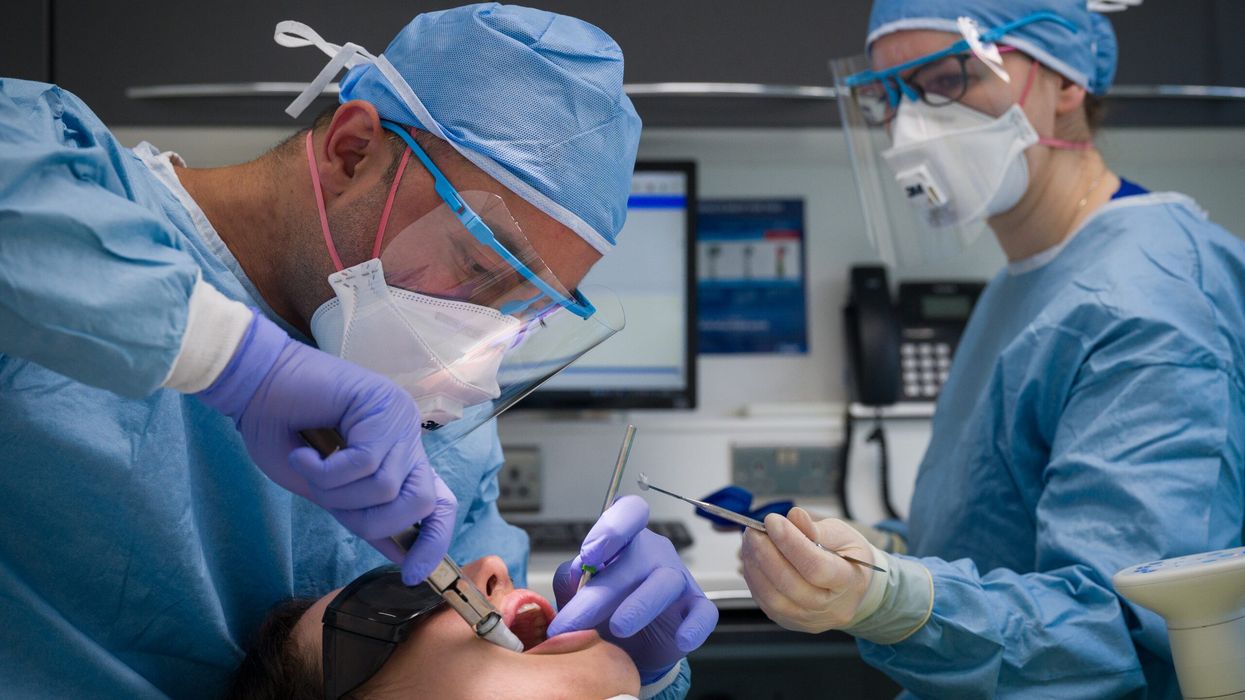

DENTISTS in England will receive cash to accept new patients amid a critical shortage of state-funded dental care.
Announced last Wednesday (7), the plan is backed by £200 million in government funding. It comes as the number of dentists providing care in the NHS stands at its lowest level in a decade.
The British Dental Association said around 12 million people are currently looking for an NHS dentist providing free care as increasing numbers of practitioners turn their backs on the NHS in favour of more lucrative private practice.
According to the Organisation for Economic Cooperation and Development data, the UK has 49 dentists per 100,000 inhabitants - the lowest rate among G7 countries.
“The health service will now introduce a range of practical measures to help make it easier for people to see a dentist, from incentivising dentists to take on new patients, to supporting dentists to be part of the NHS in areas where access is challenging,” NHS England chief executive Amanda Pritchard said.
Under the plan public dentists will be given a “new patient” payment of between £15-£50 to treat around a million new patients who have not seen a public dentist in two years or more. Around 240 dentists will be offered one-off payments of up to £20,000 for work in under-served areas for up to three years.
New ways of delivering care in rural and coastal areas would be rolled out, including launching “dental vans”, to help reach isolated communities.
Prime minister Rishi Sunak said the plan would help cut waiting lists and put NHS dentistry “on a sustainable footing for the long-term”.
Last week hundreds of patients were shown queueing in Bristol after a dental practice said it would be taking on new NHS patients.
Leading dentists said the queues would be replicated around the country if more practices opened up their appointment books to NHS patients.
In Bridlington, in northern England, locals were told it would take around eight to nine years to get an appointment at the seaside town’s only dentist, media reported.
Healthwatch England said patients had reported living with ongoing pain and even resorted to “DIY dentistry” such as pulling out their own teeth.
Shawn Charlwood, chairman of the British Dental Association’s General Dental Practice Committee, said the recovery plan was “not worthy of the title”.