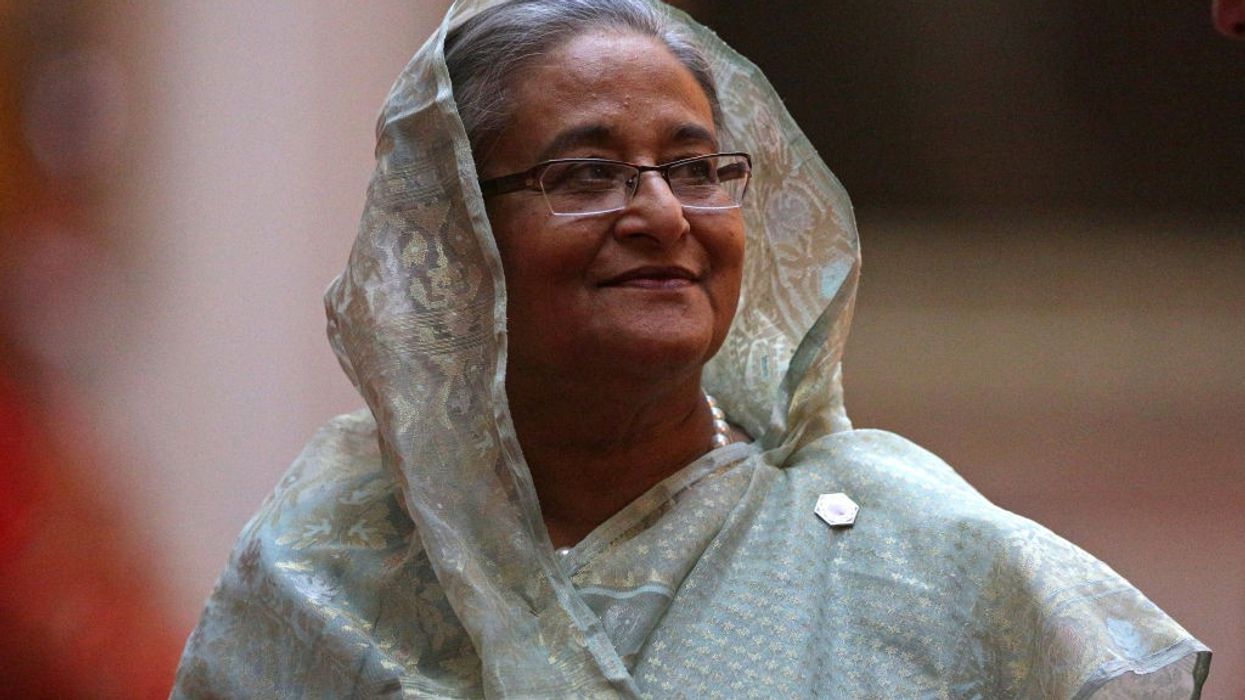

Bangladesh Prime Minister Sheikh Hasina while expressing her love for her mother tongue Bangla, said it was the large-scale language movement that gave Bangladesh its Independence from Pakistan five decades back.
"When Pakistan was formed, Urdu language was imposed upon us. A language movement started across our country and we gained Independence through that movement," she told ANI in an interaction ahead of her four-day visit to India. On being asked how important is Bangla for the people who speak the language as Bangladesh is the only country which was formed because of the language, she replied language is really very important for any community.
"So far (in this interview) I was speaking in English language and I couldn't speak that well as it is a foreign language to me. I may have several things on my mind that I could not express. Language is really very important for any community," she said referring to the initial part of the interaction with ANI where she spoke in English.
"Bangladesh's origin began with language and the country has only one language...The attraction toward our own language is something special as the mother tongue helps us speak our minds. It helps you to work for your country, so it is very crucial."
Answering another question on whether it is pride and love for mother tongue Bangla and not rejection for other languages, the prime minister said: "Yes exactly. It's pride and love for mother language. We don't oppose any languages but at the same time we encourage people to learn other languages such as English, Farsi, Arabic, French or for that matter any others."
"World is now interconnected as people are moving from place to place for various purposes, including for work. So learning new languages help in communicating with others."
In addition, the prime minister mentioned learning new languages has its own happiness and joy.
Further, she was asked whether it is a disadvantage when people from Bangladesh go to foreign countries and feel they cannot speak English properly because they learnt only their mother tongue Bangla. In response, she candidly said Bengalis typically learn languages very quickly.
"They learn and speak English. But they do not speak that fluently as it is not their mother tongue... I don't speak English that well but those who learn the language speak well. Many Bangladeshi people living in other countries learnt languages spoken in that country."
Lastly, she was asked whether language creates a special rapport and in which language does she speak when in West Bengal in India and meet Chief Minister Mamata Banerjee and others.
She smilingly said, "Yes, we speak in Bangla."
In a quick follow-up question, she was asked does the language bind even though there may be different political differences-- say for instance on Teesta water, to which the Bangladesh prime minister said: "Problems may remain but the friendship should continue."
"Yes for sure. Impending issues may be at hand, but that doesn't mean the friendship will weaken. Problems may remain but the friendship should continue," the prime minister added.
For the record, Bangladeshi Prime Minister Sheikh Hasina arrived in New Delhi on Monday on a four-day trip to expand overall ties between the two countries.
Hasina will hold wide-ranging talks with Prime Minister Narendra Modi on Tuesday following which the two sides are likely to unveil a raft of measures to boost cooperation in areas of defence, trade and river-water sharing.
(ANI)





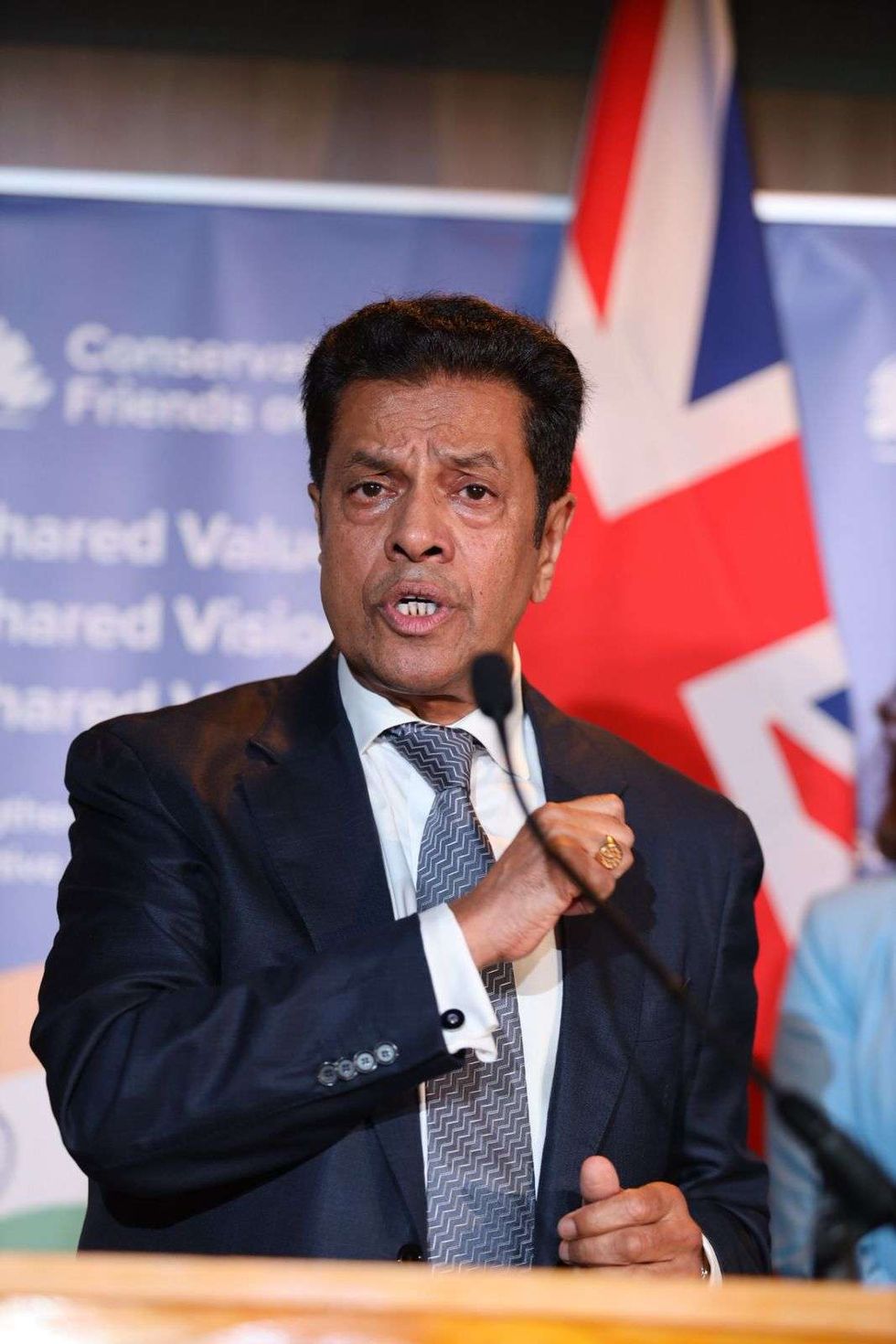 CFIndia co-chair Dr Koolesh Shah CFIndia
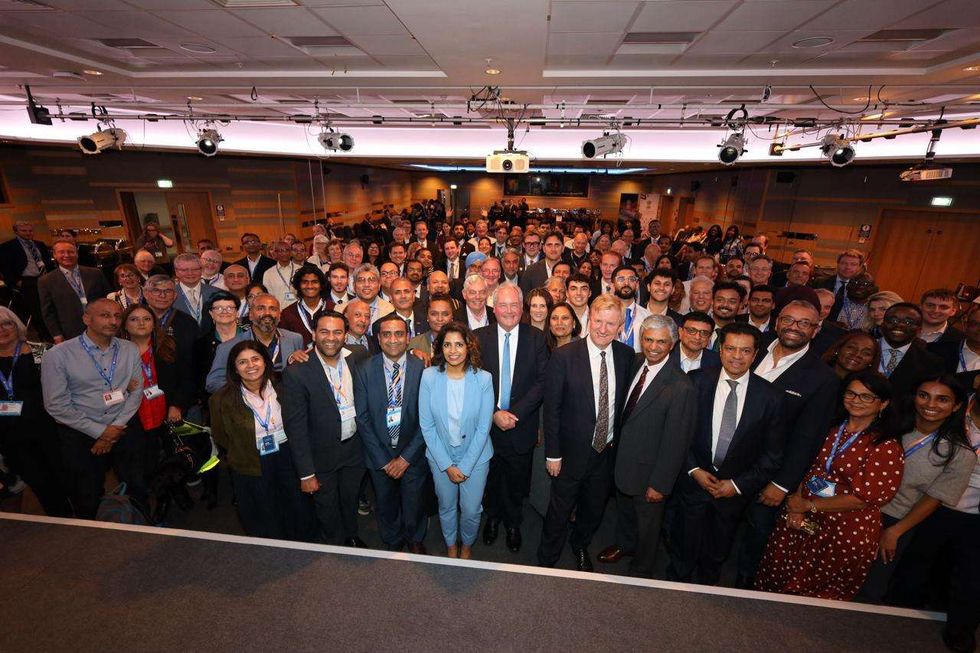 Nearly 500 attended the Conservative Friends of India event.CFIndia
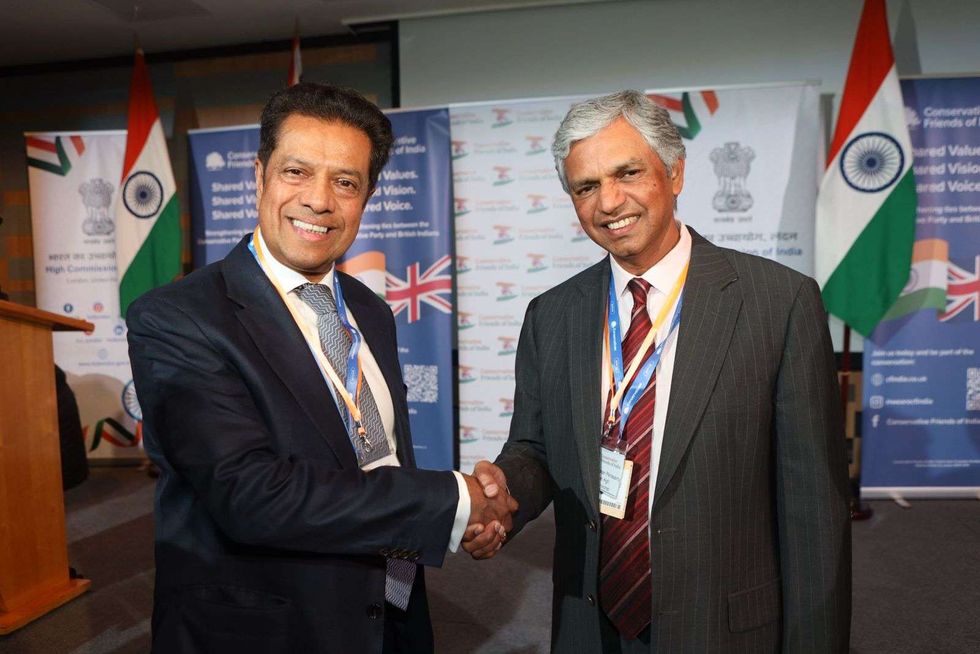 CFIndia co-chair Dr Koolesh Shah with Indian High Commissioner to the UK Kumaran PeriasamyCFIndia