
World Leprosy Day 2026 takes place this Sunday 25 January. UK-based charity Lepra is marking its theme of ‘Leprosy is curable: the real challenge is stigma’ by highlighting the work of its Information, Education and Communication (IEC) mobile units in India.
Due to misconceptions and myths surrounding the disease, people affected by leprosy can experience significant stigma and discrimination which causes barriers to seeking treatment. Afraid of rejection, many people hide their symptoms even from family members, isolating themselves from their community. But leprosy is curable and the sooner it is diagnosed and treated, transmission is no longer possible, and lasting disabilities can be prevented.
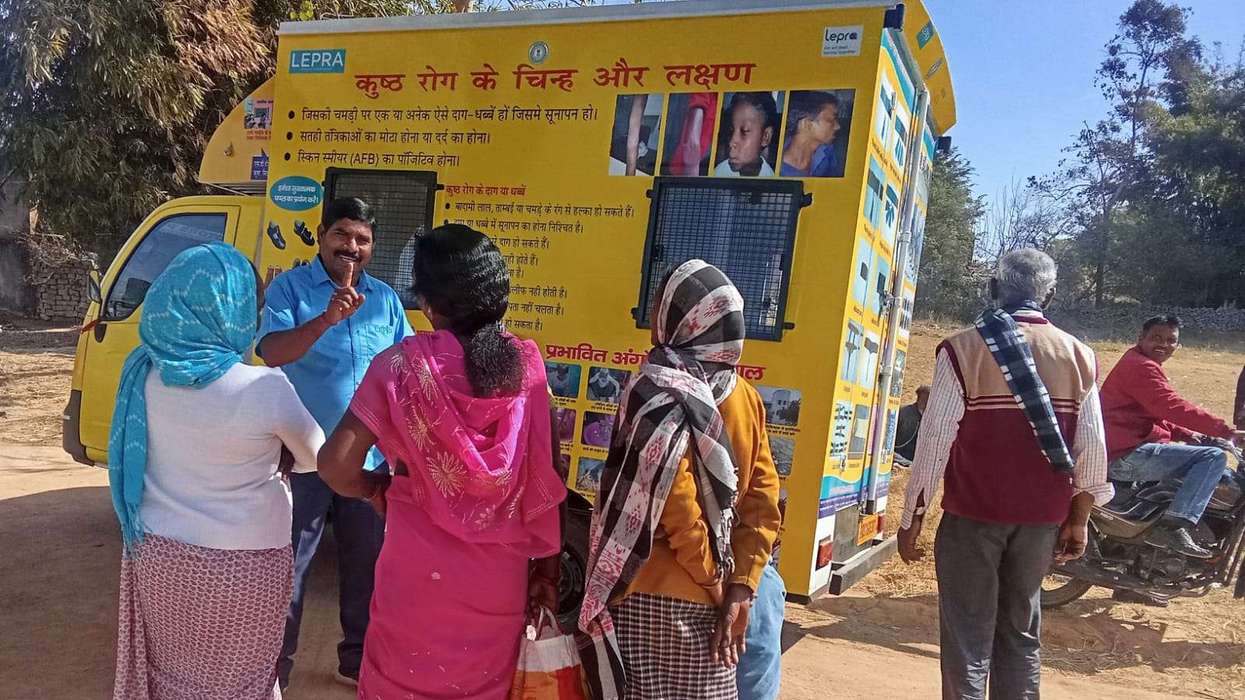
IEC mobile units were developed to address these barriers by taking accurate, accessible health information directly into communities, rather than waiting for communities to come to health facilities.
During the past year, Lepra’s new IEC mobile unit in Jharkhand, India, funded by The Hodge Foundation, has become a vital source of health information on leprosy for thousands of school students and remote endemic communities. Travelling village to village, school to school, and block to block, the unit has carried information, hope and the promise of early diagnosis for communities that are too often left behind..
Reaching young people with knowledge, confidence and reassurance
During school visits, the Jharkhand IEC mobile unit has challenged myths about leprosy. Lepra’s outreach teams trained teachers to identify symptoms and encouraged children to be more accepting of their classmates who are affected by leprosy.
4,000 young people are reached each month by the new mobile IEC unit, which equates to around 48,000 per year.
200 young people took part in awareness activities every day
40 school and community sessions were conducted each month
For many students, this was their first time learning that leprosy is curable and if diagnosed and treated early enough, lasting disabilities can be avoided. Teachers often report that the mobile unit’s presence lifted the weight of stigma not only from classrooms, but from families and the wider communities.
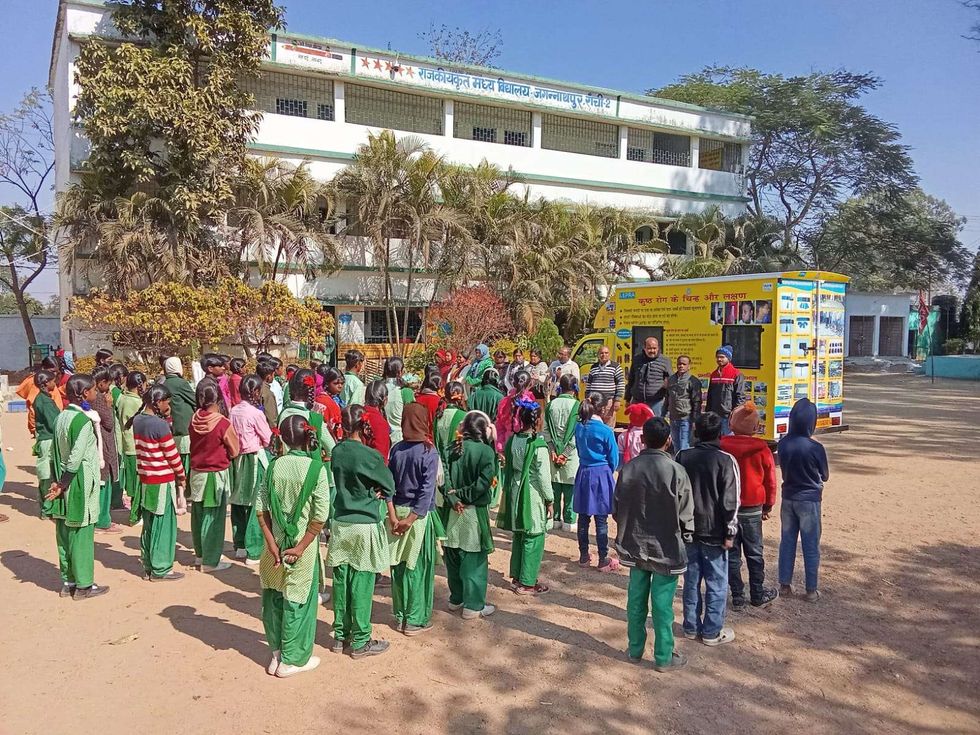 Lepra’s mobile IEC unit travels to schools to educate staff and pupils on the symptoms of leprosyLepra
Why IEC mobile units matter
Lepra’s IEC mobile units are a key component of Lepra’s early detection strategy, which is helping to find and treat people living with leprosy but out of reach of traditional health services. Prior to door-to-door ‘active-case finding’ surveys, the presence of the mobile units help to earn trust and improve engagement within endemic populations.
Through graphics, films and talks from health professionals, the unit is able to reframe leprosy as a disease which can be easily treated and need not be feared. Communities are taught to spot the early signs of the disease and people are reassured that multidrug therapy treatment is free, highly effective and will prevent ongoing transmission. With this knowledge, attitudes towards people affected are gradually changing, as fear dissipates, hope emerges for a future free from the physical, social and emotional impact of leprosy.
Last year, Lepra reached 1,169,688 people in India and Bangladesh with health education and awareness campaigns, we helped detect over 5,000 new cases of leprosy and over 10,000 government health workers were trained to provide early detection and treatment of people affected.
With your support this World Leprosy Day, we hope to reach even more people in 2026. Please visit www.lepra.org.uk/get-involved/appeals to find out more.