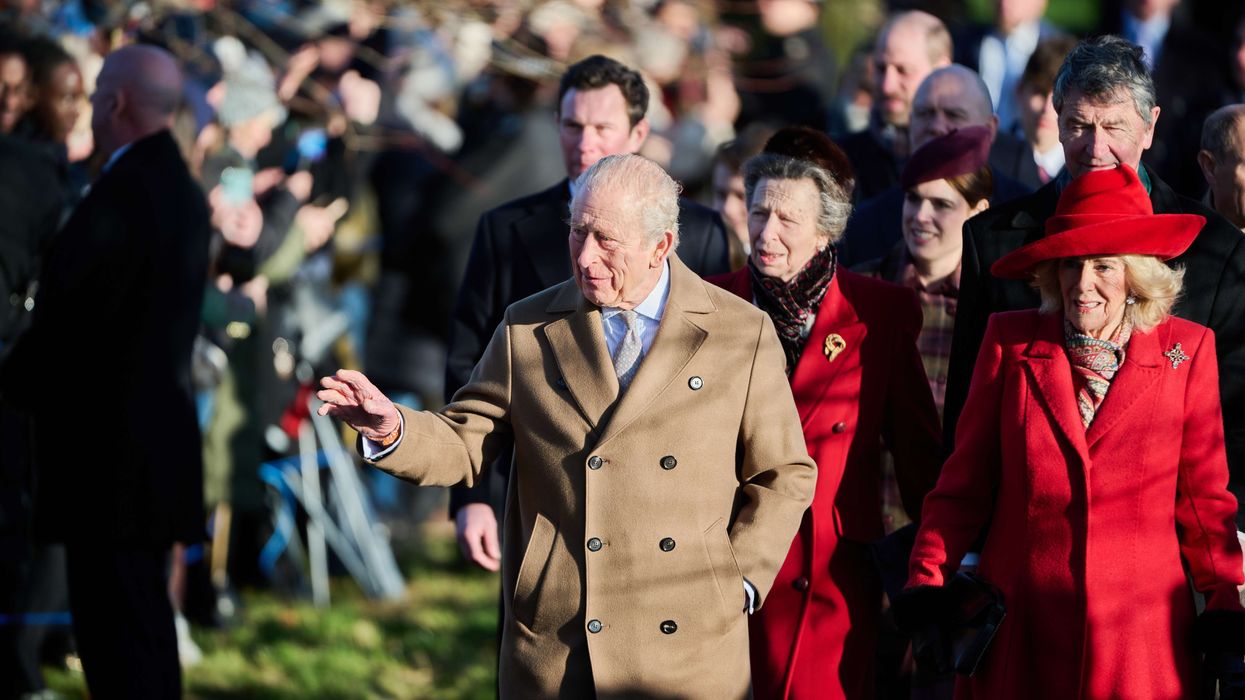

KING CHARLES focused on unity in diversity in his annual Christmas Day message on Thursday, as conflicts and tensions continue to affect communities worldwide.
“With the great diversity of our communities, we can find the strength to ensure that right triumphs over wrong,” Charles, 77, said in his fourth Christmas broadcast since becoming monarch.
“As I meet people of different faiths, I find it enormously encouraging to hear how much we have in common, a shared longing for peace and a deep respect for all life.”
The king referred to “journeying” and the need to show kindness to people on the move, themes that come amid public concern over migration in many parts of the world.
The message was delivered from Westminster Abbey, where British monarchs have been crowned since William the Conqueror in 1066, and followed a year marked by tensions within the royal family.
UKRAINIAN CHOIR HIGHLIGHTS KING'S SUPPORT FOR KYIV
The broadcast was followed by a performance by a Ukrainian choir wearing traditional Ukrainian “vyshyvanka” embroidered shirts, alongside the London-based Royal Opera Chorus.
Charles has often voiced support for Ukraine and has hosted Ukrainian President Volodymyr Zelenskiy at Windsor Castle three times in 2025, most recently in October.
While constitutionally required to stay above politics, the king has spoken about global crises, including the Israel–Gaza conflict, and expressed sorrow after violence against Jewish communities, including an attack at a synagogue in northern England in October and a shooting at Sydney’s Bondi Beach this month.
In his Christmas broadcast, a tradition dating back to 1932, Charles praised military veterans and aid workers for their courage in difficult conditions, saying they gave him hope.
Referring to the Biblical Christmas story, he also spoke about his state visit to the Vatican in October, where he and Pope Leo prayed together. It marked the first joint worship by a British monarch and a Catholic pontiff since England broke away from Rome in 1534. The British monarch is the supreme governor of the Church of England.
HEALTH AND FAMILY CHALLENGES
Nearly two years after announcing an unspecified cancer diagnosis, Charles said this month that his treatment could be scaled back in the new year.
His daughter-in-law, Kate, Princess of Wales, said in January that she was in remission after completing chemotherapy in September, disclosures that are unusual for the royal family.
The monarchy also faced other challenges during the year.
Charles removed his younger brother Andrew’s titles as Duke of York and prince following renewed scrutiny of his links to sex offender Jeffrey Epstein.
The year also saw a rare moment of reconciliation when Charles’ younger son, Prince Harry, met his father for tea in September, their first meeting in almost two years.
Harry, who lives in the United States, later said he hoped for healing, describing life as “precious” and referring to limited time to repair family ties.
(With inputs from agencies)