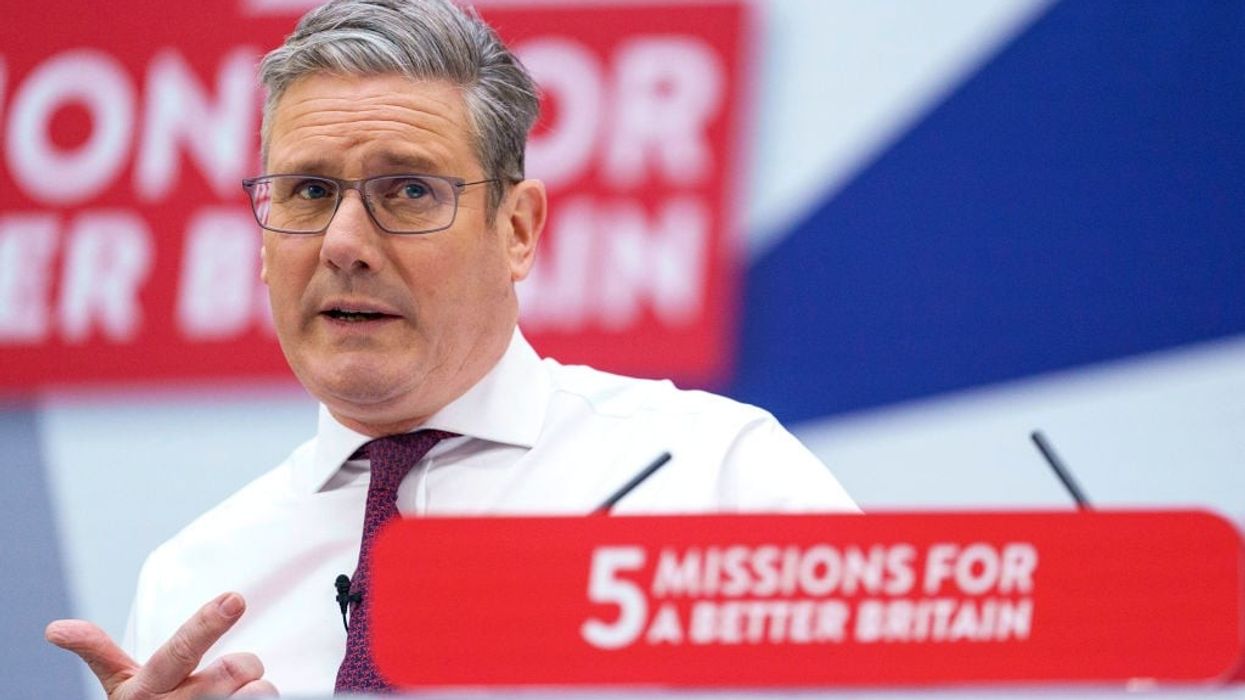

LABOUR leader Keir Starmer set out plans for five "national missions" on Thursday (23), including to make the UK economy the fastest growing among the G7, in a challenge to the Conservatives, ahead of a pivotal year for both parties.
If Labour wins power, it should be judged on ensuring growth in every region after 13 years of Conservative governments which have left Britain's problems "deeper, longer lasting and more painful," Sir Keir said in a speech in Manchester.
His other four missions were reducing health inequalities, tackling crime, making Britain a clean energy superpower, and raising education standards, the Labour leader said.
He said these missions would be measurable, so voters could check them against performance if Labour wins power.
"I will never accept that this country is destined for decline. That our best days belong to the past," Sir Keir said.
"Success is all around us, it just needs direction."
With an election expected next year, Labour, the Tories and other political parties are setting out their solutions to key issues, including a spate of worker strikes, decades-high inflation, a healthcare crisis and a predicted long recession.
The pledges follow prime minister Rishi Sunak's own five plans he set out last month vowing to halve inflation; grow the economy; reduce the national debt; drive down health waiting lists; and pass new laws to stop migrants arriving on small boats.
Labour said Sunak’s promises were the "height of sticking-plaster politics", designed only to get the government through the next few months.
Speaking to party members at the headquarters of the Co-operative Group, which is owned by its members, Sir Keir pledged he would provide "a long-term plan to unlock Britain’s pride and purpose".
While Labour enjoys an opinion poll lead of about 20 points over the Tories, it is still trying to cement its position as the most trusted by voters on the economy, having only recently overtaken the governing party on the issue.
Sir Keir said he wanted a different approach to government - neither state control nor pure free markets - which would draw on investment and expertise from both the public and private sector.
History suggests that Sir Keir's goal to have the fastest sustained economic growth in the G7 will be a challenge. On a rolling five-year basis, US economic growth has outpaced Britain’s almost constantly over the past 60 years.
Britain's economy in the fourth quarter was still 0.8 per cent smaller than its pre-pandemic level, in contrast to the rest of the Group of Seven advanced economies which are now above their pre-pandemic size.
Sir Keir challenged the prime minister to call a general election so that voters can deliver their verdict on their respective plans.
If anyone wants to know who the public prefers "then there is a very good way to find out," the Labour leader said.
"I will put my five long term missions for national renewal, a decade of national renewal, up against Rishi Sunak's five promises to clean up his own mess."
(Reuters)