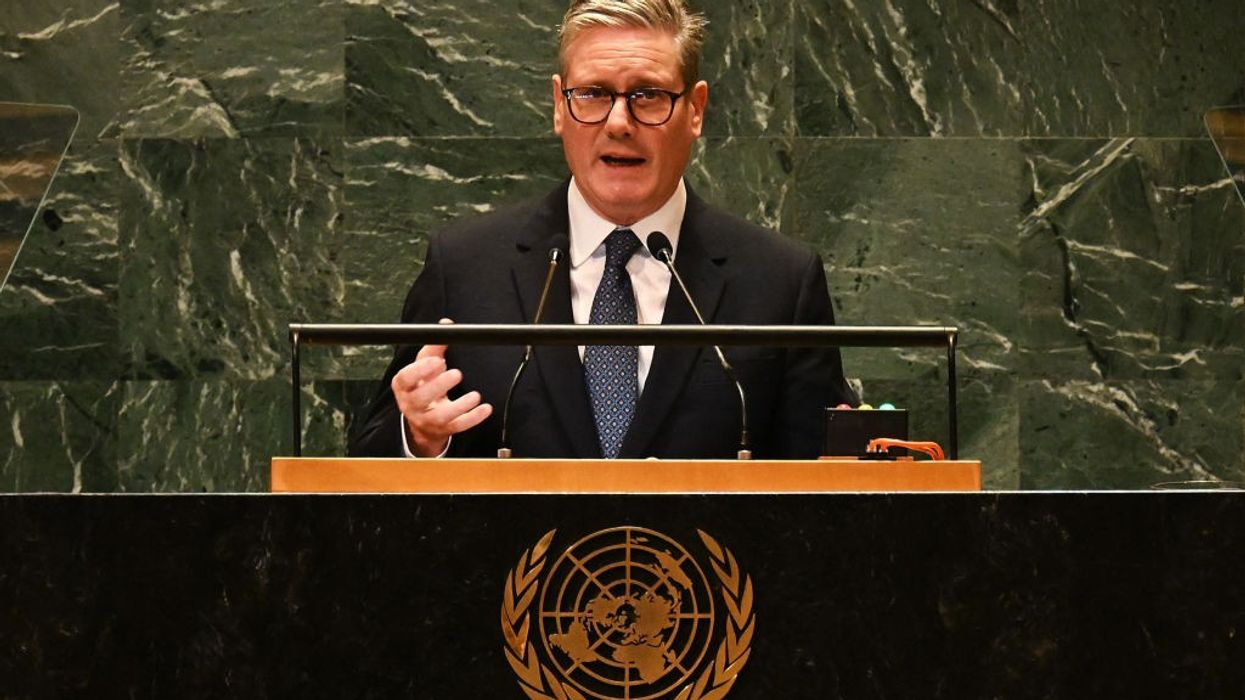

PRIME MINISTER Keir Starmer joined the leaders of the US and France in backing India’s bid for a permanent seat on the UN security council (UNSC) to make it a more representative body that is not “paralysed by politics”.
During his speech at the UN general assembly in New York, Starmer called for reforms to ensure the global multilateral system is “more representative and more responsive”.
Besides permanent representation for India, Africa, Brazil, Japan and Germany, the UK also made a pitch for more seats for elected members of the security council.
“We need to make the system more representative and more responsive to those who need it most,” said Starmer.
“So we will make the case not just for fairer outcomes, but fairer representation in how we reach them; and this also applies to the security council. It has to change to become a more representative body, willing to act – not paralysed by politics. We want to see permanent African representation on the council, Brazil, India, Japan and Germany as permanent members, and more seats for elected members as well."
The Labourleader, making his first UNGA address as prime minister after the July general elections, also set out a change in Britain’s approach.
He said: “To support this we will also change how the UK does things. Moving from the paternalism of the past towards partnership for the future. Listening a lot more – speaking a bit less. Offering game-changing British expertise and working together in a spirit of equal respect.”
French president Emmanuel Macron on Wednesday (25) also backed India’s bid for permanent membership in the UNSC to make the UN more efficient and representative.
“France is in favour of the security council being expanded. Germany, Japan, India, and Brazil should be permanent members, as well as two countries that Africa will decide to represent it,” he said.
It follows president Joe Biden reiterating the US stance in favour of such an expansion of the UNSC, which comprises five permanent members and 10 non-permanent member countries – elected for a two-year term by the general assembly of the UN.
The five permanent members are Russia, the UK, China, France, and the US, which have the power to veto any substantive UN resolution.
India has been at the forefront of efforts at the UN to push for urgent long-pending reform of the security council, emphasising that it rightly deserves a place at the UN high table as a permanent member.
India argues that the 15-nation council founded in 1945 is not fit for purpose in the 21st Century and does not reflect contemporary geo-political realities.
India last sat at the UN high table as a non-permanent member in 2021-22. There has been a growing demand to increase the number of permanent members to reflect the contemporary global reality.
(PTI)


 Basingstoke’s parade will depart from the Willis MuseumKala the Arts

