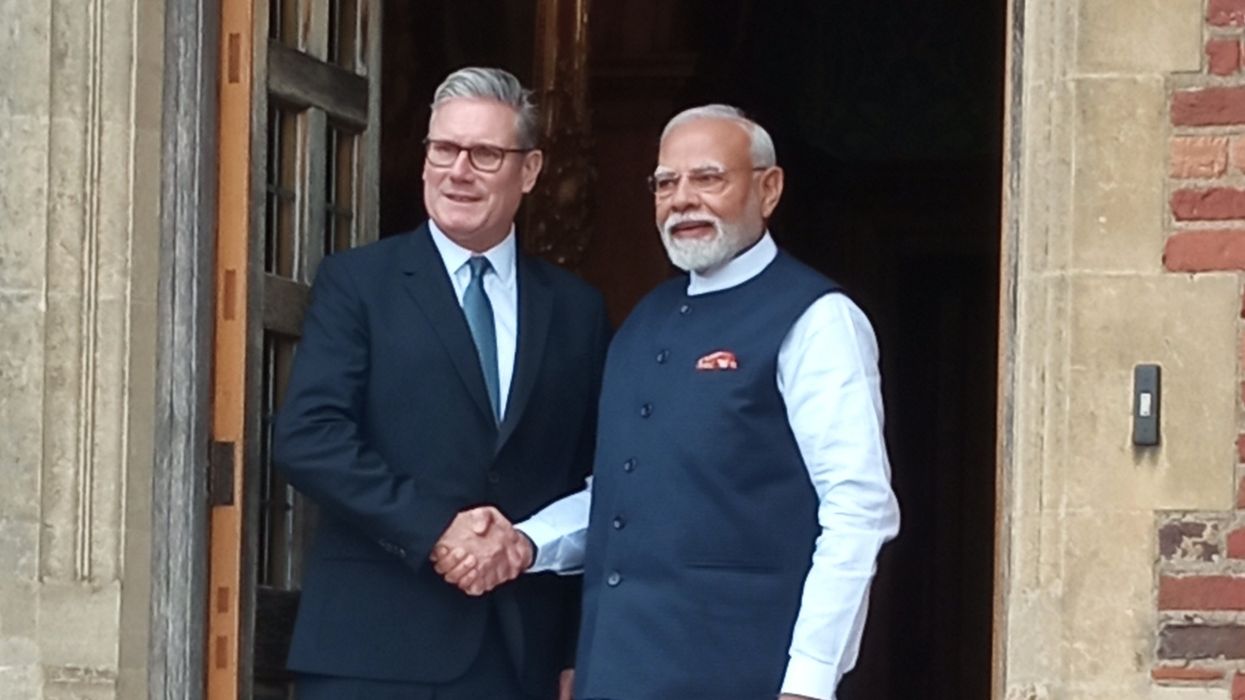

THE free trade agreement (FTA), which was signed at Chequers last week, has been well received in India.
But it is worth remembering India has also entered into FTAs with several other countries and blocs. These include the South Asian Free Trade Area (SAFTA), Sri Lanka, Nepal, Bhutan, Thailand, Singapore, Malaysia, Japan, South Korea, ASEAN (Association of Southeast Asian Nations), Mauritius, UAE, and Australia.
Additionally, India is currently negotiating FTAs with the US – this will be the big one – plus the European Union, another crucial one, Oman, Peru and Israel.
Politically, the FTA with the UK will not have very many consequences for the Indian prime minister, Narendra Modi, who will turn 75 on September 17 this year. The speculation is more about succession, though my guess is he will carry on if he wins the next election in 2029, which he might well do. But what we saw of him at Chequers indicates he is fit and agile.
In Britain, though, the story is a little different. The British prime minister, Sir Keir Starmer, stands to gain politically from the FTA, although it will take some time for it to come into force. It could be that many British Indian voters, who found the Tories – under David Cameron, Boris Johnson and Rishi Sunak – reflected their aspirations, might consider switching their allegiance to Starmer at the next general election, also in 2029.
One reason is that under Kemi Badenoch (who has boasted she blocked the FTA on the spurious migration question when she was trade secretary under Rishi) the Conservative party has been moving to the far right, with many of its MPs favouring an electoral pact with the Reform leader Nigel Farage.
Governments in London and Delhi have to be pragmatic and deal with whichever party is in power. Starmer has said that the FTA with India is the biggest such deal since Brexit. He has built on the negotiations conducted under Boris and Rishi but history will judge the deal was concluded when he was prime minister. And the UK economy could well be transformed if it rides piggy back on the India growth story.
To secure the support of more Indian origin voters and prove himself a very successful and “pragmatic” prime minister , Starmer needs to do four things – find a way of “promoting” Rachel Reeves to another job; reverse the VAT raid on private schools (it’s not working, anyway, because school after school is shutting); change the inheritance tax and non-dom rules so as to get back the Dubai Indians; and pay an official visit to India sooner rather than later. He could well win the next election providing Reeves is not his chancellor.