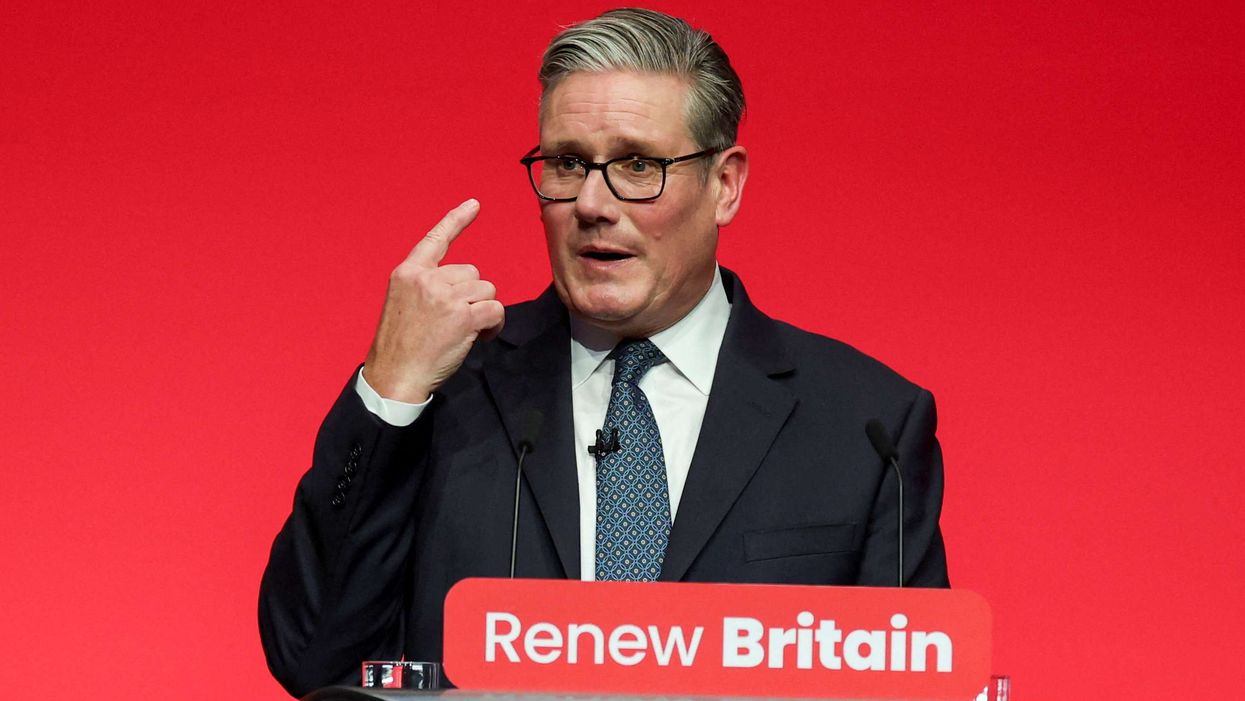

Prime minister Sir Keir Starmer’s declaration that the next election is “a battle for the soul of the country, exemplifies how Reform leader Nigel Farage’s new frontrunner status made him the main target of his political opponents during this year’s party conference.
"Don't let Trump’s America become Farage's Britain" was LibDem leader Ed Davey’s theme in Bournemouth. That was a confident, liberal message with an appeal to most people in this country. Davey’s literal Trump card is that he is the most prominent politician being willing to openly criticise a US president who three-quarters of the British public disapprove of. It passes the ‘tik-tok test' of being communicable in three seconds to those paying little attention to politics.
Starmer has to work with the leader that the US public chose to elect. So, he tried to make a similar argument, but in more abstract language: contrasting ‘patriotic renewal’ with ‘the politics of grievance’ - and ‘decency’ versus ‘division’. The general public may find that harder to decode than his party audience in Liverpool.
Trump once boasted that his supporters would let him get away with murder on Fifth Avenue. Farage’s opponents fear that the normal rules of scrutiny might never apply to him, either. Yet Farage made unforced errors under pressure - partly because he does not appear to recognise any risk in his close association with Trump. Being unwilling to criticise the US president’s unfounded claims about paracetamol being a cause of autism panders to a narrow conspiracist fringe that could be a red flag to the more mainstream voters who Farage needs to persuade and reassure. The 14 per cent of votes he got last time were from four million people who have often voted for Farage’s parties in the past decade. Making a serious bid for power - trying to turn 14 per cent into 30 per cent - involves targeting another four million voters, who have mostly chosen not to do so before.
Yet, there are few voices for reassurance or moderation in Reform’s internal debate to counter online and ideological pressure to radicalise. Former academic turned populist advocate Matthew Goodwin says the key is that Reform must be more like Trump’s second term than his first. That amounts to a call for the authoritarian rejection of democratic norms.
The radicalisers are winning the war for Farage’s ear. After Farage’s call for mass deportations of those here without legal status was criticised as ‘weak sauce’ by Elon Musk, the Reform leader expanded the threat to up to two million people. He proposed to abolish indefinite leave to remain entirely - including reneging on commitments made to those told Britain was their permanent home.
Downing Street’s initial flat-footed response was to call the Farage plan ““unrealistic, unworkable and unfunded” before the prime minister was persuaded that he needed to make a moral argument.
“It is one thing to say ‘we’re going to remove illegal migrants’, people who have no right to be here. I’m up for that. It is a completely different thing to say we are going to reach in to people who are lawfully here and start removing them. They are our neighbours. It would tear our country apart”, he told the BBC’s Laura Kuennsberg last Sunday (28).
Starmer made headlines by calling the Farage plan ‘racist’ too. That was an unplanned response to the journalist’s question. As Reform appears to be now exempting four million European nationals with settled status from its plan, while threatening up to half a million people - often Commonwealth nationals from India, Pakistan, Bangladesh and Nigeria - in a similar ethical position, the impact is discriminatory, whatever Reform’s unexplained motive for this differential treatment.
Yet Starmer’s strongly worded argument as to why those here legally should not be threatened with deportation seemed to be contradicted by his own home secretary’s keynote speech on Monday (29).
Shabana Mahmood told the Labour conference she would be a tough home secretary - but a tough Labour home secretary. On small boats and asylum hotels, the government must respond to public pressure for change - with an orderly, workable and humane asylum system. Mahmood sees this as crucial to challenging the rise of racism.
Unlike its asylum challenge, the government’s proposals on settlement do not respond to any public appetite for change. The government wants a 10-year baseline for settlement - though most people - including seven out of ten Labour voters - believe that five years is a fair timeline, as our recent British Future report shows.
The home secretary put her speech’s headline message that ‘migrants must contribute to earn their right to stay’ into block capitals on social media before government sources scrambled to clarify that this would not actually apply to those who have arrived in the past five years. The government is yet to begin its policy consultation - but what that dividing line between decency and division should mean in practice will be a crucial and contested question this autumn.

Sunder Katwala is the director of thinktank British Future and the author of the book How to Be a Patriot: The must-read book on British national identity and immigration.