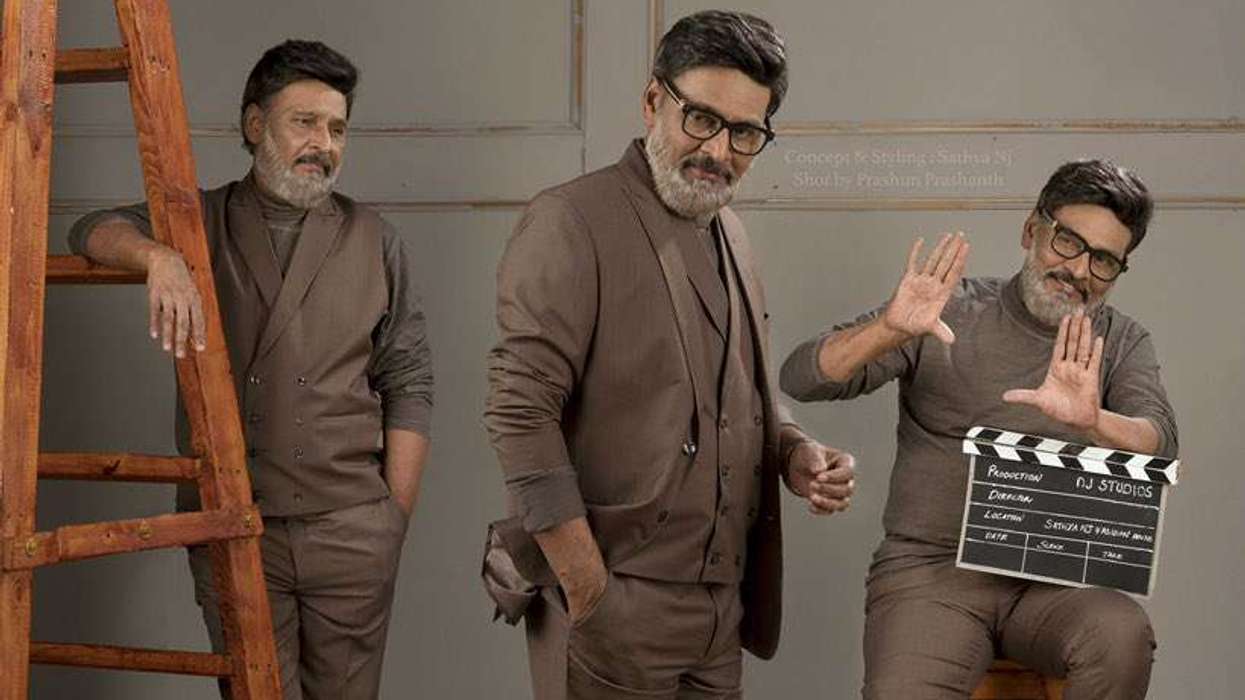

Highlights
- Actor, director and screenwriter K. Bhagyaraj died after suffering a massive heart attack
- His screenplay-driven films redefined the Tamil film hero and influenced generations of filmmakers
- Survived by wife Poornima Bhagyaraj and children Shanthanu and Saranya
K. Bhagyaraj, the actor, director and screenwriter whose character-driven storytelling transformed Tamil cinema, has died at the age of 73.
He suffered a massive heart attack on Saturday (27 June) and was rushed to Apollo Hospital in Chennai, where doctors were unable to revive him despite resuscitation efforts.
Bhagyaraj is survived by his wife, actor Poornima Bhagyaraj, and their children, actor Shanthanu Bhagyaraj and Saranya Bhagyaraj.
Best known for writing and directing films that combined humour, emotion and everyday life, Bhagyaraj created a distinctive filmmaking style that continues to influence Tamil cinema. His works, including Mouna Geethangal, Andha 7 Naatkal and Mundhanai Mudichu, remain widely discussed and studied for their screenplays and characterisation.
A filmmaker shaped by Bharathiraja
Born in Vellakoil in Tamil Nadu's Tiruppur district, Bhagyaraj began his career as an assistant director under V.V. Balaguru before joining producer S.A. Rajkannu of Amman Creations. It was during this period that he met filmmaker Bharathiraja, who recognised his talent for storytelling and encouraged his growth.
Bhagyaraj later played the lead role of a schoolteacher in Bharathiraja's Puthiya Vaarpugal, marking an important milestone in his career. Actor and director Ilavarasu, who worked with both filmmakers, recalled Bharathiraja frequently asking assistants to study Bhagyaraj's approach while preparing scenes.
Scripts and characters that stood apart
At a time when conventional film titles and formulaic storytelling dominated Tamil cinema, Bhagyaraj took a different path. Films such as Suvar Illatha Chithirangal, Oru Kai Osai and Thooral Ninnu Pochu reflected his willingness to challenge industry norms.
His strength lay in creating believable characters and memorable situations rather than relying on spectacle. Even before becoming a leading filmmaker, he appeared in supporting roles in 16 Vayathinile and Sigappu Rojakkal. He also published the magazine Bhagya and wrote the dialogues for Kamal Haasan's Oru Kaidhiyin Diary.
Following the death of his first wife, Praveena, he married actor Poornima Jayaram, who had starred opposite him in Darling, Darling, Darling.
Redefining the Tamil film hero
While contemporaries Kamal Haasan and Rajinikanth dominated the box office, Bhagyaraj carved out his own identity through films that prioritised story over star power.
His protagonists were ordinary men whose intelligence, wit and vulnerability made them relatable. Wearing spectacles and often embracing self-deprecating humour, his screen persona broke away from the traditional image of the larger-than-life action hero.
In Inru Poi Naalai Vaa, three young men pursue romance through comic acts of devotion rather than displays of heroism, while Idhu Namma Aalu explored love across caste lines through the relationship between the son of a barber and a Brahmin woman.
Bhagyaraj was an admirer of AIADMK founder and former Tamil Nadu Chief Minister M.G. Ramachandran and frequently referenced him in his films. He later launched the MGR Makkal Munnetra Kazhagam, though the party failed to gain political traction.
He subsequently joined the AIADMK before moving to the DMK in 2006, campaigning for the party before later stepping away from politics.
Championing regional identity
Bhagyaraj's deep understanding of the Kongu region's dialects and culture became one of his creative strengths. His directorial debut, Suvar Illatha Chithirangal, showcased authentic regional speech, while Goundamani's performance in the film was widely appreciated for its natural use of the Kongu dialect.
Music also played a defining role in his films. Composer Gangai Amaran scored Suvar Illatha Chithirangal and Mouna Geethangal, with songs such as Kathal Vaibhogame and Mookuthipoomele becoming enduring favourites.
In another unconventional decision, Bhagyaraj chose veteran composer M.S. Viswanathan for Andha 7 Naatkal at a time when Ilaiyaraaja dominated Tamil film music. The soundtrack proved to be one of the film's lasting successes, with every song becoming a major hit.
Bhagyaraj leaves behind a body of work that demonstrated the enduring power of strong writing, memorable characters and stories rooted in everyday life, securing his place among Tamil cinema's most influential filmmakers.