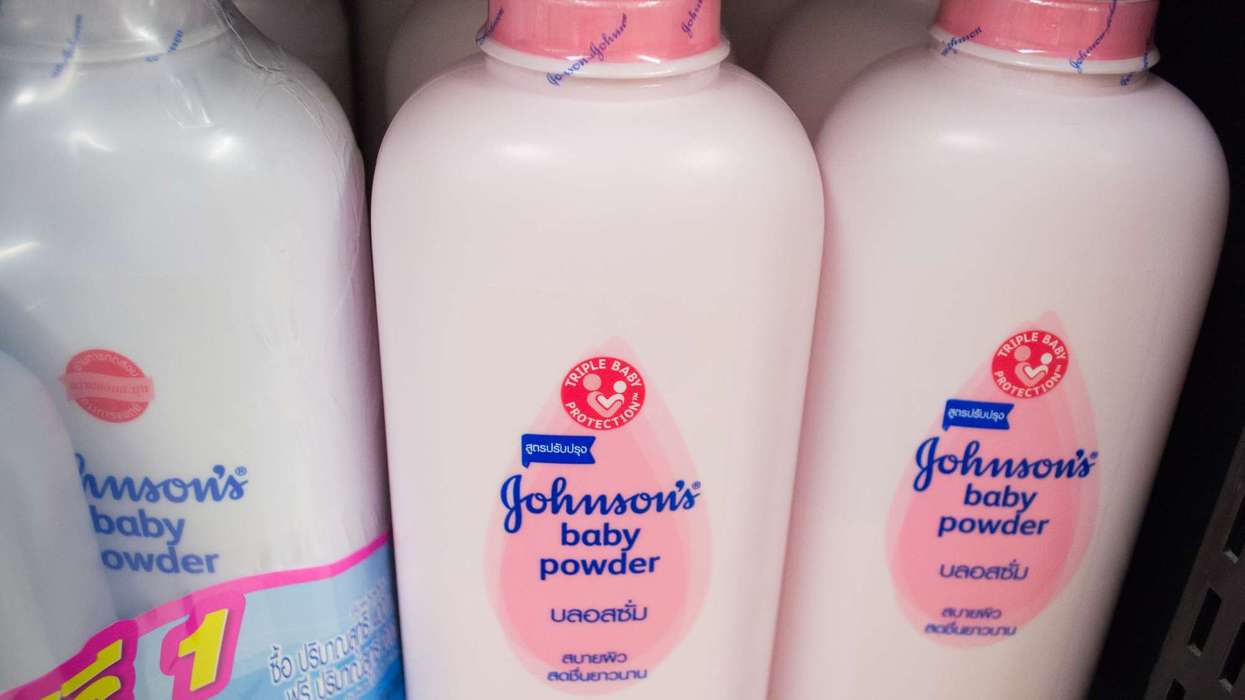

- Johnson & Johnson has agreed to pay an estimated £4.1 billion ($5.5 billion) to settle most remaining ovarian cancer lawsuits linked to its talc products.
- The agreement covers about 76,000 claims but still requires approval from 95 per cent of claimants.
- The settlement applies only to existing lawsuits and does not prevent future claims.
Johnson & Johnson has agreed to pay an estimated £4.1 billion ($5.5 billion) to settle tens of thousands of lawsuits alleging that its talc-based baby powder and other talc products caused ovarian cancer, marking what could be the biggest step yet towards ending a legal battle that has stretched for more than a decade.
The proposed Johnson & Johnson talc settlement covers around 76,000 ovarian cancer claims filed in federal and state courts across the US. If accepted by at least 95 per cent of eligible claimants, it would resolve nearly all of the remaining lawsuits linked to the company's talc products. The agreement does not cover future claims.
The healthcare giant has consistently denied that its talc products caused cancer or contained asbestos, maintaining that the lawsuits lack scientific merit.
A costly deal to close a long-running chapter
Johnson & Johnson said it expects to pay around £2.2 billion ($3 billion) in 2027, with further payments scheduled for 2028. However, the final bill could be significantly higher depending on how many claimants join the settlement.
Chris Seeger, one of the lawyers involved in negotiating the agreement, reportedly said the company's total payout could eventually exceed £5.2 billion ($7 billion) because the settlement does not place an overall cap on compensation. He also reportedly described the agreement as a fair outcome after years of litigation.
The company reached the settlement after securing several legal victories, including favourable rulings in individual trials and a recent decision by a federal judge questioning whether plaintiffs could prove that talc specifically caused ovarian cancer in individual cases.
Erik Haas, Johnson & Johnson's vice-president of litigation, reportedly said the company remained confident it would ultimately have succeeded in court but chose to settle to bring the matter to a close and focus on its healthcare business.
From bankruptcy strategy to settlement table
The agreement follows years of failed attempts by Johnson & Johnson to resolve the litigation through bankruptcy proceedings involving a subsidiary, a legal strategy widely known as the "Texas two-step". Courts dismissed all three bankruptcy filings, allowing the lawsuits to resume in March 2025 after being paused for more than three years.
Before pursuing bankruptcy, Johnson & Johnson faced mixed outcomes in court. While it won several trials, it was also ordered to pay billions of dollars in one high-profile case involving 22 women who claimed the company's baby powder caused their ovarian cancer. Some of those awards were later reduced on appeal.
The company stopped selling its talc-based baby powder in the US in 2020, replacing it with a cornstarch-based version. It had already settled most lawsuits alleging its talc products caused mesothelioma, another cancer linked to asbestos exposure.
Unlike the earlier bankruptcy proposals, the new settlement applies only to existing ovarian cancer claims. Lawyers representing the plaintiffs reportedly said this approach allows current claimants to receive compensation within about 18 months instead of waiting years under a court-supervised bankruptcy process.
If enough claimants approve the agreement, the settlement could finally bring one of the largest and most closely watched product liability disputes in the healthcare industry close to its conclusion.