
Highlights
- 3I/ATLAS is the third confirmed interstellar object to enter our solar system
- Online speculation claimed it could be an alien spacecraft
- Astronomers confirm it behaves like a natural comet, shedding gas and dust
- Object recently passed behind the sun and will be visible again in mid-November
- Observations show it contains water, carbon dioxide and other volatile ices
A comet that ignited conspiracy chatter
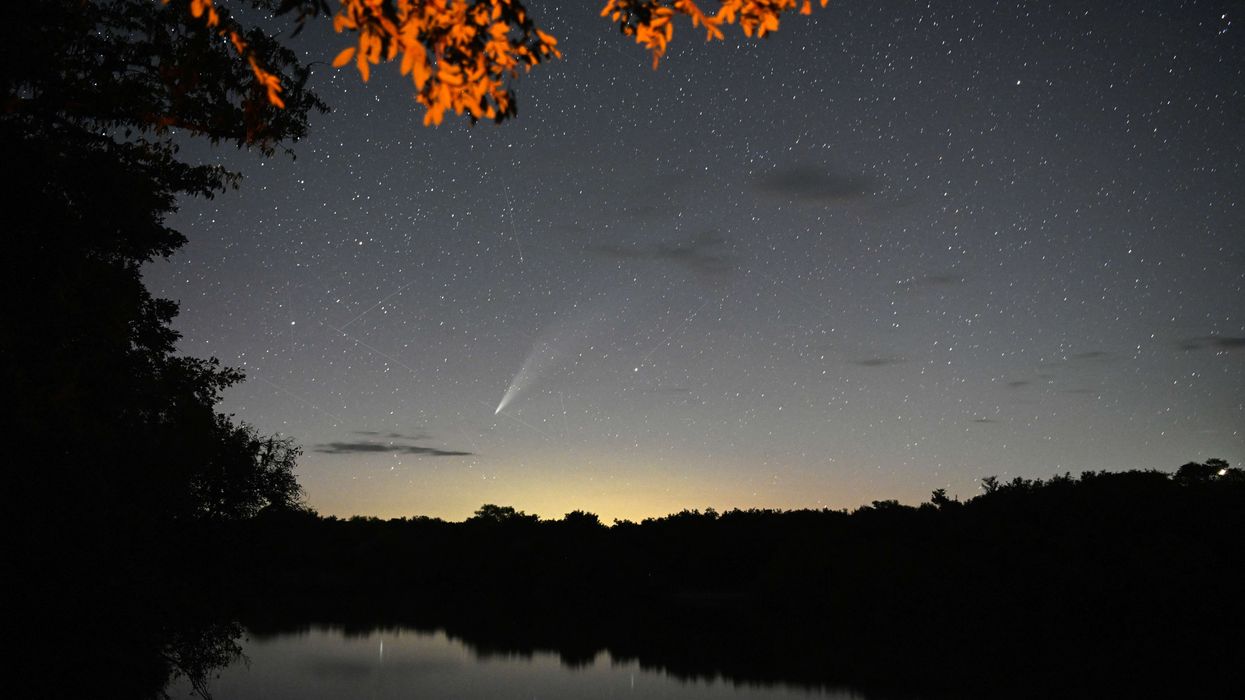
The interstellar comet 3I/ATLAS has returned to the spotlight after briefly disappearing behind the sun. While some online voices suggested the object was hiding because it is an alien spacecraft, astronomers have dismissed the idea as baseless.
The comet has been visible for months and will reappear in the morning sky from around 11 November. If it were an extraterrestrial vehicle trying to stay concealed, experts point out, vanishing only for a few days would make little sense.
A rare visitor from another star system
3I/ATLAS is only the third confirmed object to enter our solar system from beyond it. It made its closest pass to the sun recently, coming to around 203 million kilometres from the star. It will approach Earth on 19 December, at a distance of roughly 270 million kilometres, posing no threat.
Astronomers first detected it on 1 July and have been monitoring its path and behaviour closely. Its movement and emissions match what scientists expect from a natural comet shaped by ice, dust and rock.
What scientists are learning
Observations from major telescopes and spacecraft, including Hubble, the James Webb Space Telescope and NASA’s SPHEREx mission, have recorded gas and dust streaming from the comet as the sun warms its surface. Carbon dioxide, water, carbon monoxide and other compounds have been detected, offering clues to the comet’s origins.
Researchers estimate 3I/ATLAS to be between three and eleven billion years old. Early findings suggest it has never passed close to another star before, meaning its frozen material may still carry pristine chemical signatures from the environment in which it formed.
A continuing scientific opportunity
Although it faded from ground-based view in October, spacecraft such as SOHO, PUNCH and the European Space Agency’s Mars orbiters have continued tracking it. The comet passed within about 30 million kilometres of Mars on 3 October, allowing instruments there to attempt images and collect data.
Further observations are expected in the coming months, including attempts by ESA’s Juice mission later in November. Scientists anticipate new insights once the data returns to Earth early next year.
Researchers say that with several months of viewing still ahead, 3I/ATLAS offers a rare opportunity to study the building blocks of another planetary system. Despite the noise online, the scientific verdict remains clear: sometimes a comet really is just a comet.