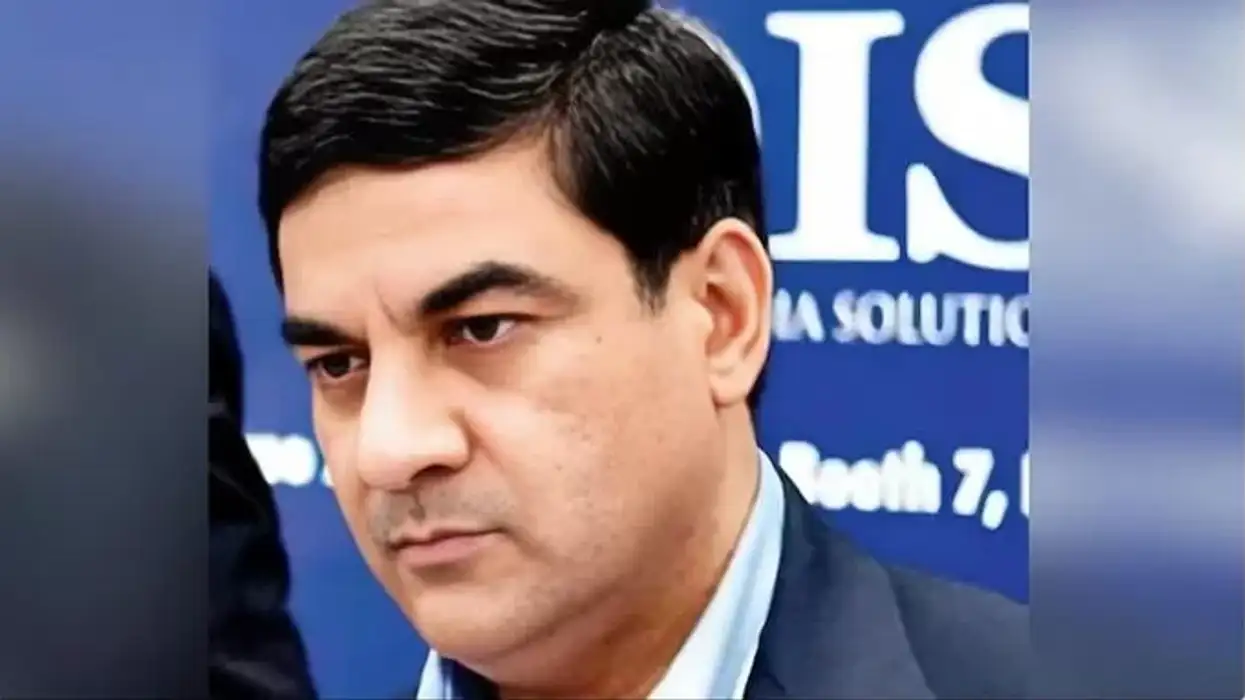
INDIA’S Supreme Court has given a “final opportunity” to fugitive businessman Vijay Mallya to appear before it personally or through his lawyer in a contempt case where he has been found guilty.
Mallya, who is currently living in the UK, is accused of bank loan defaults of more than Rs 90 billion (£880 million) in India involving his now-defunct Kingfisher Airlines.
The top court said it has given multiple opportunities to Mallya to appear either personally or through a lawyer.
A bench of justices U U Lalit, S Ravindra Bhat and P S Narasimha posted the contempt case for further hearing after two weeks.
It said Mallya is at liberty to act as per the direction given in its order on November 30 last year, failing which the matter shall be taken to its "logical conclusion".
At the outset, the bench told senior advocate Jaideep Gupta, who has been appointed amicus curiae in the matter, that it has found the contemnor guilty of contempt of court, and now, punishment has to be imposed.
"Going by normal logic, the contemnor has to be heard but from that stage, he has not appeared before the court. What course should the court adopt?" the bench asked Gupta.
Gupta said that the contemnor does not need to be physically present, and he can appear through his counsel, and the court may clarify this further in its order.
Justice Bhat said the case has different colours, and the contemnor has abstained from the proceedings.
"Next hearing, the same thing will happen. We will have to pronounce the sentence in absentia. In this situation, in other countries courts are not powerless. We want assistance in that regard," Justice Bhat said.
The bench said this problem should not become a gateway for courts of first instance to adopt this course.
"We will have to say that this is in extraordinary circumstances in which he has been found guilty and is on the run. We need to have appropriate safeguards," it said.
Gupta said the court would have to make it clear what would happen and what consequences would follow if Mallya does not appear either personally or through his lawyer.
Solicitor general Tushar Mehta, appearing for the government, said the court has inherent jurisdiction in contempt cases and that it has given enough opportunity to Mallya, which he has not taken.
He said the Indian government has been informed by UK officials that there is some confidential proceeding going on which cannot be shared.
The bench asked Gupta, "What should the court do? Should we appoint an amicus for the contemnor or do we proceed ahead? Normally, in criminal matters, we appoint an amicus to represent the accused."
Gupta said if no lawyer appears for him or makes submissions on behalf of him, then the court should appoint an amicus curiae to represent the accused.
On November 30 last year, the top court had said it could wait any longer and the sentencing aspect in the contempt matter against Mallya would be dealt with finally.
It had in 2020 dismissed Mallya's plea seeking a review of its 2017 verdict which held him guilty of contempt for transferring $40 million (£29.46m) to his children in violation of court orders.
On January 18 last year, the Indian government had said it was making all efforts to extradite Mallya from the UK but the process is being delayed due to some legal issues involved in the matter.
Mallya has been in the UK since March 2016. He is on bail on an extradition warrant executed three years ago by the Scotland Yard on April 18, 2017.
(PTI)

Search
Latest Stories
Start your day right!
Get latest updates and insights delivered to your inbox.
Related News
More For You
Veeraswamy boss accuses King’s property manager of looking down on Indian food
Oct 05, 2026
- Veeraswamy chairman Ranjit Mathrani claims Indian cuisine was undervalued in the lease dispute.
- The Crown Estate wants to redevelop the building and turn the restaurant space into offices.
- The 100-year-old Michelin-starred restaurant is due to face a court hearing in November.
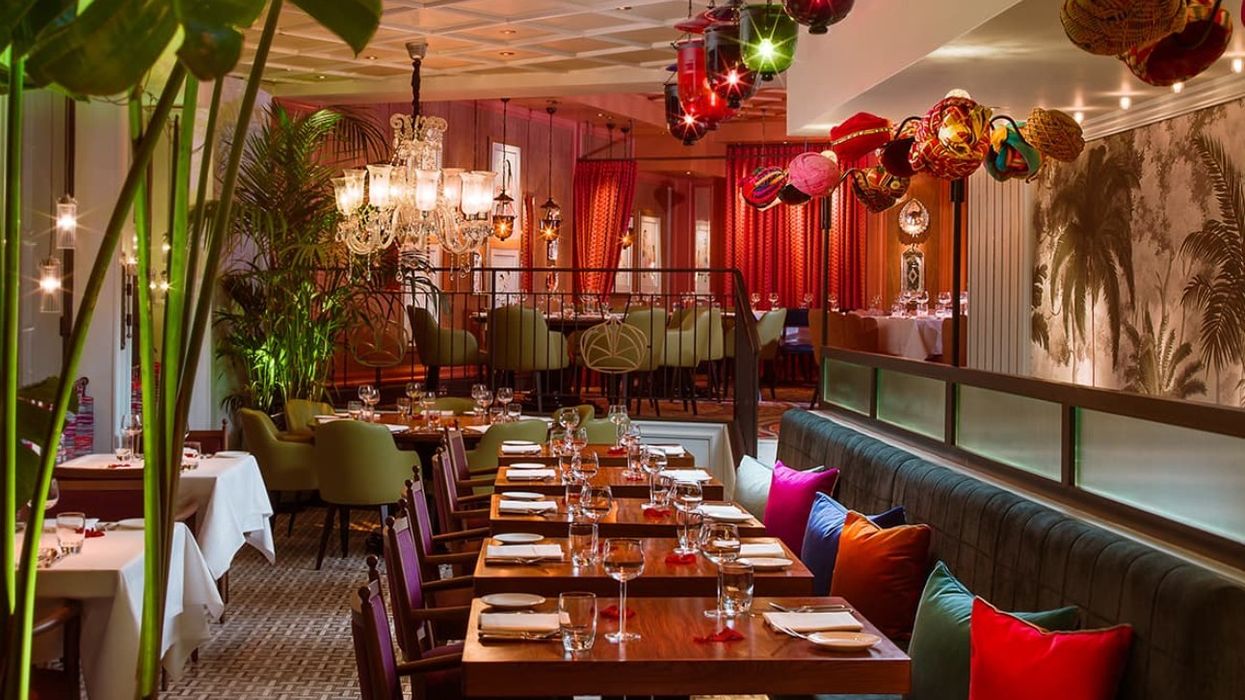
The chairman of Veeraswamy, Britain’s oldest Indian restaurant, has accused the Crown Estate of treating Indian cuisine as less important than European food as the Michelin-starred restaurant fights to remain at its historic Regent Street home.
Ranjit Mathrani, who runs Veeraswamy’s parent company MW Eat, claims the Crown Estate's decision not to renew the restaurant's lease was partly influenced by the way it viewed Indian food.
“Perhaps they didn’t actually pay much regard to Indian food being very important in their lexicon of gastronomy,” Mathrani told The Telegraph.
“French cuisine and European cuisine are somehow regarded as being at a different level from, say, Indian or Japanese or other cuisines of the world,” he said, adding: “Had it been Michel Roux or Gordon Ramsay, that would be different.”
The Crown Estate disputes that interpretation. It says it needs to comprehensively refurbish Victory House, the Grade II-listed building that houses Veeraswamy, following flood damage in 2023. Its plans include using the restaurant's space for a larger office reception, meaning Veeraswamy would not be able to return after the works.
The dispute is expected to reach court in November.
A restaurant that became part of London
Veeraswamy opened in 1926 and has spent a century at the same Regent Street location. It survived the Blitz and the Second World War and became one of London's best-known Indian restaurants.
Over the decades, it has attracted royalty, celebrities and generations of London diners. Queen Elizabeth II was among its guests, while the restaurant has also catered for occasions at Buckingham Palace.
It received a Michelin star in 2016.
The restaurant's history is now central to the dispute. Mathrani argues that removing Veeraswamy would not simply mean losing another tenant from a commercial property. It would remove an institution that has helped shape London's relationship with Indian food.
“It is the heart of London,” he said. “It gives you a great sense of history, of place.”
People have come to the restaurant for first dates, engagements, weddings and family occasions, he said, while generations of diners experienced high-end Indian food there for the first time.
The restaurant's supporters have similarly argued that its cultural importance extends beyond its commercial value. A petition supporting its future attracted more than 20,000 signatures earlier this year.
The Crown Estate, however, says its decision is about the future of Victory House rather than the cuisine served by its tenant.
“We understand how disappointing this is for MW Eat and have offered help to find new premises on our portfolio so that the restaurant can stay in the West End, as well as financial compensation,” a Crown Estate spokesman said.
The organisation said it has a statutory responsibility to manage its property to create long-term value for the UK and return its profits to the government for public spending.
It also said it had reviewed alternative proposals put forward by MW Eat but had concluded that none met its responsibilities as the steward of the listed building.
Can a 100-year-old restaurant survive a property redevelopment?
Mathrani says MW Eat has tried several ways to avoid the confrontation.
The group offered to buy Victory House outright and also proposed matching the rent the Crown Estate could receive from office tenants while taking responsibility for building works. Another proposal involved redesigning the restaurant to create a shared reception area.
According to Mathrani, those proposals were effectively rejected.
“No suitable premises have they put forward to us of any type whatsoever,” he said.
MW Eat estimates that lost rent and legal costs have already reached around £1.7m and could rise to £2.2m by the time the case is heard.
The restaurant is continuing to trade while the legal dispute plays out. Its future now rests partly on whether the court accepts that the Crown Estate's proposed redevelopment provides sufficient grounds to prevent the restaurant from remaining at the site.
For Mathrani, however, the argument is bigger than a lease.
“People have come there at different stages of their lives, often the first exposure to Indian food,” he said.
As London continues to redevelop some of its most valuable commercial spaces, the Veeraswamy dispute raises a broader question: when a business becomes part of a city's cultural history, how much weight should that history carry against the financial case for changing the building?
The answer could determine whether Veeraswamy's next chapter is written on Regent Street or somewhere else in London.
Keep ReadingShow less