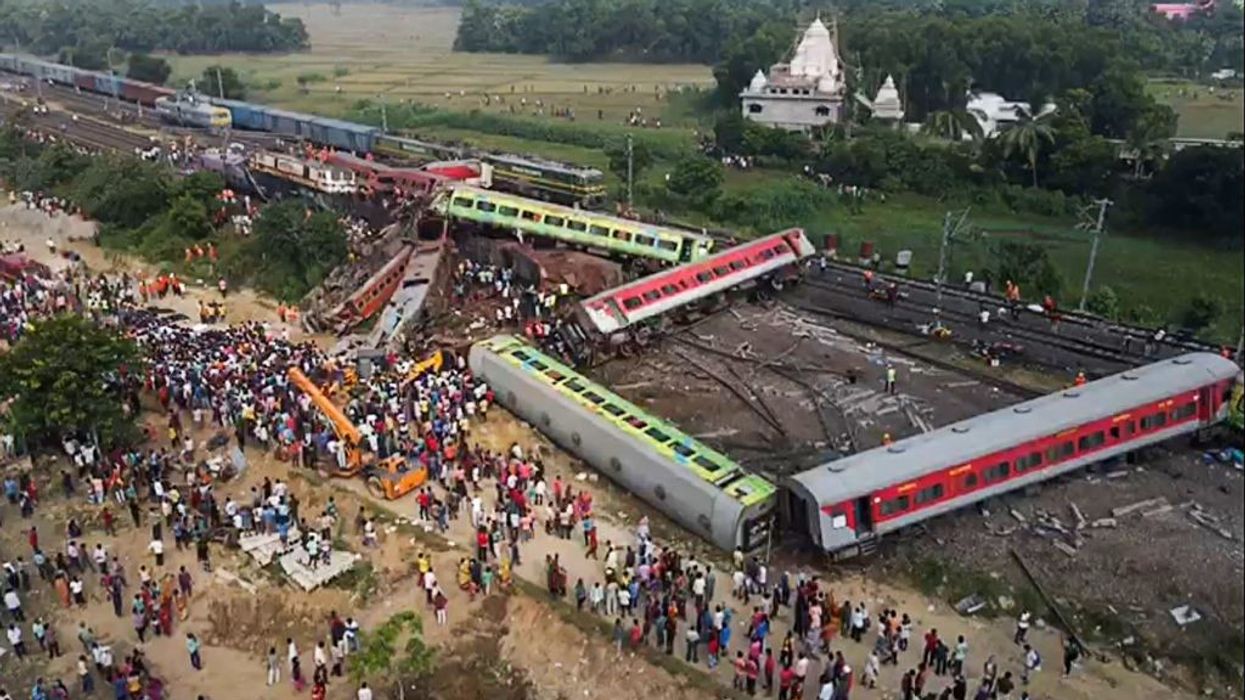

AT LEAST 250 people were killed and 900 injured when two passenger trains collided in Odisha on Friday (2). It is one of India's worst rail accidents in years.
Here are details of some of the deadliest rail accidents in India in recent decades:
June 1981: At least 800 people are killed when seven rear coaches of an overcrowded passenger train are blown off the track and fall into a river during a cyclone.
July 1988: An express train leaves the rails and plunges into a monsoon-swollen lake near Quilon in southern India, killing at least 106 people.
August 1995: At least 350 people are killed when two trains collide 200 km (125 miles) from Delhi.
August 1999: Two trains collide near Calcutta, leading to the deaths of at least 285 people.
October 2005: Several coaches of a passenger train derail in southern Andhra Pradesh state, near Velugonda. At least 77 people are killed.
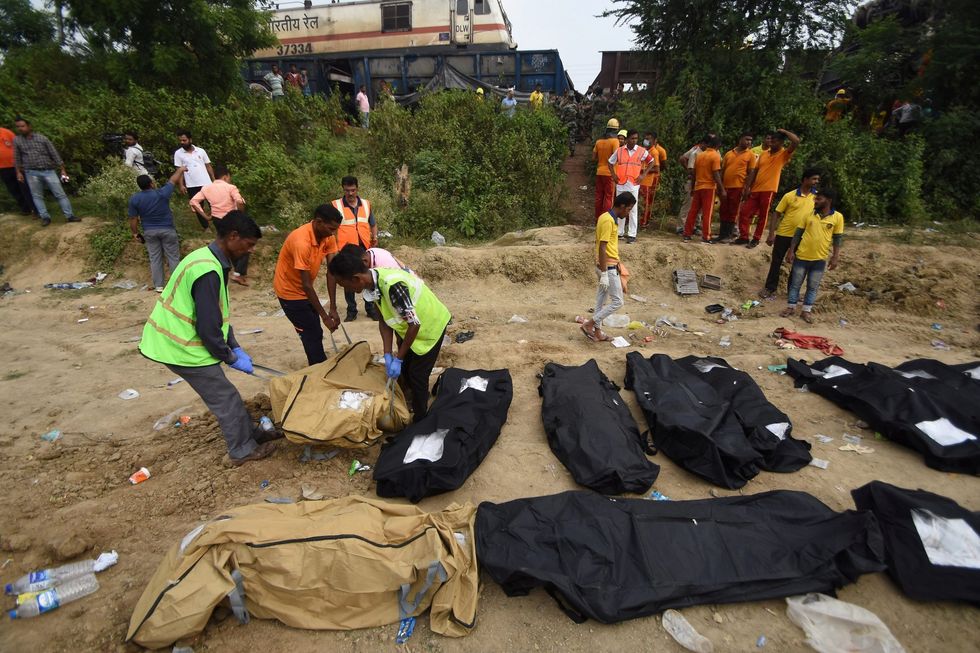 Rescue workers carry a body of a victim after a deadly collision of trains in Balasore, Odisha, India, June 3, 2023. REUTERS/Stringer
July 2011: Around 70 people are killed and over 300 injured when a mail train derails in Fatehpur.
November 2016: Some 146 people are killed and more than 200 injured when an express train derails in the northern state of Uttar Pradesh.
January 2017: At least 41 people are killed after several coaches of a passenger train go off the rails in southern Andhra Pradesh state.
October 2018: A commuter train runs through a crowd gathered on the tracks for a festival in northern India's Amritsar city, killing at least 59 people and injuring 57.
(Reuters)