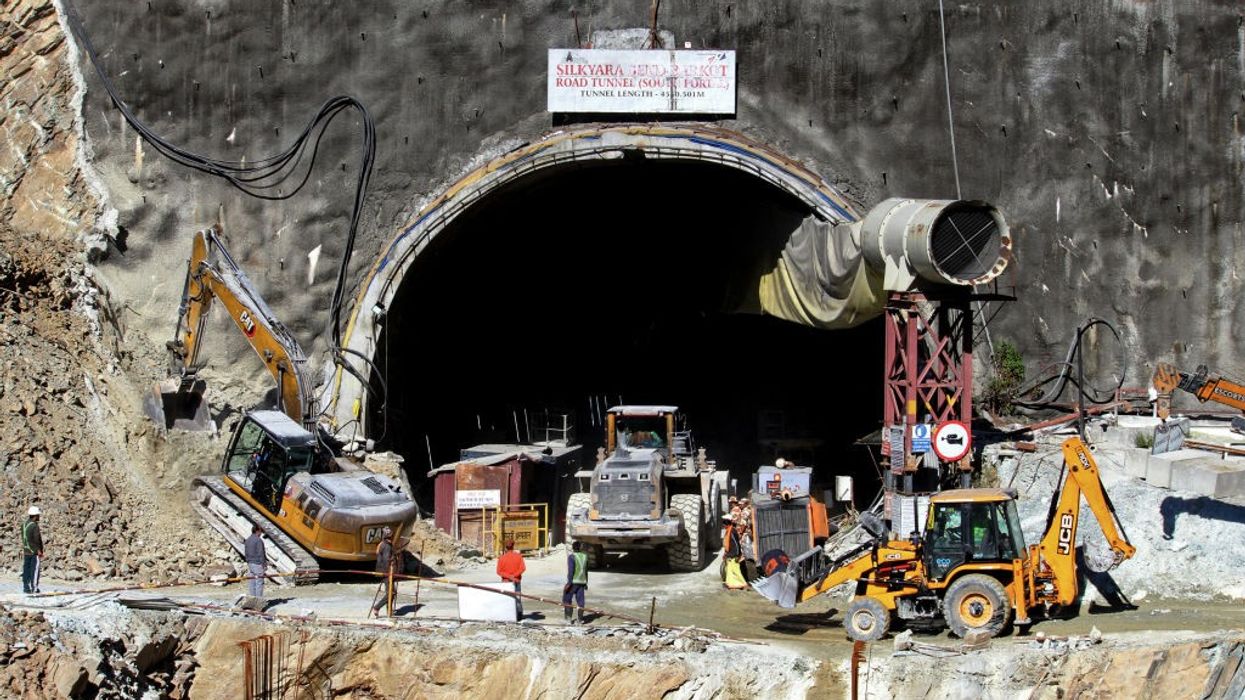
INDIAN authorities were exploring five new plans to rescue workers trapped inside a collapsed tunnel in the Indian Himalayas after a week of failed attempts.
Forty-one men, stuck in the highway tunnel in Uttarakhand state since November 12, are safe and being fed through a pipe, the authorities say. The cause of the accident has not been determined, although the hillside region is prone to landslides, earthquakes and floods.
Rescuers had been drilling horizontally through the debris toward the trapped workers in the 4.5-km (3-mile) tunnel until the auger drilling machine broke on Friday (17) and a new one was flown in.
Drilling was suspended and it would take four or five more days "to get the good news", Bhaskar Khulbe, officer on special duty for the tunnel project, said on Friday.
Now the rescue team is considering alternatives including a perpendicular tunnel with two proposed routes and insertion of a pipe six inches (15 cm) wide as a lifeline, according to a government document reviewed by Reuters.
The trapped workers have received Vitamin C and medicines including anti-depression tablets, said RCS Panwar, a health official involved in the rescue efforts.
The health department has set up a camp for health checkups near the site and kept 10 ambulances on standby.
(Reuters)
Indian officials consider five new plans to rescue men trapped in tunnel