Skip to content
Search

Latest Stories

Submit Guest Post

Indian gifts to universities

By Amit Roy

A NUMBER of universities in the UK and the US have acknowledged donations from Indians in time-honoured fashion.


At Oxford, the post of professor of vaccinology, currently held by Prof Adrian Hill, is being renamed the Lakshmi Mit­tal and Family Professorship of Vacci­nology, after receiving a £3.5-million donation from the steel tycoon.

Another man of steel, Lord Swraj Paul, last week announced a gift of $5m (£3.9m) to the Massachusetts Institute of Technology, where he and his sons, Akash and Angad, were students. In recognition of this gift, “the large hall in the Kresge Auditorium will be named as the Lord Swraj Paul PC ’52 and An­gad Paul ’92 Theatre. The hall will be more generally known as the Swraj Paul Theatre at Kresge Auditorium.”

At Christ’s College, Cambridge, where Cipla chairman Dr Yusuf Hamied, has been a generous benefactor over the years, a building currently under con­struction will include a Hamied Court.

There is nothing to stop institutions honouring black achievers, even with­out receiving donations. Many cricket lovers would be happy to see a monu­ment commemorating the “three Ws”– Sirs Frank Worrell, Clyde Walcott and Everton Weekes – either at Lord’s or the Oval. And what about a bust of the late Lord (David) Pitt in parliament?


Add EasternEye As Your Trusted Source
preferred source on google news

More For You

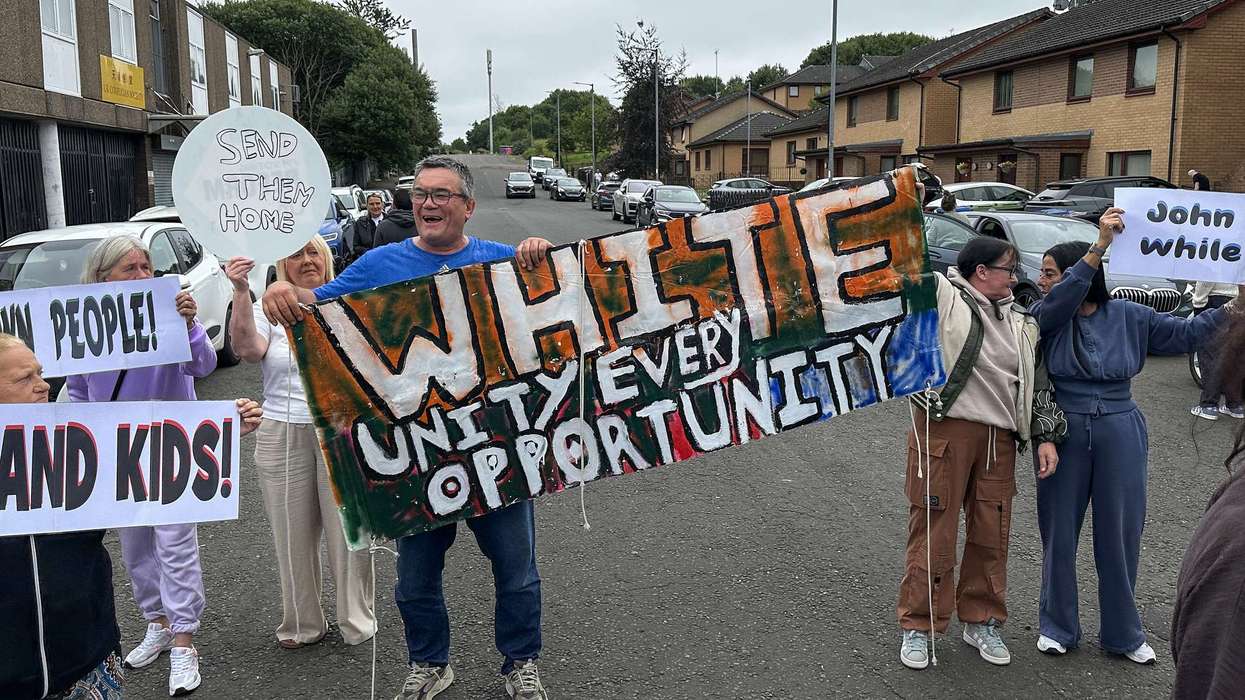
When protest becomes a pogrom: The Home Office must draw a clearer line

An anti-migrant protest in Glasgow’s Possilpark on July 11, 2026, amid rising tensions and violence over migration across parts of UK

Getty Images

When protest becomes a pogrom: The Home Office must draw a clearer line

Sunder Katwala

IT TOOK three nights of violence in Thetford, Norfolk for the police to restore order. A crowd chanted “get them out” and “deport, deport, deport” as they pelted a house with eggs and smashed the windows. Several dozen people tried to break down the door, hoping to confront the people inside, violently attacking the police who blocked them.

This violent criminality was not political protest, but an attempt at a xenophobic pogrom to drive out asylum seekers housed in the property. The police relocated them elsewhere for their own safety. That felt like ‘mission accomplished’ for the angry crowd. Online, extremists suggested other places could target asylum seekers’ homes to emulate Thetford’s success. Disorder in Belfast and Epping had seen a crime, committed by an asylum seeker, used to mobilise collective punishment against migrants and other ethnic minorities. Nobody involved in the Thetford disorder suggested those in the house targeted had caused any trouble. The mere presence of asylum seekers in the town was perceived as a threat – from “illegals” or “invaders”.

Keep ReadingShow less