INDIA will provide free Covid-19 vaccines to all adults, prime minister Narendra Modi said on Monday (7), in an effort to rein in a pandemic that has killed hundreds of thousands and led to the world's second-highest tally of infections.
Modi's announcement on national television came after weeks of criticism of a bungled vaccine rollout that has covered fewer than five per cent of India's estimated adult population of 950 million.
Health experts have warned that vaccination is the only way to protect lives from a third wave of infections after a surge in April-May overwhelmed hospitals in the big cities and in the vast hinterland.
Modi said the federal government would take over the vaccination programme from the states from June 21, reversing a policy under which states were running a part of it.
"Whether it is the poor, the lower middle class, the middle class, or the upper middle class, under the federal government programme, every one will get free vaccines," he said.
Under the earlier policy, the federal government gave free vaccines to the elderly and frontline workers, and left state governments and private hospitals to administer doses for a fee to people in the 18-45 age group.
State governments were also competing against each other to procure vaccines from local manufacturers as well as foreign firms with little luck.
India has been inoculating its people with the AstraZeneca vaccine produced locally by the Serum Institute of India and Covaxin made by local firm Bharat Biotech. It will commercially launch Russia's Sputnik V shots by mid-June.
Modi said the government would allow private hospitals to have 25 per cent of all vaccine supplies but they cannot charge more than Rs 150 ($2.06) over the cost of the dose.
The new policy should help move things faster, an expert said.
"This (centralised inoculation policy) eliminates states having to compete with one another for vaccine supplies, leaving them to concentrate on distributing them rapidly to their populations," Gautam Menon, professor of physics and biology at Ashoka University in Delhi, said.
Overnight, India reported 100,636 new infections, the lowest in the world's second-most populous nation since April 6, and well off last month's peaks of more than 400,000, allowing authorities to re-open parts of the economy.




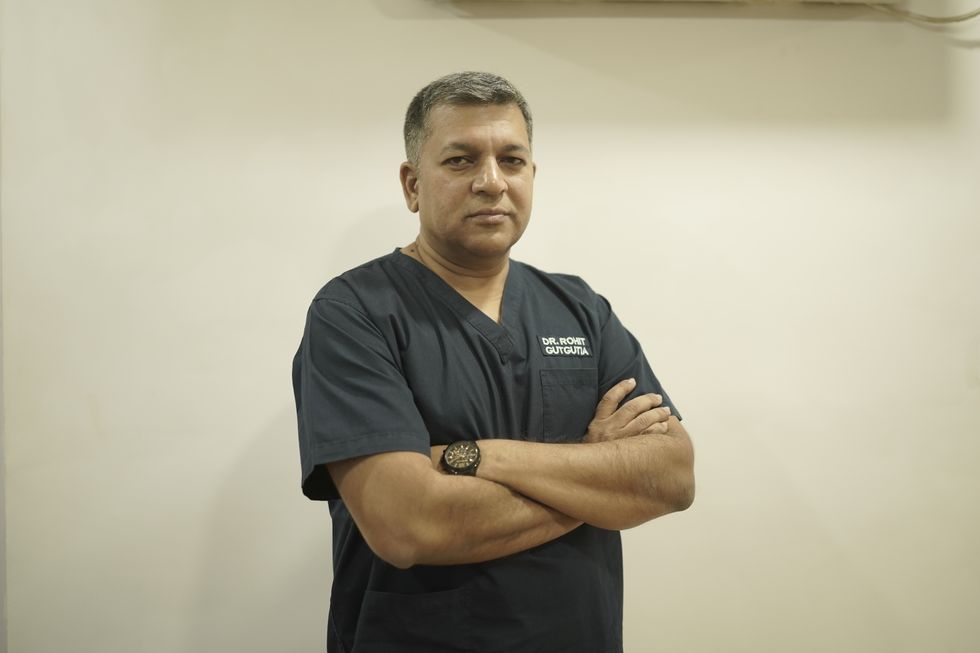 Dr Rohit Gutgutia is a fertility and IVF specialist with more than two decades of experience in reproductive medicine. He holds an MBBS and DGO in Gynaecology and Obstetrics and trained in advanced IVF in Israel in 2005.