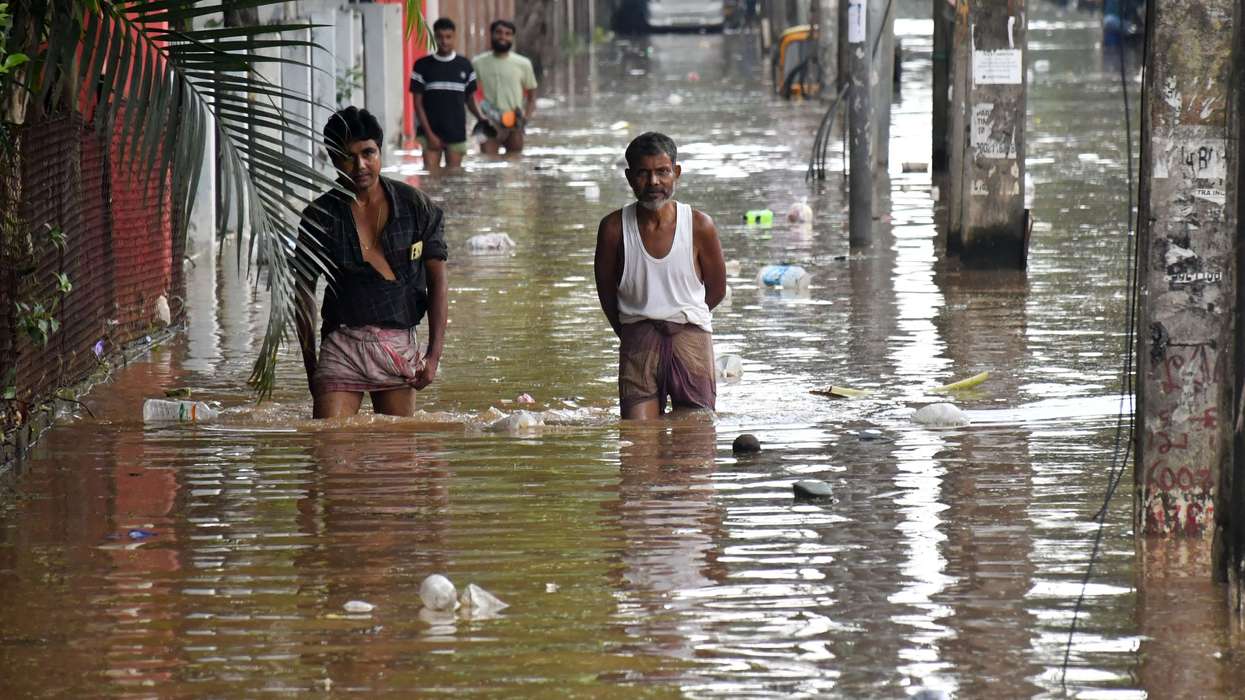

FLOODS and landslides caused by monsoon rains have killed more than 100 people across India since July, according to official data released on Wednesday. Thousands of people have also been forced to leave their homes as floodwaters inundated several areas.
The annual monsoon provides rainfall that farmers rely on, but scientists say climate change is making the weather pattern more erratic, unpredictable and deadly across South Asia.
India's northeastern state of Assam has recorded the highest number of deaths, with at least 87 people killed, according to chief minister Himanta Biswa Sarma.
The worst-hit district in the state is Sivasagar, where 47 people have died and several areas remain under water.
State authorities have appealed for financial donations from the public to support relief and rehabilitation efforts.
"The devastation here is unlike anything these areas have witnessed before," Sarma posted on X.
"Material losses can be restored, but no compensation can replace a loved one."
AFP images showed residents using rafts and inflated boats to reach higher ground with assistance from the state's disaster response officials.
In the southern state of Kerala, chief minister VD Satheesan said at least 15 people had died and another seven were missing after several days of heavy rain.
More than 300 relief camps have been set up across the state, sheltering over 10,000 people after landslides and rivers overflowing their banks forced people from their homes.
In the Himalayan territory of Jammu and Kashmir, at least 31 people have been killed in several short bursts of intense rainfall, according to a report by the public state broadcaster.
Monsoon-related disasters occur every year across India after the long summer season, when many parts of the country experience water shortages and drought.
Neighbouring Sri Lanka has also been hit by heavy monsoon rains, with flash floods and mudslides killing at least eight people since Monday, according to the Disaster Management Centre.
Around 12,000 people have been forced to leave their flooded homes in the country's central region.
At the same time, eastern parts of Sri Lanka were facing drought, with authorities transporting drinking water to residents by tanker trucks.
The government last month said the severe weather events were linked to this year's El Nino weather phenomenon, which warms surface temperatures in the central and eastern equatorial Pacific Ocean.
The government has not yet estimated the potential economic losses caused by El Nino but has set up a ministerial task force to reduce its impact.
(With inputs from agencies)