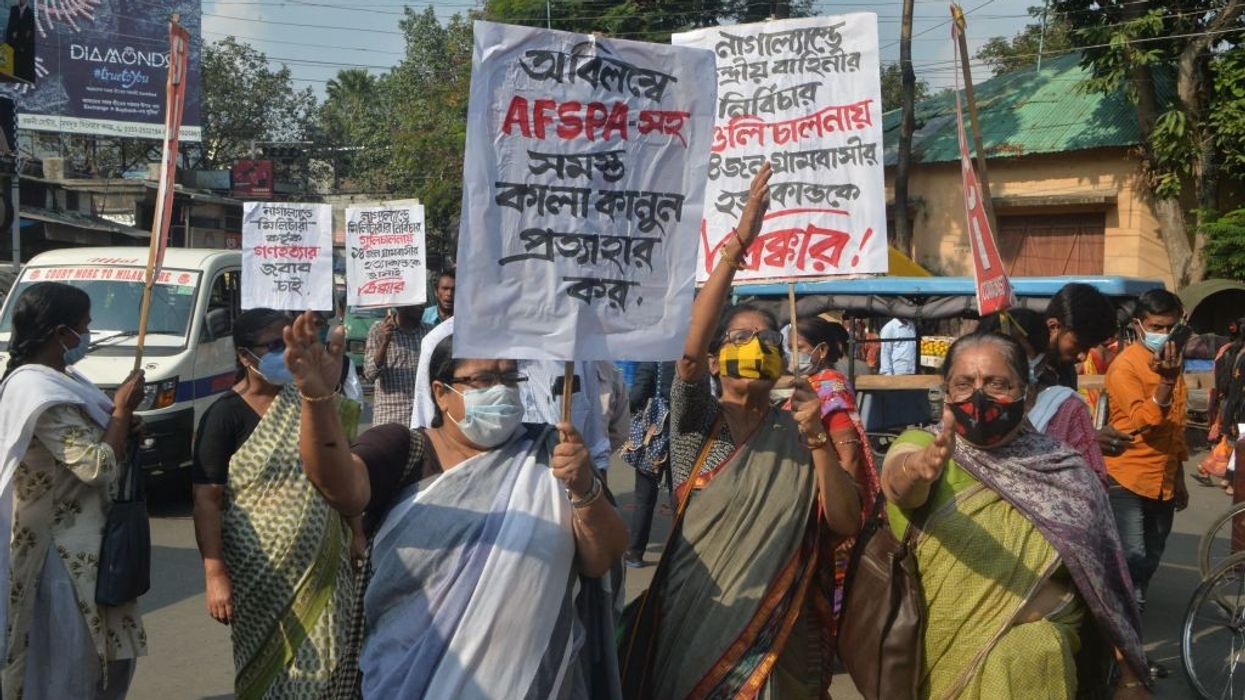

THE Indian government extended on Thursday (30) a special law giving armed forces sweeping powers in the north-eastern state of Nagaland, days after a botched army ambush killed 14 people.
The killings triggered protests against the law which gives the armed forces sweeping powers to conduct raids, warrantless searches and open fire, with broad protection from prosecution.
But the six-month extension issued by India's ministry of home affairs said the government believed the state was "in a disturbed and dangerous condition."
"The use of armed forces in aid of the civil power is necessary," the government said, justifying the extension of the Armed Forces Special Powers Act (AFSPA).
Earlier this month, the Indian army shot dead six miners returning to their homes in the state's Mon district, near the Myanmar border, believing them to be insurgents.
Another eight people were killed by the troops when they were confronted by an angry crowd. A soldier was killed and a military vehicle was set alight.
Those calling subsequently for a repeal of the AFSPA included the head of the state government, an ally of Prime Minister Narendra Modi's ruling party.
"India is the biggest democratic country in the world. This is a draconian law. So it should be removed from our country," Nagaland chief minister Neiphiu Rio told reporters after the killings.
The Indian army said in a statement Wednesday (29) that a court of inquiry set up to probe the incident was "proceeding expeditiously."
Nagaland and other states in northeast India, linked to the rest of the country by a narrow land corridor, have seen decades of unrest among ethnic and separatist groups.
While insurgent activity has declined in recent years, the AFSPA governs military deployments in the state.
(AFP)