FORMER Pakistan prime minister Imran Khan has been nominated for the Nobel Peace Prize for his work on human rights and democracy.
The nomination was announced by members of the Pakistan World Alliance (PWA), an advocacy group formed in December, who are also part of the Norwegian political party Partiet Sentrum.
"We are pleased to announce on behalf of Partiet Sentrum that, in alliance with somebody with the right to nominate, we have nominated Imran Khan, the former prime minister of Pakistan, to the Nobel Peace Prize for his work with human rights and democracy in Pakistan," the party said on X on Sunday.
In 2019, Khan was also nominated for the Nobel Peace Prize for his role in promoting peace in South Asia.
The Norwegian Nobel Committee receives hundreds of nominations each year, selecting the winner through an eight-month process, The Express Tribune reported.
Khan, founder of the opposition Pakistan Tehreek-e-Insaf (PTI) party, has been in jail since August 2023.
In January, he was sentenced to 14 years in prison in a case related to misuse of authority and corruption.
It was his fourth major conviction. Earlier cases involving selling state gifts, leaking state secrets, and unlawful marriage were overturned or suspended by courts.
Khan was removed from office through a no-confidence vote in April 2022. He denies all charges, calling them politically motivated.
(With inputs from PTI)


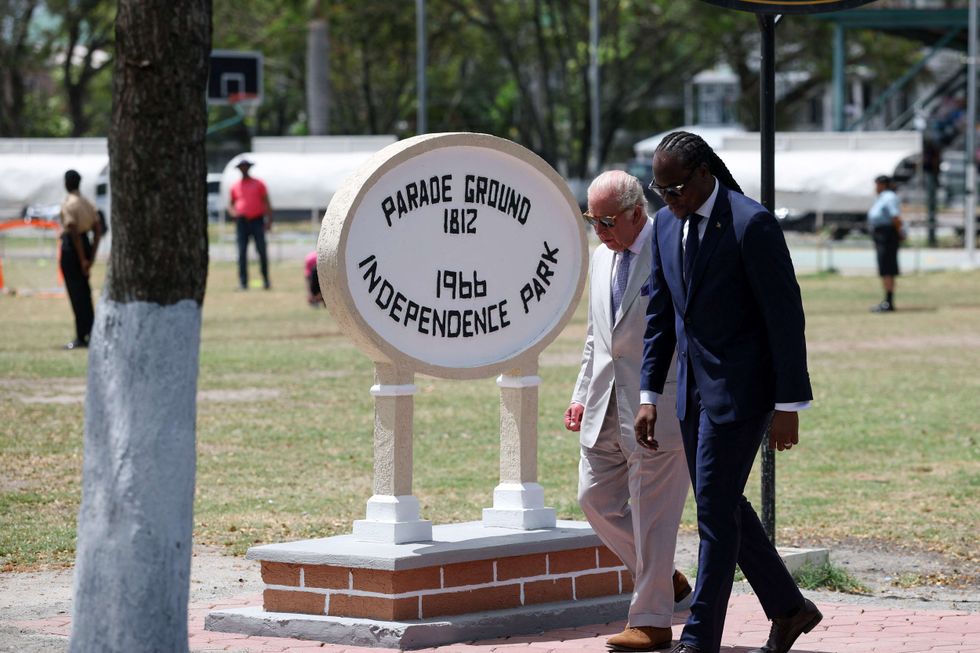 King Charles III, accompanied by Steven Jacobs, a Minister within Guyana's Ministry of Culture, Youth and Sport, visits Independence Park, which marks the site of public executions following the 1823 Demerara Slave Rebellion, during his tour of Caribbean nations on October 30, 2026 in Georgetown, Guyana. Getty Images