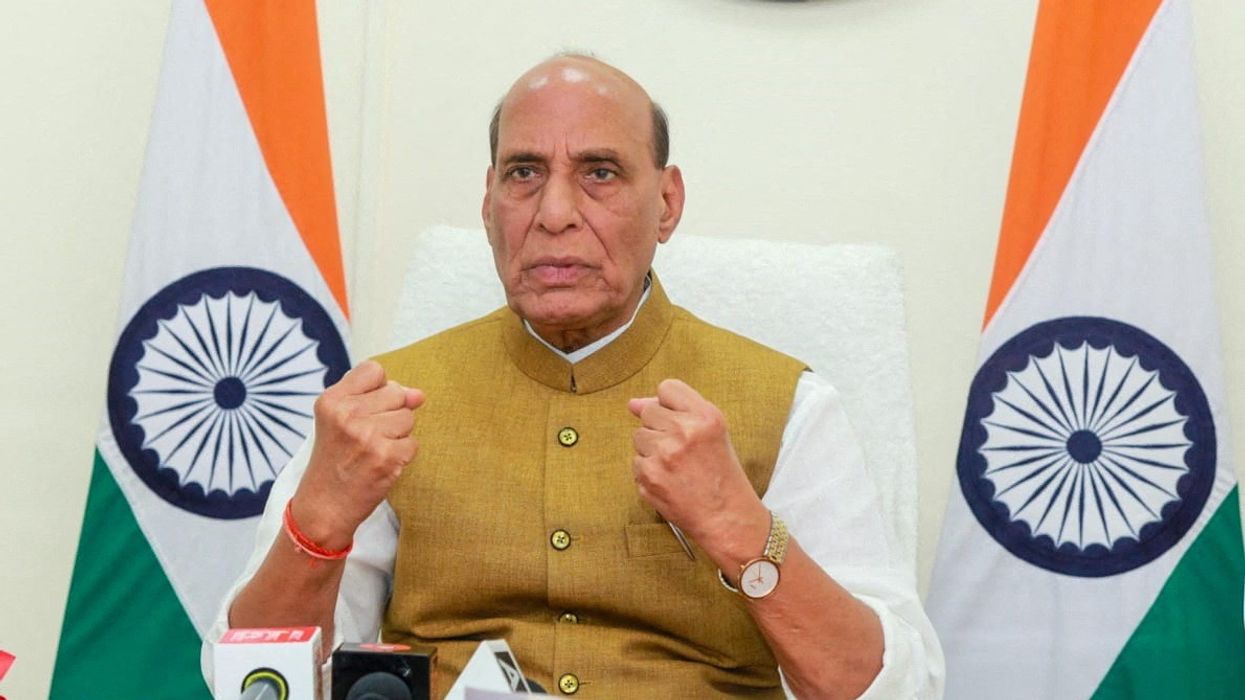

INDIA's defence minister Rajnath Singh on Friday said the International Monetary Fund (IMF) should reconsider its decision to approve a $1 billion loan to Pakistan, alleging that Islamabad was using the funds to support terrorism.
"I believe a big portion of the $1 billion coming from IMF will be used for funding terror infrastructure," Singh told troops at an air force base in western India. "I believe any economic assistance to Pakistan is nothing less than funding terror."
India and Pakistan had engaged in missile, drone and artillery strikes last week before a ceasefire began on Saturday.
The IMF last week approved a review of its loan programme for Pakistan, unlocking about $1 billion and approving a further $1.4 billion bailout. India objected to the decision but abstained from the review vote.
India, which represents Bhutan, Sri Lanka and Bangladesh on the IMF board, said in a finance ministry statement that it had "concerns over the efficacy of IMF programmes in case of Pakistan given its poor track record".
Pakistan was on the verge of default in 2023 amid a political crisis and economic downturn. The IMF extended a $7 billion bailout to Pakistan last year, its 24th such assistance since 1958.
Singh said, "It is now clear that in Pakistan terrorism and their government are hand in glove with each other.
"In this situation there is a possibility that their nuclear weapons could get their way into the hands of terrorists. This is a danger not just for Pakistan but the entire world."
The recent fighting between India and Pakistan began on May 7, when India launched strikes on what it called "terrorist camps" in Pakistan. The strikes followed an April attack in Indian-administered Kashmir that killed 26 people.
India blamed Pakistan for supporting the terrorists it said were responsible for the attack. Pakistan has denied the charge.
The four-day exchange of missiles, drones and artillery killed around 70 people on both sides, including dozens of civilians.
(With inputs from agencies)


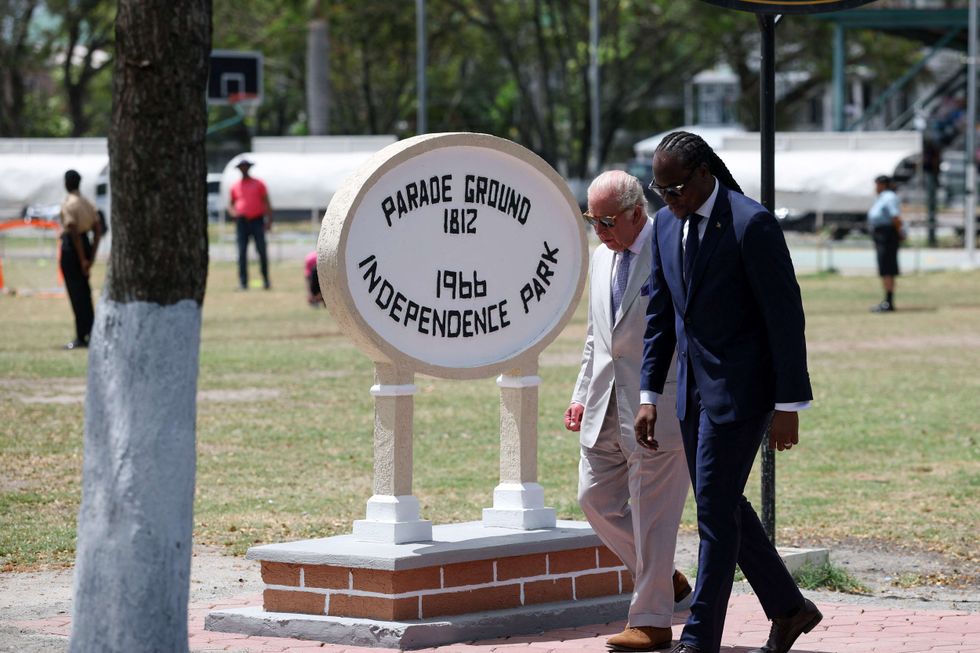 King Charles III, accompanied by Steven Jacobs, a Minister within Guyana's Ministry of Culture, Youth and Sport, visits Independence Park, which marks the site of public executions following the 1823 Demerara Slave Rebellion, during his tour of Caribbean nations on October 30, 2026 in Georgetown, Guyana. Getty Images