
If you are someone who suffers from high blood pressure then try listening to classical music after taking your medicine. A new study shows that that music improves the effect of anti-hypertensive drugs.
"We observed that music improved heart rate and enhanced the effect of anti-hypertensives for about an hour after they were administered," said study coordinator Vitor Engracia Valenti, Professor at Sao Paulo State University (UNESP) in Brazil.
For the study, which was published in the journal Scientific Reports, researchers performed an experiment to analyse the effects of music associated with anti-hypertensive medication on heart rate and blood pressure.
On one day, patients were made to listen to instrumental music via earphones for an hour after they were given oral anti-hypertensive medication. Another day, the earphones were not turned on. The heart rate variability of the participants were measured at rest and at 20, 40 and 60 minutes after oral medication.
"We found that the effect of anti-hypertension medication on heart rate was enhanced by listening to music," Valenti said.
A similar study was conducted in 2008, where it was revealed that people with mild hypertension (high blood pressure) who listened to classical, Celtic or Indian (raga) music for just 30 minutes a day for one month had reductions in their blood pressure.
“Listening to music is soothing and has often been associated with controlling patient-reported pain or anxiety and acutely reducing blood pressure,” study investigator Dr. Pietro A. Modesti, of the University of Florence in Italy, said. “But for the first time, today’s results clearly illustrate the impact daily music listening has on ambulatory blood pressure.”
At the time, Modesti predicted that the number of people with hypertension was set to increase despite measures taken by various governments to prevent the incidence of the disease.
“Sadly, despite the global focus on prevention, it is predicted that 56 billion people worldwide will be hypertensive by 2025,” Modesti added. “In light of these devastating statistics, it is reassuring to consider that something as simple, easy and enjoyable as daily music listening combined with slow abdominal breathing, may help people naturally lower their blood pressure.”



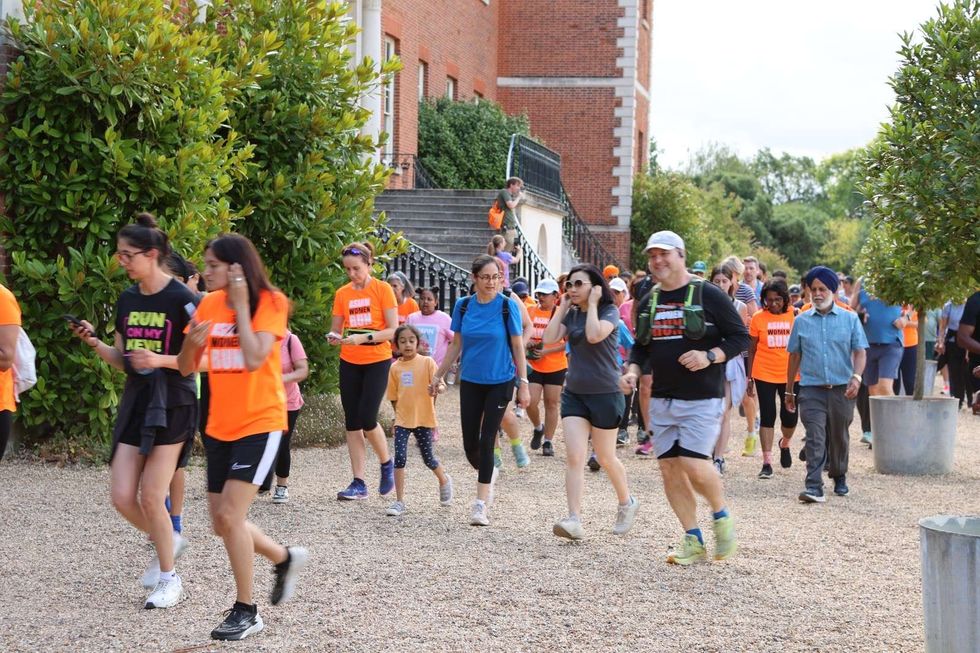 Participants set off on the 5K and 10K routesMinreet Kaur