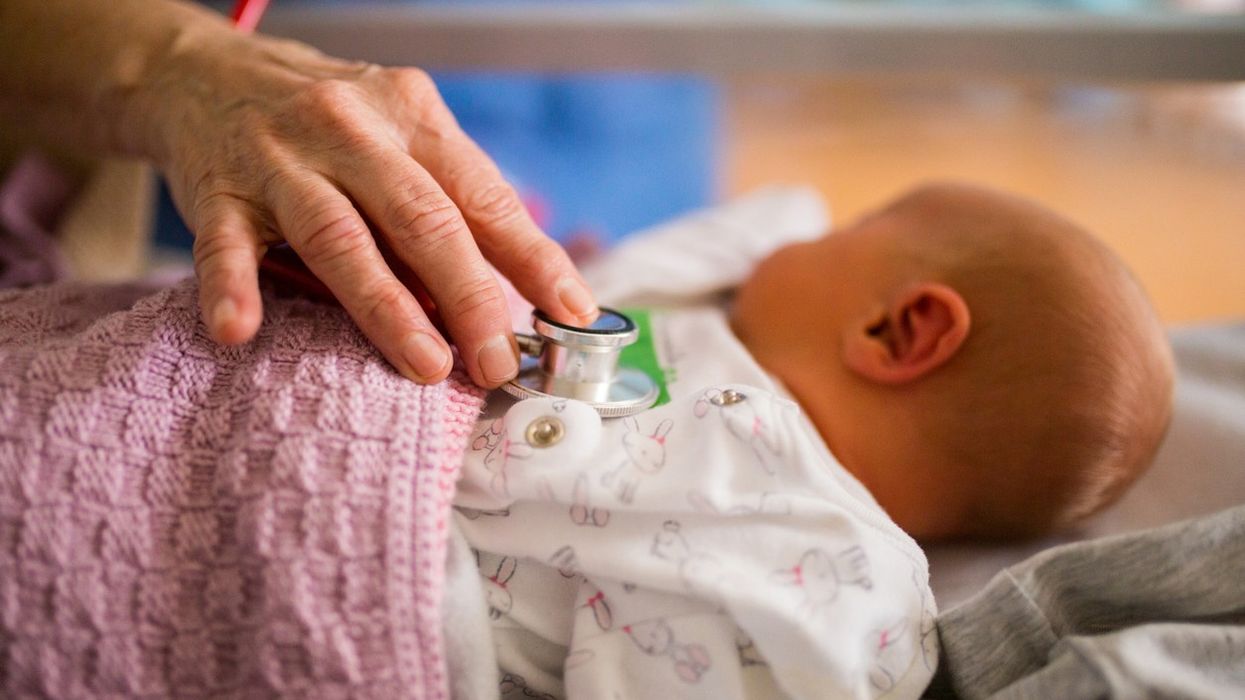

HEALTH SECRETARY Wes Streeting has ordered an immediate nationwide probe into England's maternity services following a string of NHS scandals that have cost the lives of hundreds of mothers and babies.
The fast-track investigation will focus on the country's poorest-performing maternity and baby care units, with findings expected by December 2025, the BBC reported.
Streeting on Monday (23) issued an apology to families who have suffered preventable harm and said urgent action was needed.
"We must act - and we must act now," he declared, after meeting parents who lost children in various NHS maternity disasters.
The health secretary promised the inquiry would "make sure these families get the truth and the accountability they deserve" and ensure "no parent or baby is ever let down again".
The investigation comes amid alarming statistics showing maternal death rates have worsened dramatically. Government data revealed that between 2009 and 2022, maternal mortality increased by 27 per cent, and even after accounting for Covid deaths, there was still a 10 per cent rise.
Official figures exposed stark racial inequalities, with black women nearly three times more likely to die during childbirth compared to white women, while Asian mothers face double the risk. Despite a 2017 government pledge to cut maternal deaths by half between 2010 and 2025, the opposite has happened.
The probe will be split into two sections. The first will examine up to 10 of the most troubling maternity and newborn units to provide answers to affected families as quickly as possible.
University Hospitals Sussex and Leeds Teaching Hospitals have already been confirmed for investigation, though it remains unclear whether these will be part of the 10 units or separate cases.
The second phase will take a broader view of the entire maternity system, combining lessons from previous investigations to create national improvements across all NHS maternity services.
At Morecambe Bay between 2004 and 2013, mothers and babies died unnecessarily due to what investigators called a "dysfunctional culture" with poor clinical skills and failure to learn from mistakes. The Shrewsbury and Telford scandal saw more than 200 mothers and babies who could have survived with better care, according to a 2022 investigation.
In another case, at least 45 babies might have lived if given proper treatment at East Kent, a review found in October 2022.
Meanwhile, an ongoing review at Nottingham examining around 2,500 cases is set to be the largest maternity scandal investigation yet.
Adding to concerns, inspectors found that not a single one of 131 maternity units checked in 2024 received the highest safety rating.
Dr Clea Harmer from baby loss charity Sands called the national investigation "much-needed and long-overdue", stressing the need for "lasting systemic change".
Rhiannon Davies, who lost her daughter Kate at Shrewsbury and Telford NHS Trust in 2009, welcomed the inquiry but argued it should cover the entire UK, not just England.
Anne Kavanagh from Irwin Mitchell solicitors, representing many affected families, said the scandals "all pointed to deep-rooted problems nationally" and stressed the need for decisive action.
She warned that "sadly many recommendations from previous reports and investigations had not been fully implemented, missing crucial opportunities to improve patient safety and learn from mistakes".
The government has also announced plans for an anti-discrimination programme aimed at addressing the unequal treatment of black, Asian and other underserved communities in maternity care.
Streeting acknowledged that while most births are safe and the majority of NHS staff want the best outcomes, "it's clear something is going wrong".
"What they have experienced is devastating – deeply painful stories of trauma, loss, and a lack of basic compassion – caused by failures in NHS maternity care that should never have happened," he said of the bereaved families.
The investigation will begin this summer, with affected families given a voice in how the inquiry is conducted.





 Curator Emma Slocombe with ikat robes and arabachi coats in the Peter the Great Room in Blickling Hall Amit Roy
 View of the entrance to Blickling Hall on a rainy autumn dayAmit Roy
 Kente cloth from Ghana in the Long Gallery in Blickling Hall
 Decoration in the Great Hall at Blickling Hall Amit Roy
 Palampore fragment made in coastal south-east India in the Brown Room in Blickling Hall Amit Roy
 Bed valance dating from early 1700s in the Italian Print Room at Blickling Hall Amit Roy
 Indian inspired fabric draped on sofas in the South Drawing Room in Blickling Hall Amit Roy
 Indian inspired fabric draped on sofas in the South Drawing Room with Indian carpet in Blickling Hall Amit Roy
 Karun Thakar has picked out the geometric patterns in the bookcase and the Kente cloth in the Long Gallery in Blickling Hall Amit Roy
 Large tapestry depicting Peter the Great defeating the Swedish army at the Battle of Poltava in 1709 Amit Roy
 ikat robes and arabachi coats in the Peter the Great Room in Blickling Hall Amit Roy
 Baghs and kanthas made by women provide contrast to the men only portraits in the Great Hall at Blickling Hall Amit Roy
 Baghs and kanthas in the entrance Great Hall at Blickling Hall Amit Roy
 Baghs and Kanthas in the Great Hall in harmony with stained glass window at Blickling Hall Amit Roy
 Kimonos reflect Japanese influence in Upper Ante Room in Blickling Hall Amit Roy
 Kimono in Upper Ante Room in Blickling Hall
 A view of the Palace and fort at Agra shows romantic side of India Amit Roy
 Blickling Hall Amit Roy
 Table carpet, European 1670-1680 Amit Roy
 Unfinished 17th century Italian embroidery in the Print Room at Blickling Hall Amit Roy
 Picture of Kashmir shows a romantic view of India Amit Roy
 A panel of Ashburnham bed hangings made in Gujarat for sale in Europe in the Brown Room in Blickling Hall Amit Roy
 Colcha made in the 1600s by women in Bengal for the Portuguese market in the Long Gallery at Blickling Hall Amit Roy