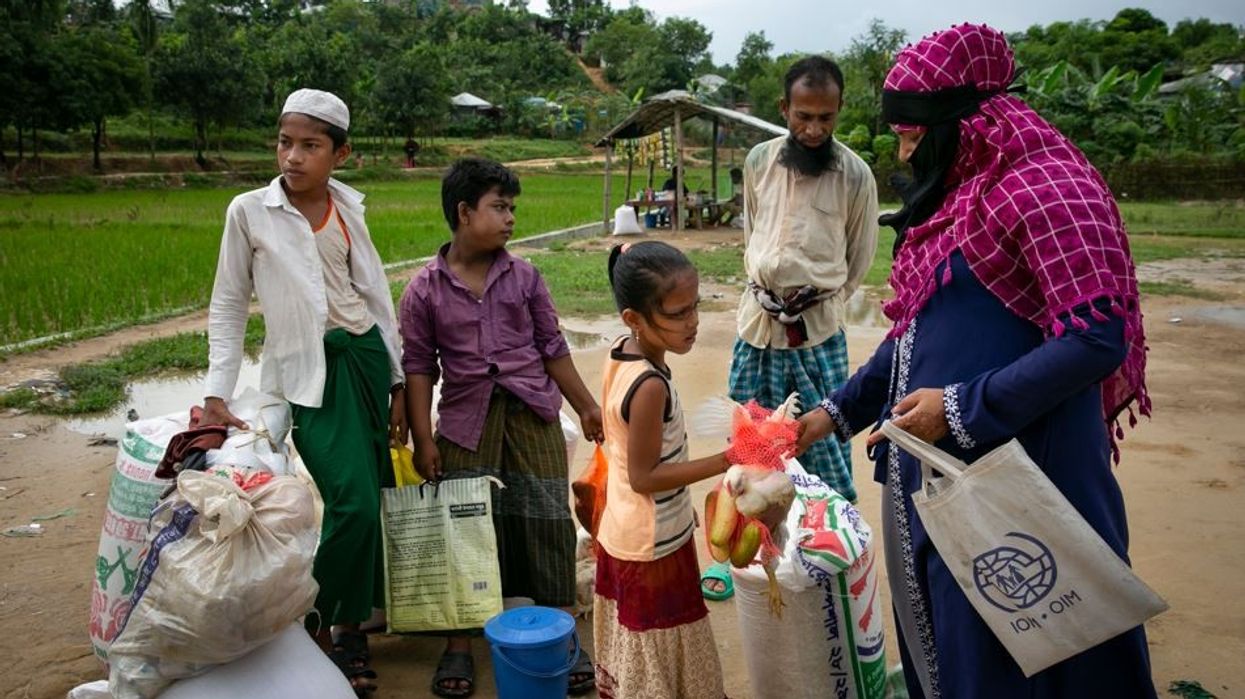

The United Nations food agency said on Monday (22) that lack of funding has forced it to cut food aid for around one million Rohingya refugees living in camps in Bangladesh for the second time in three months.
Rations would be cut from $10 (£8.05) per person per month to $8 (£6.44) from June 1, World Food Programme spokesperson Kun Li said in an email.
The full ration of $12 (£9.66) had already been cut in March.
“The reasons for the ration cuts are lack of funding. We need urgently $56 million (£45.1m) to restore the full ration ($12),” Kun Li said. There was no immediate reaction from Bangladeshi authorities.
Aid groups said the cut in March caused hardship in the overcrowded camps, where malnutrition was already rampant.
Khin Maung, who heads the Rohingya Youth Association inside the camps, said the new food cut decision came as a surprise to the refugees and that it would lead to hunger. “It’s a shameful action by the United Nations,” he said.
“I think it is political. Some people have said it is a ploy to send Rohingyas back to Myanmar,” said Maung.
Aid workers said the move could worsen security in the camps, which last year saw scores of deadly drug-related clashes between Rohingya criminal groups.
UN and foreign diplomats have urged the Bangladeshi government to drop a ban preventing Rohingya working outside the camps in the surrounding Cox’s Bazar region.
Experts have warned, however, that this could stoke resentment among the local population and could further discourage the Rohingya from returning to Myanmar.
After several failed repatriation attempts, Myanmar has launched a pilot project to resettle around 1,100 Rohingya to a border township.