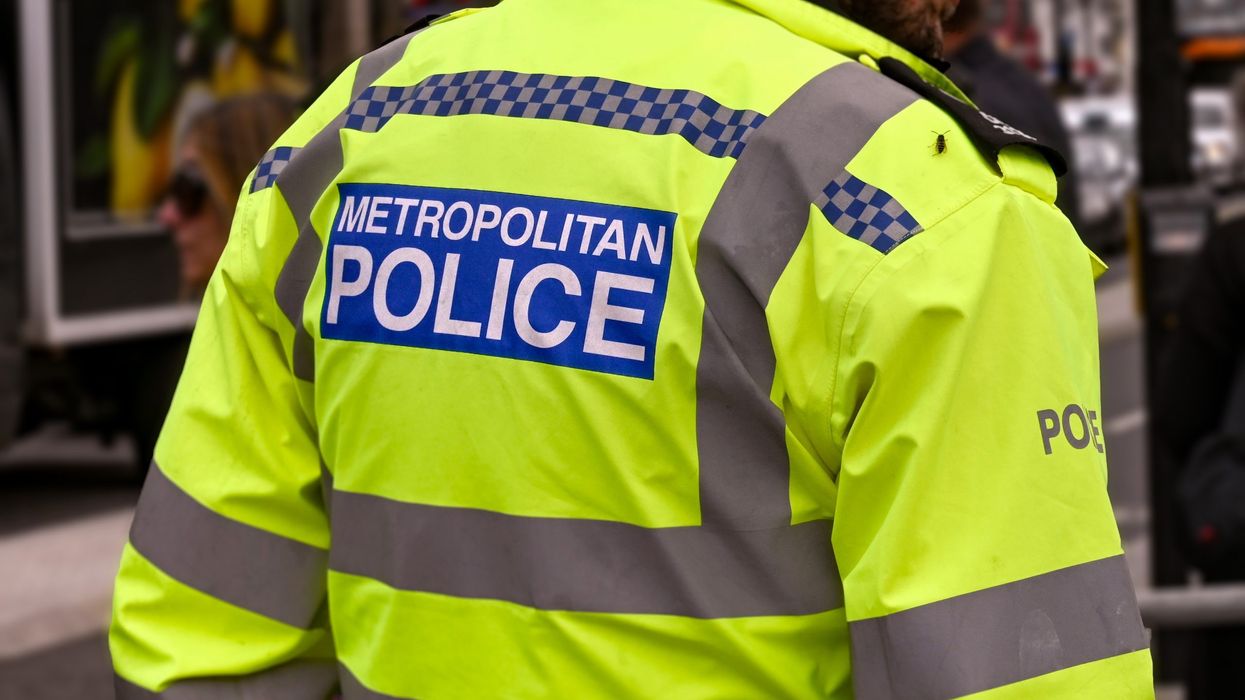

A FORMER officer of Metropolitan Police has accused the department of targeting her for being a whistleblower on alleged racism. According to her, it happened after she faced the threat of legal action over a memoir she penned detailing her sour experience in service. However, despite the legal and other hardships, she said she had no regret over writing the book.
Parm Sandhu, one of the UK's most known female Asian police officers, has been compelled to start giving back half of the money she got in a settlement from the Met after the latter threatened to sue her otherwise, The Times reported. She had received £120,000.
It was alleged that Sandhu broke an agreement not to make "disparaging" or "derogatory" remarks about the force or its former commissioner Dame Cressida Dick.
They entered the deal in 2020 when the former police officer's claim of discrimination was settled before an employment tribunal.
In 2021, Sandhu's book 'Black and Blue' claimed that for three decades, she had experienced 'regular episodes' of discrimination in a body she called "institutionally racist". According to her, the incidents included "commonplace" low-level sexual and racial abuse and efforts to hinder promotion.
The Times report said Sandhu consented to return half of the money so that the Met did not apply for a last-minute court injunction to stop her book from getting published. She had agreed to return £60,000 to the department. But it emerged in 2022 that Sandhu refused to give the money following which the Met launched legal action.
Sandhu consequently started paying in instalments after facing the challenge of going through expensive court proceedings. The award-winning former officer said she had been victimised for being a whistleblower.
“I lost 60k for the privilege of speaking out. And if I could get it back, I would. But I don’t regret writing the book," she was quoted as saying by The Times.
According to Sandhu's lawyer Lawrence Davies, it should not be legal to put into tribunal settlements confidentiality clauses or non-disclosure agreements.
“The public has a right to know about racism and sexism in the Met Police,” he told The Times.
“An agreement was reached with Ms Sandhu to settle an employment tribunal claim. To be clear, the Met has made no admissions of liability in respect of the allegations made. The agreement was signed voluntarily by Ms Sandhu and part of that agreement was a clause against publication of derogatory statements," Scotland Yard was quoted as saying by the news outlet.
“Settlements are only reached when both parties agree and have opportunity to obtain independent legal advice on the terms. In those circumstances where a confidentiality clause is included within a settlement, this is a decision that will have been reached following agreement between both parties. We keep the use of such clauses under review.
“Due to a subsequent breach of that clause, the Met took steps to recover funds owed to them, via a civil claim. That claim has since been settled.”






 Curator Emma Slocombe with ikat robes and arabachi coats in the Peter the Great Room in Blickling Hall Amit Roy
 View of the entrance to Blickling Hall on a rainy autumn dayAmit Roy
 Kente cloth from Ghana in the Long Gallery in Blickling Hall
 Decoration in the Great Hall at Blickling Hall Amit Roy
 Palampore fragment made in coastal south-east India in the Brown Room in Blickling Hall Amit Roy
 Bed valance dating from early 1700s in the Italian Print Room at Blickling Hall Amit Roy
 Indian inspired fabric draped on sofas in the South Drawing Room in Blickling Hall Amit Roy
 Indian inspired fabric draped on sofas in the South Drawing Room with Indian carpet in Blickling Hall Amit Roy
 Karun Thakar has picked out the geometric patterns in the bookcase and the Kente cloth in the Long Gallery in Blickling Hall Amit Roy
 Large tapestry depicting Peter the Great defeating the Swedish army at the Battle of Poltava in 1709 Amit Roy
 ikat robes and arabachi coats in the Peter the Great Room in Blickling Hall Amit Roy
 Baghs and kanthas made by women provide contrast to the men only portraits in the Great Hall at Blickling Hall Amit Roy
 Baghs and kanthas in the entrance Great Hall at Blickling Hall Amit Roy
 Baghs and Kanthas in the Great Hall in harmony with stained glass window at Blickling Hall Amit Roy
 Kimonos reflect Japanese influence in Upper Ante Room in Blickling Hall Amit Roy
 Kimono in Upper Ante Room in Blickling Hall
 A view of the Palace and fort at Agra shows romantic side of India Amit Roy
 Blickling Hall Amit Roy
 Table carpet, European 1670-1680 Amit Roy
 Unfinished 17th century Italian embroidery in the Print Room at Blickling Hall Amit Roy
 Picture of Kashmir shows a romantic view of India Amit Roy
 A panel of Ashburnham bed hangings made in Gujarat for sale in Europe in the Brown Room in Blickling Hall Amit Roy
 Colcha made in the 1600s by women in Bengal for the Portuguese market in the Long Gallery at Blickling Hall Amit Roy




