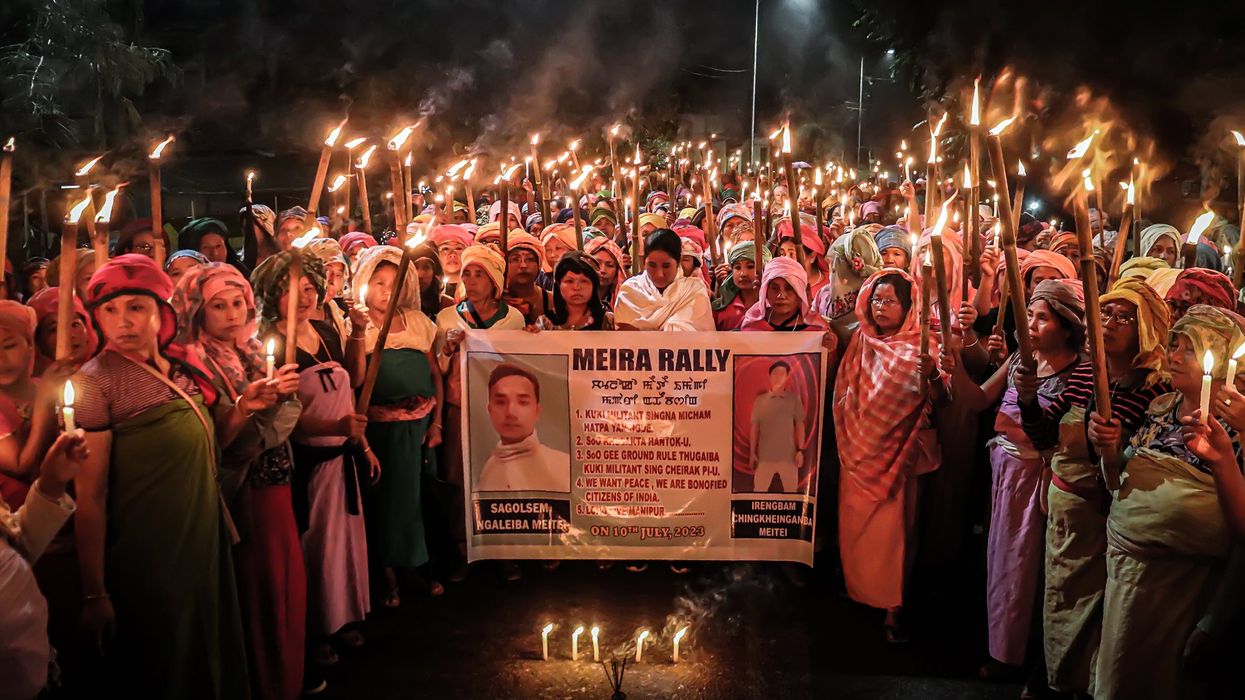

THE European Parliament adopted a resolution on the human rights situation in India, with particular reference to the recent clashes in Manipur, a move rejected by India as "unacceptable" and a reflection of "colonial mindset".
The Parliament in Strasbourg, France, on Thursday (13) called on Indian authorities to put in place measures to halt the ethnic and religious violence and to "protect all religious minorities".
Responding to media queries on the development, ministry of external affairs Spokesperson Arindam Bagchi said that "such interference in India's internal affairs is unacceptable, and reflects a colonial mindset".
"We have seen that the European parliament held a discussion on developments in Manipur and adopted a so-called Urgency resolution," he said.
He added that the Indian authorities at all levels, including the judiciary, are seized of the situation in Manipur and are taking steps to maintain peace and harmony and law and order.
"The European Parliament would be well advised to utilise its time more productively on its internal issues," he added.
Foreign secretary Vinay Kwatra said that the EU parliamentarians concerned are being reached out and it has been made clear to them that it is a matter "absolutely" internal to India.
Manipur has been witnessing violent clashes, especially between Kuki and Meitei communities for close to two months.
The resolution entitled 'India, the situation in Manipur' was initiated by Pierre Larrouturou, Member of the European Parliament (MEP) from the Group of the Progressive Alliance of Socialists and Democrats.
"...Parliament strongly urges the Indian authorities to put in place all necessary measures to promptly halt the ethnic and religious violence and to protect all religious minorities,” reads a press statement from the Parliament on the passed resolution.
The MEPs called on the Indian authorities to allow "independent investigations" to look into the violence and urged all conflicting sides to cease making “inflammatory statements, re-establish trust and play an impartial role to mediate the tensions”.
"Parliament reiterates its call for human rights to be integrated into all areas of the EU-India partnership, including in trade," the press statement said.
"MEPs also advocate for the EU-India Human Rights Dialogue to be reinforced and encourage the EU and its member states to systematically and publicly raise human rights concerns, notably on freedom of expression, religion and the shrinking space for civil society, with the Indian side at the highest level," it added.
The resolution comes as prime minister Narendra Modi began a two-day visit to France on the invitation of president Emmanuel Macron as the guest of honour at the country's Bastille Day Parade.
(PTI)