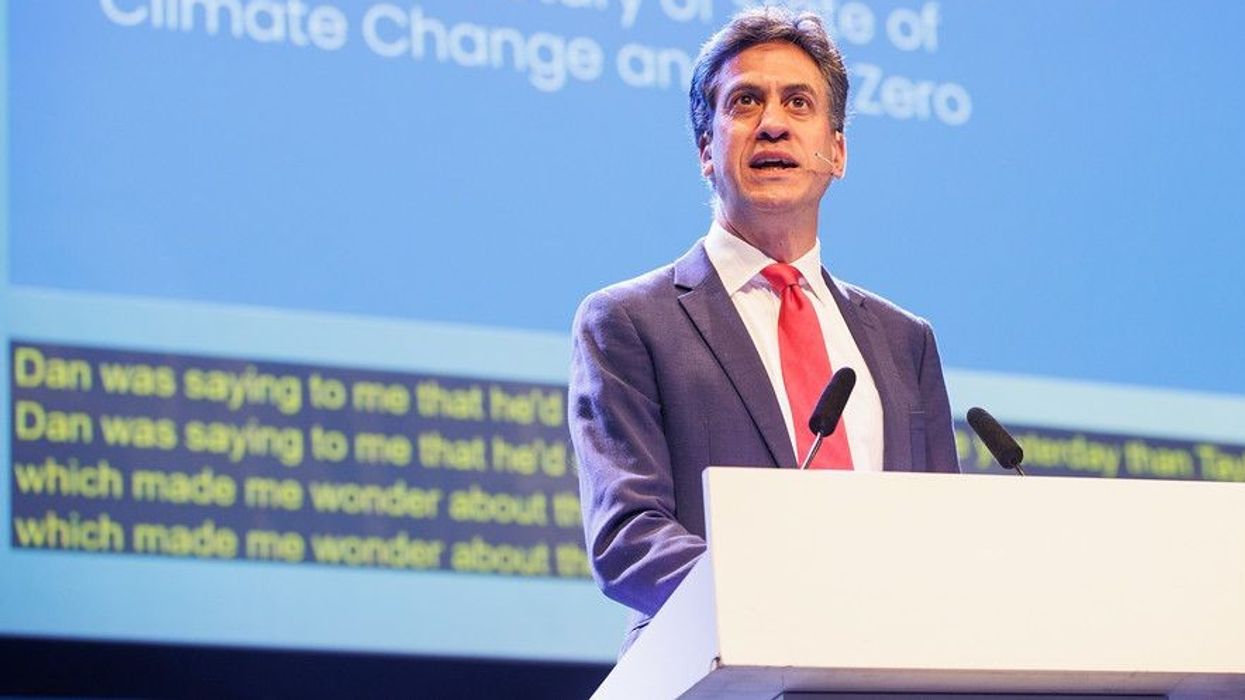

SECRETARY of state for energy security and net zero, Ed Miliband, arrived in New Delhi on Monday (10) for the fourth UK-India Energy Dialogue and to promote UK business interests at the India Energy Week global exhibition.
The Department for Energy Security and Net Zero (DESNZ) said the aim of the visit is to unlock economic growth from clean energy transition, support new jobs, create export opportunities and tackle the climate crisis in partnership with India.
Miliband will take part in the fourth UK-India Energy Dialogue with his Indian counterpart, minister of power, Manohar Lal Khattar, and also hold talks with G20 Sherpa, Amitabh Kant.
“The UK and India are strengthening our partnership under our Plan for Change to unlock investment and accelerate the global transition to clean, secure, affordable energy,” said Miliband.
“Both our countries are determined to address the climate emergency to protect our way of life while reaping the rewards of the industrial and economic opportunity of our time. This week I will back UK business at India Energy Week, fighting for climate security, good clean energy jobs, export opportunities and growth for Britain,” he said.
The visit comes ahead of the expected re-launch of Free Trade Agreement (FTA) and Bilateral Investment Treaty negotiations during business and trade secretary Jonathan Reynolds’ India visit towards the end of the month.
Britain believes an India-UK FTA would not only increase economic growth across both countries, but also facilitate the trade of renewable technologies and sustainable materials in support of the Labour government’s mission to become a “clean energy superpower”.
Miliband’s Delhi visit this week is aimed at increasing UK clean energy investment opportunities and placing British businesses at the forefront of the global race for renewables.
“As one of the world’s biggest emitters, working with India on clean energy and climate is crucial to protecting British families and businesses from the threat of climate change. Increasing investment in renewables and clean technology supports the government’s mission to become a clean energy superpower, protecting households from unstable fossil fuel markets and helping keep bills down for good,” DESNZ said in a statement.
At the bilateral energy dialogue, both countries are expected to agree on a UK-India Offshore Wind Taskforce, with a focus on offshore wind supply chains and financing models.
The UK also hopes to finalise funding for reform in India’s power sector to support decarbonisation through UKPACT, which aims to deliver grid transformation as part of India’s renewables rollout. Both sides are also expected to agree on an extension of the bilateral Accelerating Smart Power and Renewable Energy in India (ASPIRE) programme, which will work to deliver round-the-clock power supply, accelerate industrial decarbonisation and roll out renewables.
According to DESNZ, this builds on the UK and India’s collaboration to tackle climate change through innovation that was agreed upon as part of the Technology Security Initiative by Foreign Secretary David Lammy during his India visit in July 2024.
Using AI to increase resilience, bringing together experts to safeguard the critical minerals needed for renewable technologies like wind turbines and batteries are some of the aims.
This engagement with India comes ahead of the COP30 climate conference, due to take place in Brazil later this year, where both countries will be pushing for ambitious outcomes to address the climate emergency, DESNZ said.
While in India until Wednesday, Miliband was due to meet UK companies using their expertise to "speed up" India’s transition from fossil fuels to clean power, including offshore wind, solar, battery storage and hydrogen.
He was scheduled to meet a number of UK companies who are using the UK’s "world-leading technology" to speed up the global clean energy transition, create job opportunities and protect the climate.
These include Sherwood Power, which has developed an energy storage technology that converts excess, low-cost, renewable energy into compressed air and heat; Oomph EV, which designs and manufactures a range of rapid, mobile, electric vehicle charging solutions; London-based Flock Energy, which is building the digital infrastructure for the global energy transition; and Venterra Group, a London-based offshore wind services company.
The UK and India are also expected to publish a joint statement this week signalling their intention to work together on climate and clean energy.