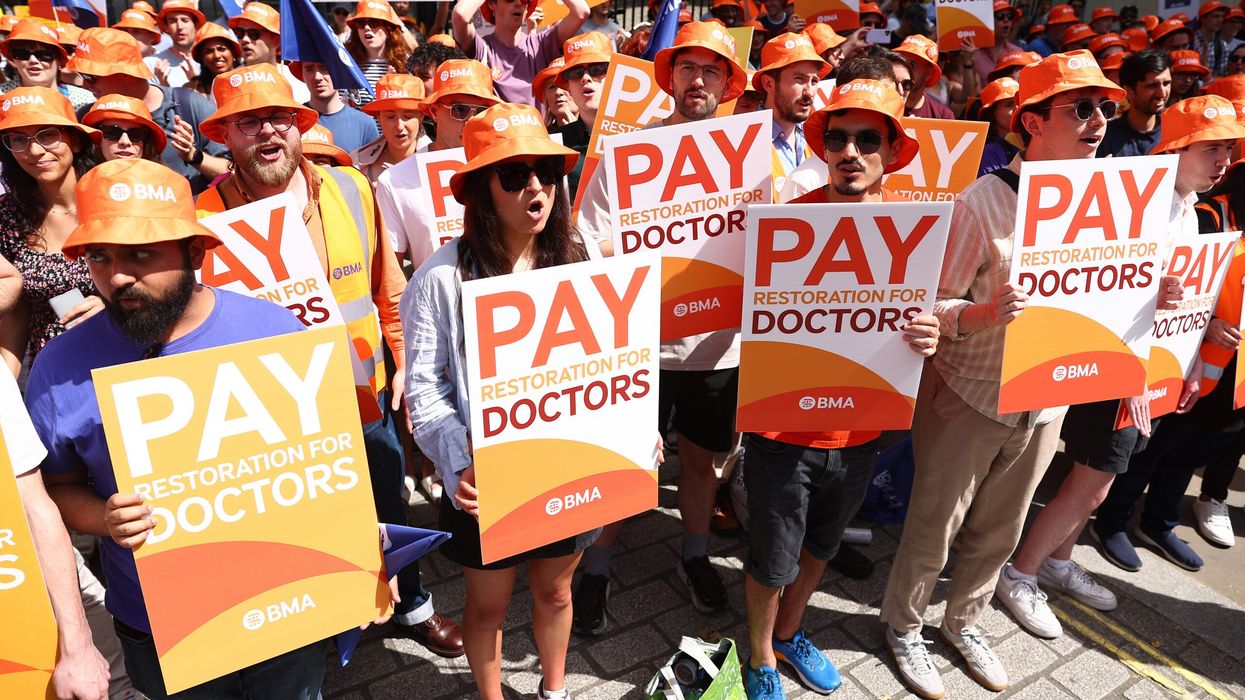

RESIDENT doctors in England have voted to extend their mandate for industrial action by a further six months, the British Medical Association (BMA) said on Monday. The result allows the union to continue calling strikes.
Health minister Wes Streeting, who criticised repeated walkouts last year, said in December he would do everything possible to avoid further disruption in 2026.
The union has said doctors have faced years of real-terms pay erosion and that more training posts are needed to resolve the dispute.
“The government has nowhere to run and no means of running out the clock,” BMA chair Jack Fletcher said in a statement. “With no choice but to get a deal, we hope that means a responsible approach from the health secretary and a timely settlement with no further need for strikes.”
The BMA, which represents about 55,000 resident doctors who make up nearly half of the medical workforce, said 93 per cent of the 28,598 doctors who voted supported further industrial action. The union urged the government to act quickly to prevent new strikes.
A spokesperson for Streeting’s office said the government had delivered a 28.9 per cent pay rise for resident doctors over the past three years and was holding “intensive and constructive” talks with the BMA to bring the dispute to an end.
“We hope that these talks result in an agreement that works for everyone, so that there is not any more strike action by resident doctors in 2026,” the spokesperson said.
The BMA carried out a series of walkouts last year in a pay dispute that began under the previous Conservative government.
(With inputs from agencies)