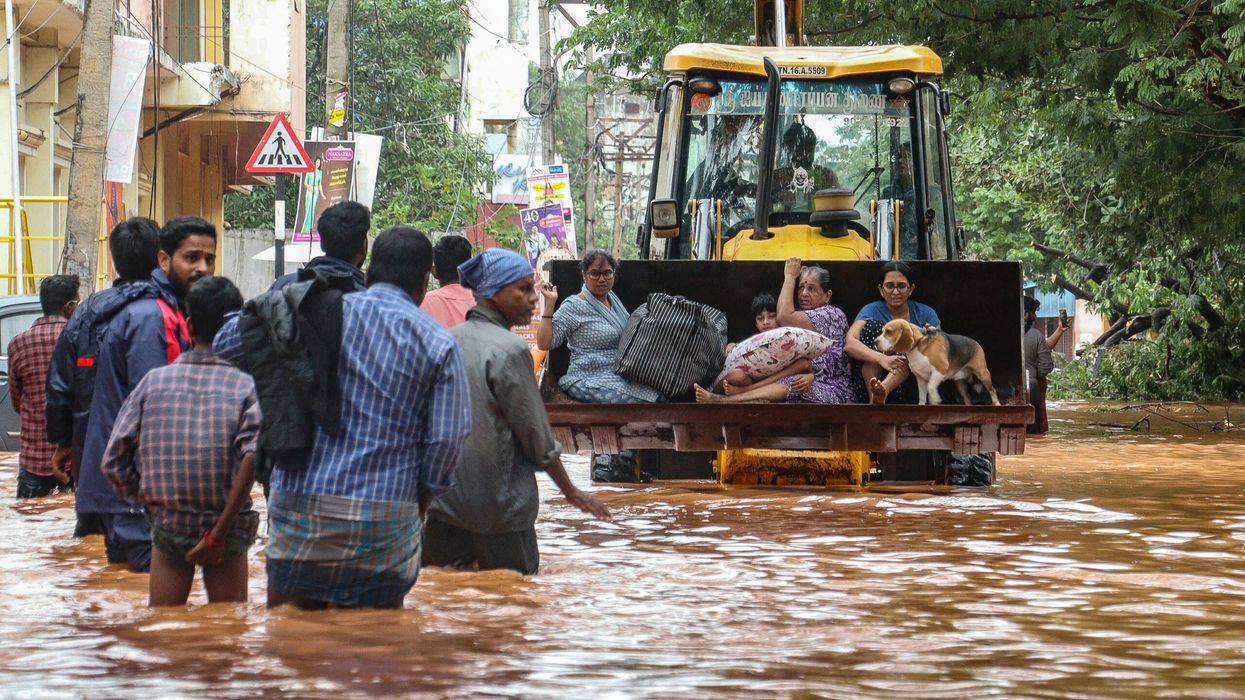

THE DEATH toll from Cyclone Fengal, which swept through Sri Lanka and southern India, rose to 20 on Monday. The storm triggered heavy rains and flooding after its winds subsided, leaving significant disruption in its path.
Fengal made landfall in India’s Tamil Nadu state on Saturday, bringing record-breaking rainfall to Puducherry — the highest in 30 years for a 24-hour period. By Monday morning, the storm had weakened into a low-pressure system.
Sri Lanka reported 17 deaths caused by heavy rains and landslides as the cyclone passed the island on Friday. The country’s disaster management agency said nearly 470,000 people were displaced and were taking refuge in temporary shelters.
In India, Tamil Nadu recorded three deaths from electrocution linked to the storm, according to disaster management minister KKSSR Ramachandran, who stated that other damage caused by the cyclone was “minimal.”
Rescue operations were underway in Tamil Nadu, where local reports on Monday said a family of seven was feared trapped by a landslide. Roads were flooded, and schools were shut in parts of southern India, with officials warning of the continued risk of flash flooding.
Puducherry, a coastal union territory, experienced its highest 24-hour rainfall in three decades following the cyclone’s landfall, according to India’s weather department.
Cyclones, comparable to hurricanes and typhoons in other parts of the world, are common in the northern Indian Ocean. Scientists warn that climate change, driven by burning fossil fuels, is intensifying these storms, increasing their power and rainfall capacity.
Despite the rising intensity of cyclones, advancements in forecasting and evacuation planning have significantly reduced death tolls in recent years.
(With inputs from AFP)