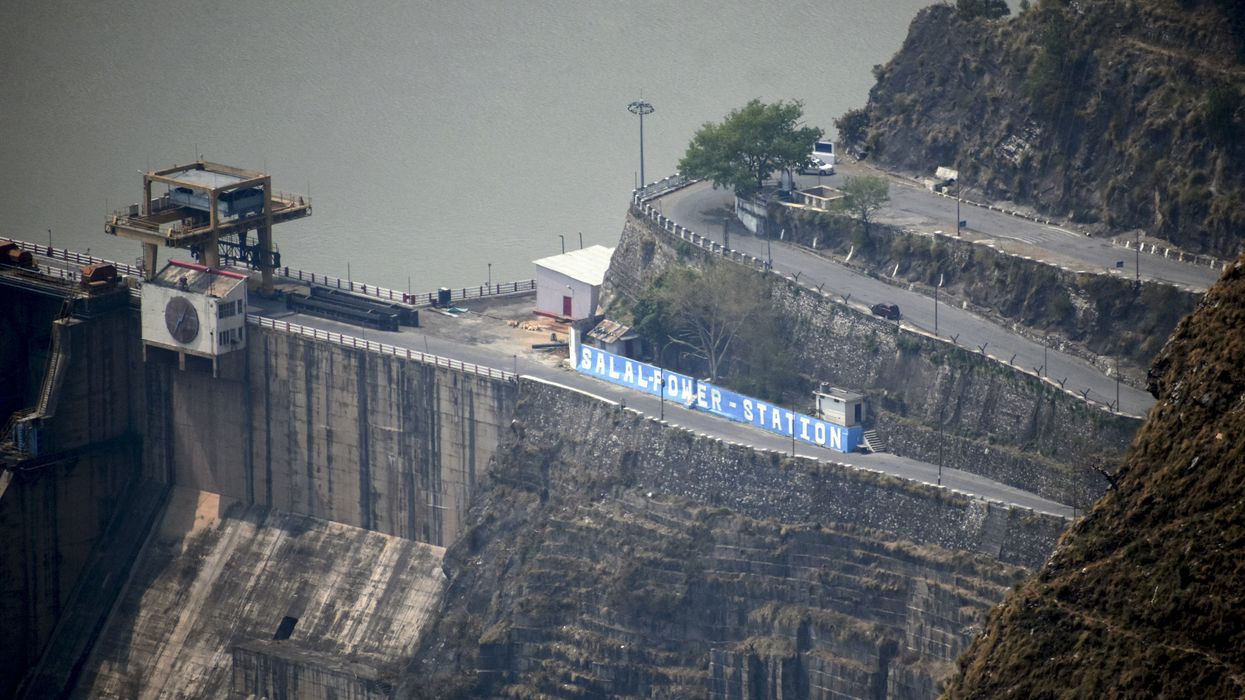

AN INTERNATIONAL court ruling that said India must adhere to the Indus Waters Treaty in the design of new hydro-electric power stations on rivers that flow west to Pakistan endorses Islamabad's position, a senior Pakistani official said on Tuesday (12).
There was no immediate comment from India's foreign ministry.
Under the 1960 Indus Waters Treaty, three rivers that flow westwards were awarded to Pakistan, with India getting three eastern flowing rivers. Pakistan fears its neighbour India could choke its main water supply, with 80 per cent of the country's agriculture and hydro-power dependent on those three river flows.
In 2023, Pakistan brought a case to the Hague-based Permanent Court of Arbitration over the design of Indian hydro-power projects on rivers that were awarded to Pakistan under the treaty.
The court, in a ruling on Friday (8) that was posted on its website on Monday (11), said it had jurisdiction over the dispute and ruled the treaty "does not permit India to generate hydro-electric power on the Western Rivers based on what might be the ideal or best practices approach for engineering" of these projects.
Instead, the design of these projects must adhere "strictly" to the specifications laid down in the treaty, the court said.
Pakistan's attorney general, Mansoor Usman, said in an interview on Tuesday that, by and large, the court had accepted Pakistan's position, especially on the design issue of the new hydropower projects.
"I am sure it is clear now that India cannot construct any of these projects in violation of the court's decision," he told Reuters.
Pakistan's foreign ministry said late Monday that the court ruling said that India had to "let flow" the waters of the three rivers for Pakistan's unrestricted use.
The court said its findings are final and binding on both countries, according to the foreign office statement.
An Indian official pointed to a June statement by India's foreign ministry, which said that India has never recognised the existence in law of the Court of Arbitration.
Tensions between the two countries over the Indus Waters Treaty soared when India unilaterally said in April that it would hold the treaty in abeyance in response to the killing of 26 civilians in Indian-controlled Kashmir, an attack it blamed on Islamabad. Pakistan denied involvement.
Conflict then erupted in May, the most serious fighting between the two countries in decades, before it ended with a cease-fire announcement by US president Donald Trump.
(Reuters)