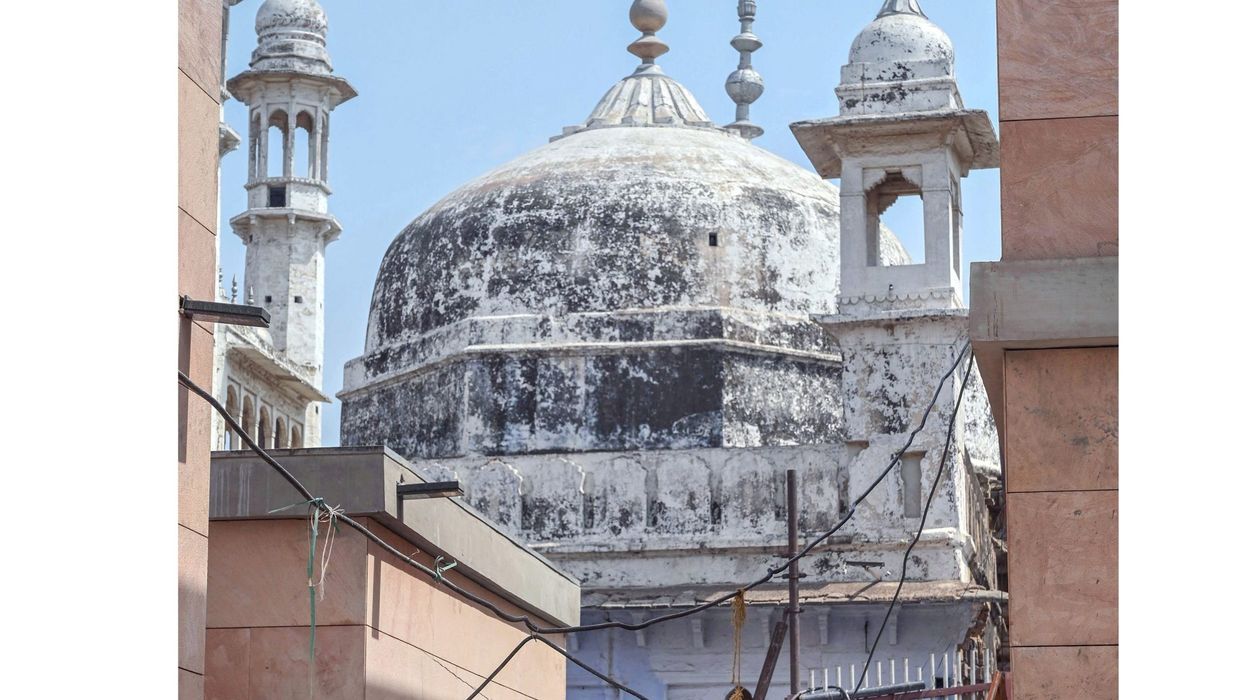
AN Indian court has allowed a “detailed scientific survey” to determine if a 17th-century mosque was built upon a temple in Varanasi.
The Allahabad High Court dismissed a petition challenging a lower court order directing the Archaeological Survey of India (ASI) to survey the Gyanvapi mosque.
Many Hindus believe the mosque, located next to the Kashi Vishwanath temple, had been built on a Hindu temple on the orders of Mughal emperor Aurangzeb.
The area is part of the parliamentary constituency represented by prime minister Narendra Modi.
The Anjuman Intezamia Masjid committee, which manages the mosque, had moved the high court on July 25 challenging the Varanasi district court’s order.
But the high court on Thursday (3) said a survey of the disputed premises is “just and proper” and “no interference” is warranted.
Citing the ASI's assurance that the survey will not cause any damage to the structure, it asserted that there should be no digging as part of the exercise.
According to advocate Vishnu Shankar Jain who represented Hindu petitioners, the high court ruling meant the district court's order on the survey would become effective immediately.
However, the mosque's 'wazukhana', where Hindu litigants claim a 'Shivling' exists, will not be part of the survey - following an earlier Supreme Court order protecting the spot in the complex.
The case came up after five Hindu women sought permission to perform rituals in one part of the mosque, where, they said, a Hindu temple once stood.
It followed a Supreme Court permission in 2019 to build a temple in Ayodhya - also in the north Indian state of Uttar Pradesh - where Babri Masjid was demolished in 1992.
(With inputs from PTI)
Court allows survey of disputed mosque in India’s Varanasi
There should be no digging as part of the exercise, says Allahabad High Court