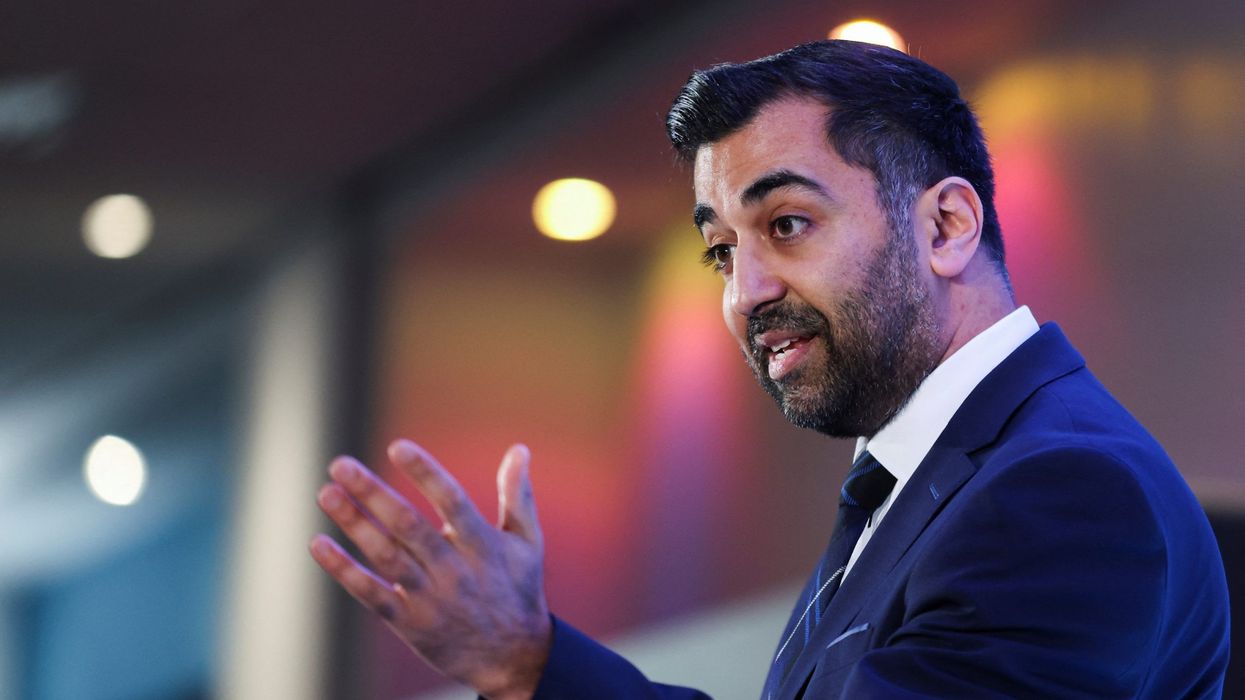

“IT is hard for me to find the words”. Humza Yousaf’s emotional response to the news that he has been elected as the Scottish National Party (SNP)’s new leader captures his role as a history-maker.
Yousaf’s victory in a bruising leadership contest heralds an unpredictable new era, where the future of Scotland will be fiercely contested again. But - before those normal hostilities resume - the symbolic significance of Yousaf’s inauguration as First Minister this week should be recognised across the partisan divides in Scottish and British politics.That SNP members chose this Asian Scot to lead their cause offers the strongest proof yet of the Scottish independence movement’s commitment to a civic nationalist project, which invites new and old Scots alike to join their cause.The messages of congratulation to Yousaf from his political opponents, including from Rishi Sunak in Downing Street and Scottish Labour leader Anas Sarwar, confirm how far ethnic and faith diversity at the top has become a new norm across British politics. King Charles III will now be inviting a Hindu prime minister of the United Kingdom and a Muslim First Minister of Scotland to his Coronation this spring, sending a powerful message to the world about how much public life in Britain has changed, to an extent unparalleled in comparable democracies. Yousaf plans to attend the Coronation – recognising his responsibility as a First Minster to represent Scots of all views – despite being a gradualist Republican himself, who would want an independent Scotland to replace the monarchy a few years after independence.
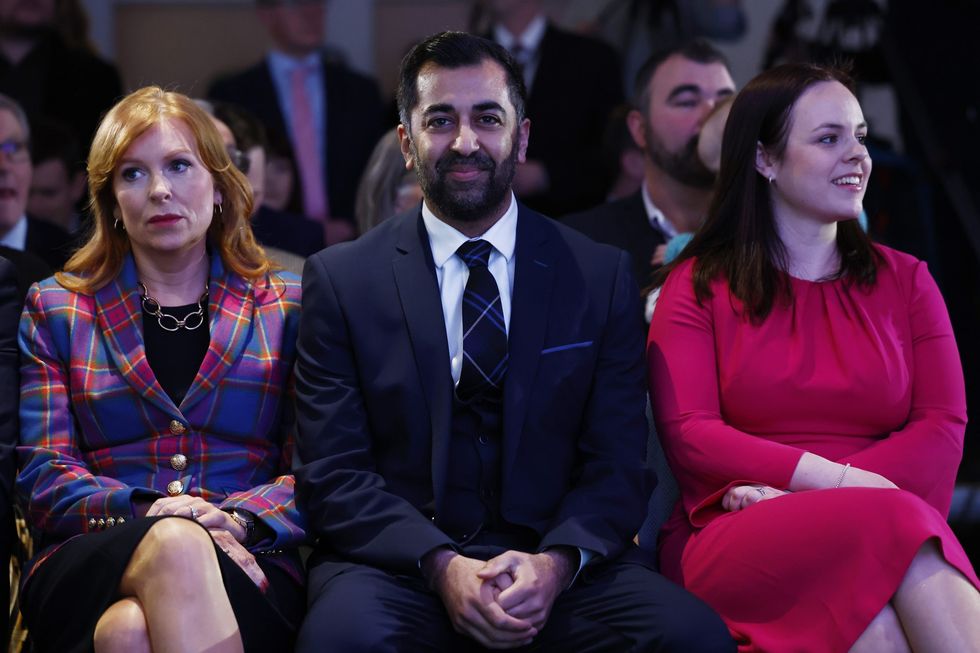 Humza Yousaf (centre) is part of a new generation of Scots who came to adulthood with devolution as the status quo and with no recollection of Scotland before devolution, says Katwala (Photo by Jeff J Mitchell/Getty Images)
Yousaf spoke of his family journey's from the Punjab to parliament over two generations. That he is the first Muslim to be elected as a national leader in any western democracy, in Europe or beyond is a breakthrough moment that should resonate well beyond Scotland. Major cities have had Muslim mayors. Senior ministers of Muslim heritage have held great offices of state. For Scotland to now smash that glass ceiling first in national leadership may seem surprising. The delayed 2021 census results are expected to show that Scotland remains around 94 per cent -95 per cent white. It is a country of gradually growing ethnic diversity, with an ethnic minority population on a scale similar to that of England in the early 1990s. Scotland’s pioneering role has become possible because it was made in Glasgow. That Yousaf and Anas Sarwar - two Glasgow-born Scots of Pakistani heritage - will contest Scotland’s future at Holyrood exemplifies the confidence of Glasgow’s south Asian communities about their contribution to inclusion and integration. Without the Glaswegian influence, there may still be precious little diversity in Scottish politics or public life.Yousaf and Sarwar even attended the same school – Hutcheson’s grammar, one of Scotland’s oldest private schools. Yousaf has cited his experience of racism there, particularly in the wake of 9/11, when he was sixteen, as having an important formative influence on his politics.
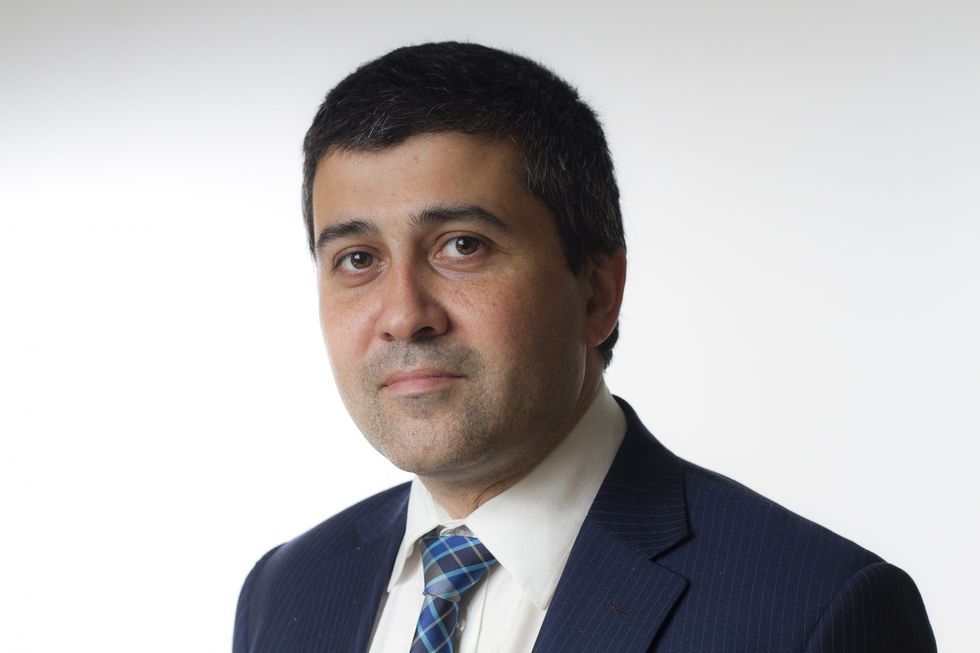 Sunder Katwala
There were several ironies about the leadership contest. A fierce row about religious faith and public policy benefited the Scottish Muslim candidate over his Scottish Presbyterian rival Kate Forbes. Yousaf won the election largely because, of the three candidates running, he most closely reflects the views of SNP party members: being liberal on social issues, centre-left on the economy and a champion, rather than a critic, of the party’s record in power under Nicola Sturgeon. This led to the 38-year-old being cast as the insider candidate of the ‘party establishment’, a narrative which may overlook how much Yousaf also represents a generation shift in Scottish leadership. He was just fourteen when Scotland voted for devolution in 1997 while Nicola Sturgeon was 27, and had stood for parliament for the first time. So Yousaf is part of a new generation of Scots who came to adulthood with devolution as the status quo and with no recollection of Scotland before devolution.Beyond the SNP ranks, much of Scotland starts off sceptical about the new First Minister. Renewing the SNP in office after 16 years will be challenging. Scotland’s politics have been very binary since the 2014 independence referendum. The SNP turned the 45 per cent referendum defeat into a winning coalition to dominate Scottish politics, but with a polarised stalemate over the question of independence itself. That binary may become more complicated as arguments about Brexit, gender recognition and the economy cut across Yes/No choices about independence. If Scottish voters start to think differently about the Westminster and Holyrood elections, that could help to decide the UK’s next general election.
Yousaf pledged in his acceptance speech that his will be the generation to deliver independence for Scotland. Yet, he tacitly acknowledged too, that the SNP will make little progress battling with Westminster about the right to call another referendum without first achieving a sustained shift in public support for independence. So, while Yousaf has earned himself a place in the history books by becoming First Minister of Scotland, writing the second chapter – in which he brings about the end of the Union – may be a much tougher task.