
ONCE upon a time, any white person in the UK who discovered an Indian or black ancestor made sure this “dark secret” never got out.
For example, Sir Cliff Richard, who was born in India, is generally assumed to have Anglo-Indian heritage, but the pop star has always insisted he is of pure British stock. Today, however, having an Indian or black ancestor – as in a new play at the National Theatre – can be worn like a badge of honour.
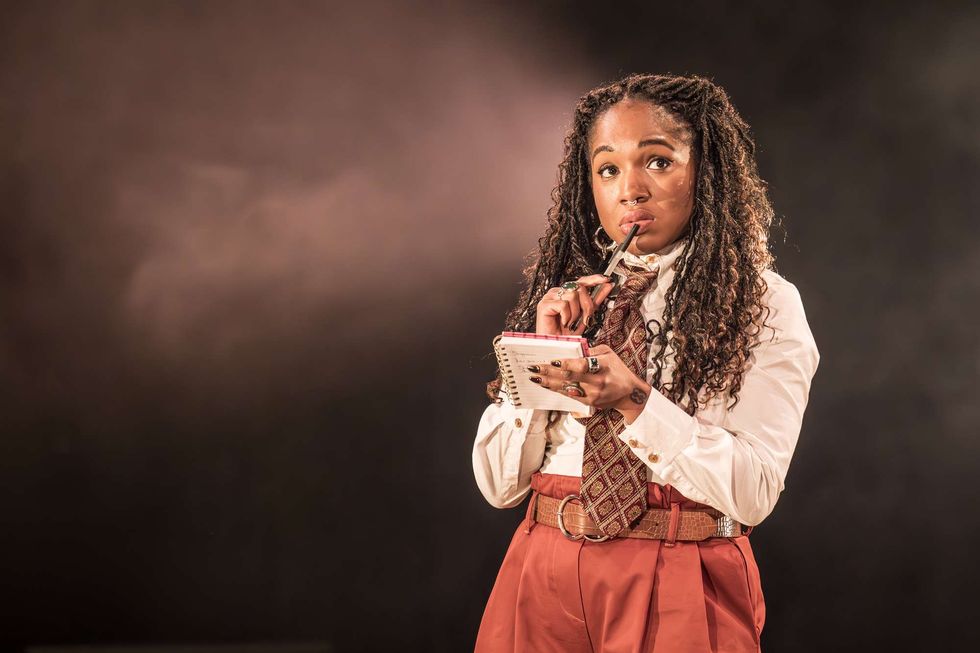 Cherrelle Skeete as Marva Harford.
The Authenticator is a gripping play by Winsome Pinnock, who has been described as Britain’s best-known black playwright. She was born in Islington in 1961 of parents who came from Jamaica.
The Authenticator appears to have been inspired in part by the National Trust’s 115-page “Interim Report on the Connections between Colonialism and Properties now in the Care of the National Trust, Including Links with Historic Slavery”.
Published in 2020, this revealed that 93 National Trust properties were built with money made in India when the country was under British rule, or from the slave trade. In the case of The Authenticator, it is the latter.
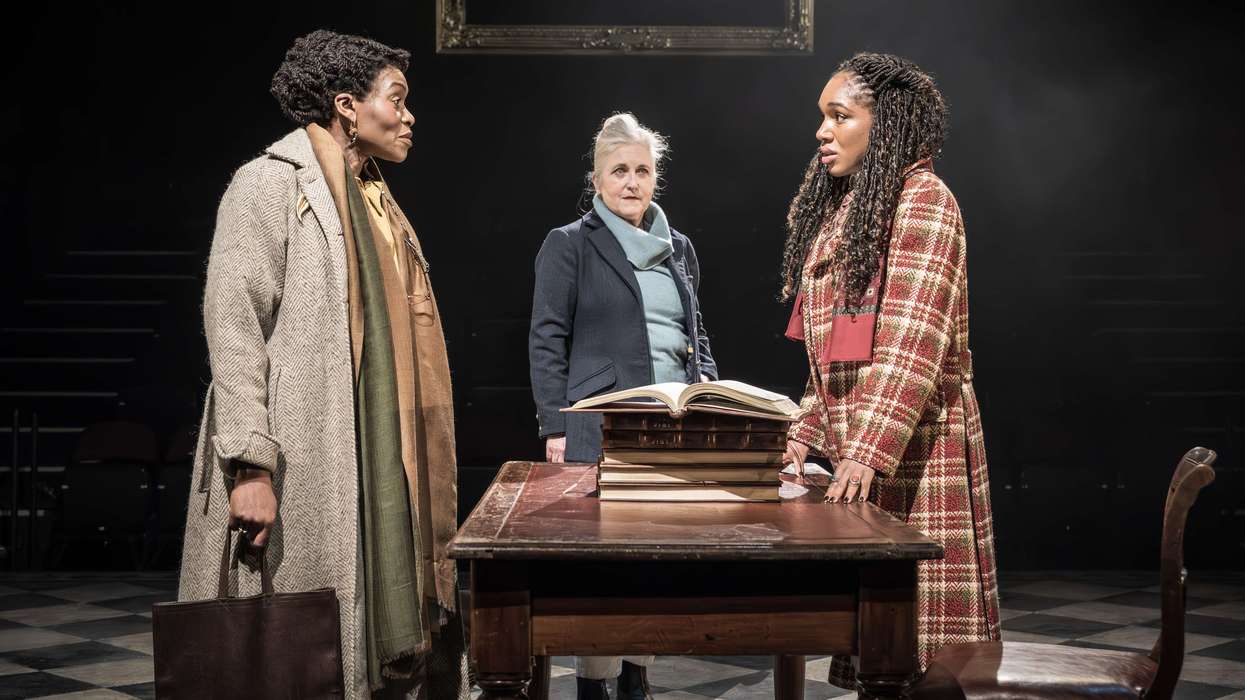
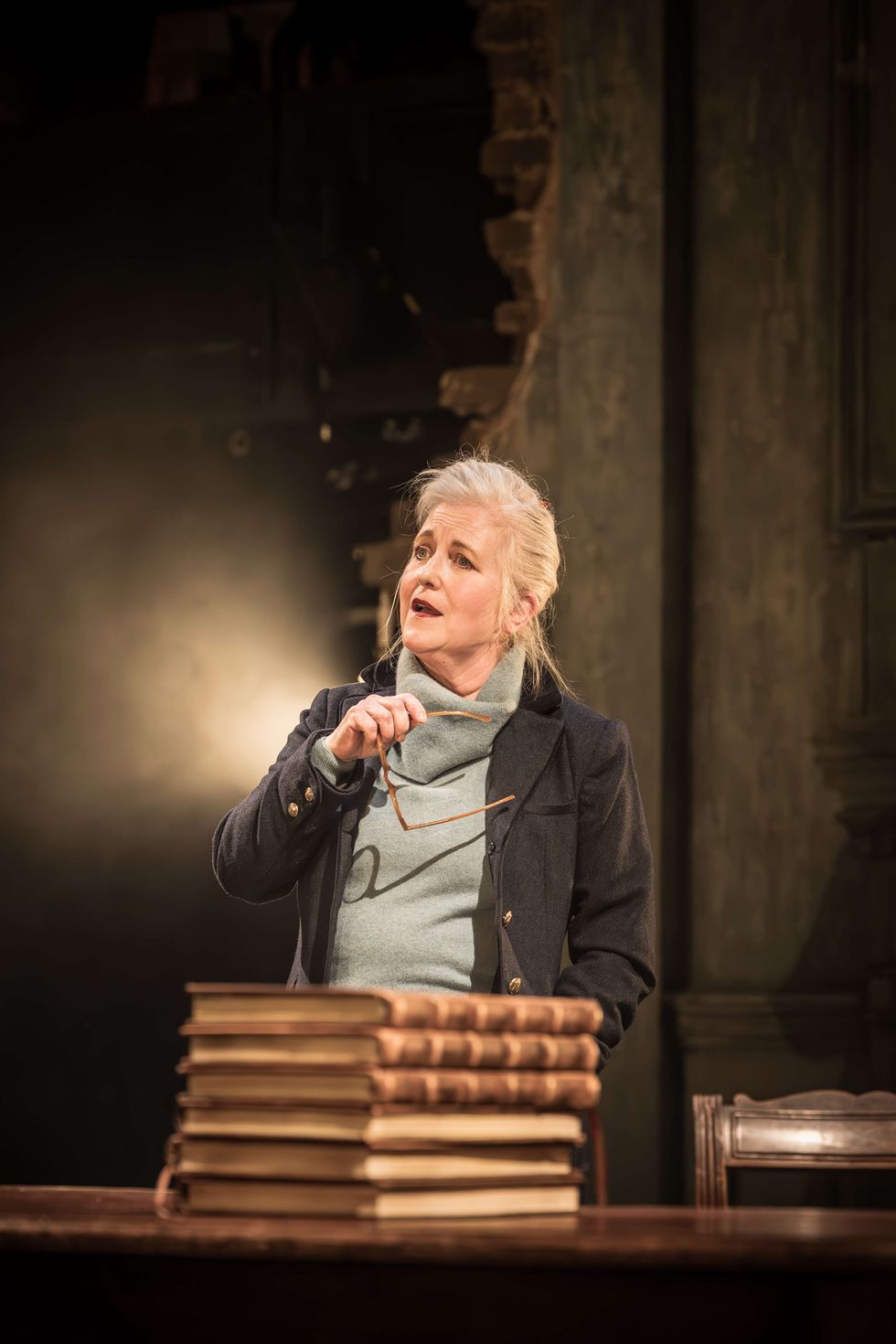 Sylvestra Le Touzel as Fen Harford.
It will be recalled that publication of the report provoked angry denunciation of the National Trust by far-right politicians and commentators who accused the organisation of “trashing British history”. On the other hand, the National Trust was given Eastern Eye’s Arts, Culture & Theatre Award (ACTA) for illuminating the dark corners of imperial history.
In The Authenticator, a woman called Fenella Eugenia Harford – she has shortened her name to Fen Harford – has inherited Harford House, a mansion where she discovers six volumes of leatherbound diaries left behind by its original fictional owner, Henry Harford.
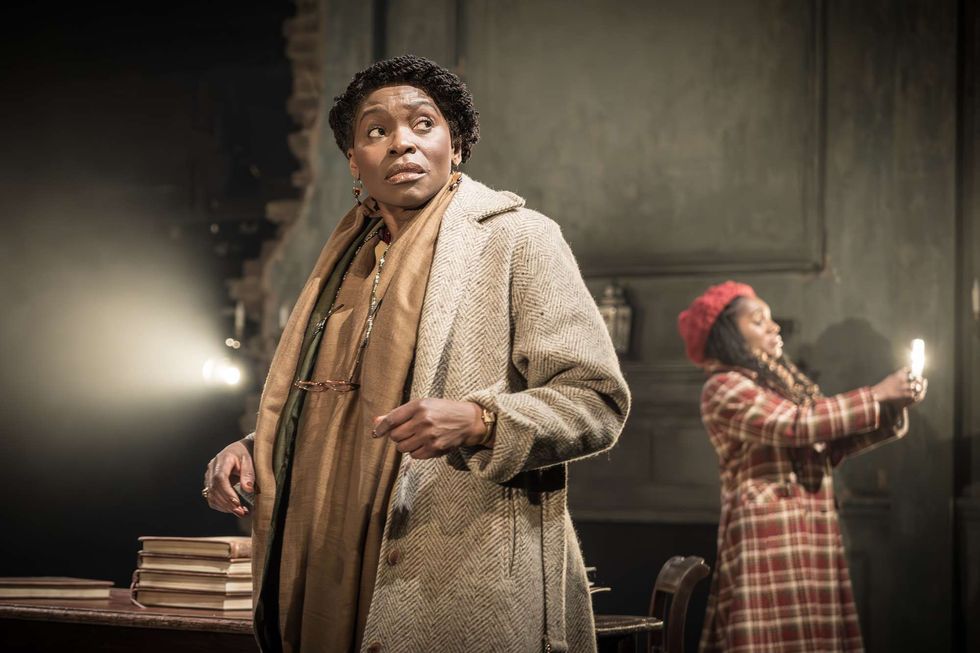 Rakie Ayola as Abi Adeyem.
He left England in 1756 for Jamaica, where he became the owner of a successful plantation run by slaves. He returned to England a rich man in 1763 and bought Harford House.
In 1833, parliament passed the Slavery Abolition Act under which, rather perversely, it was the enslavers – and not the slaves – who were compensated millions of pounds for the loss of their lucrative businesses. And in 1840, Henry Harford, a descendant of the original Henry Harford – all first-born sons in the family were named Henry – used the compensation money to refurbish Harford House.
We move now to contemporary times, with Fen becoming the sole owner of the property following the death of her brother, who was killed when a piece of the ceiling in the rambling old building fell on him. In fact, Harford House appears to be a character in the drama. Fen’s brother took visitors on a tour of what he said was a haunted house. It groans and moans, especially when the play’s three characters are in its gloomy dungeon.
Sylvestra Le Touzel is excellent as Fen. The other two characters are the historians – Abi Adeyemi (Rakie Ayola) and her research assistant, Marva Harford (Cherrelle Skeete) – that Fen has called in to authenticate the diaries.
The fact that Fen and Marva have the same surname is not a coincidence. Marva’s late father, Melvin, an electrician turned bus driver, claimed he was descended from the Harfords and wrote many letters to Fen’s father demanding a share of the estate. In the end, he had to be silenced by a “cease and desist” letter from lawyers. It is suggested that many slaves took on the surnames of the plantation owners.
We know the story is set in modern times because there is a passing reference to George Floyd, the black man whose death at the hands of police in Minneapolis in May 2020 triggered “Black Lives Matter” protests in America, the UK and elsewhere.
As the play progresses, we learn that Fen and Abi were contemporaries at Oxford (rather like David Cameron and Boris Johnson), though the black woman is resentful the white woman never ever acknowledged her at the time.
Fen also affected a cockney accent as an undergraduate to gain street cred.
Differences are also highlighted between black people from Africa and the Caribbean. Abi, it transpires, comes from a wealthy family in Ghana, whose ancestors were themselves involved in the slave trade, presumably in selling young men and women to ships that stopped by on their way to Jamaica. To try and make up for the sins of her ancestors, Abi picked out Marvi from a disadvantaged background to help her in life.
And Marvi, it becomes clear, is on a mission to prove her father was right in claiming he was descended from the Harfords.
Crucial to the play is a character named “Black Sarah”. In the way of most slave owners, the original Henry Harford apparently raped and beat Sarah, one of his slaves, by whom we are led to believe he had twins. When his wife, Hannah, gave birth to a still born, he “stole” one of Sarah’s twins and gave the infant to her. So, in theory, it is possible that Fen and Marvi had both descended from Black Sarah.
As in a detective thriller, there is a page that had been torn out from the third volume of the diaries. When Abi traces the writing from the indentation left behind, she discovers it’s the voice of Black Sarah from the past, berating Henry Harford.
She could apparently write: “Harford liar…took one twin…your son and mine… gave Hannah. And I, Black Sarah, defy…..”
Harford had torn the page out to prevent the truth coming out.
The response from Fen is: “Are you saying that Black Sarah is my greatgreat-great-whatever-whatever-whatever-grandmother?”
Marva protests: “This is my grandfather’s story.”
Fen sees it differently: This morning I was plain old Fenella Harford. And now I’m …What am I? I am the descendant of Black Sarah. I need to…I’m going to…”
Fen soon goes on BBC Radio 4’s Woman’s Hour, with a scarf of Ghanian design round her neck.
Asked by the interviewer (Anita Rani, maybe?) to describe her emotions, she says: “I don’t think the word exists for my emotions. To be honest, I didn’t believe it. I even had one of those ancestry DNA tests done.”
Interviewer: “Fascinating. And do you mind telling us the outcome?”
Fen: “I don’t mind telling you at all. The tests revealed that traces of my Ghanaian ancestry remain in my blood. I am two per cent Ghanaian.”
Interviewer: “And how does this impact on the work you’re doing with Harford House?”
Fen: “It means there there’s a hidden story to be told. And I intend to tell.”
Fen makes a sculpture of Black Sarah which resembles Marva.
“I’m going to put her in the library,” Fen announces. “She’ll replace the portrait (of Henry Harford). My plan is to convert the library into a museum and keep the diaries. I have been talking to the National Trust. I’m hoping that Harford House will pass into their ownership once I’m gone. The legacy will be preserved for the nation. Warts and all.”
But there is a twist in the tale. Perhaps the indentation was faked by Fen or by Marva, who feels her story is being hijacked. As authenticator, Abi addresses Fen: “You are a descendent of Black Sarah. And Marva is a descendant of Henry Harford.”
But Marva responds: “Henry Harford? No. I am a descendant of Black Sarah.” But perhaps this detail does not matter, for the play is looking for the larger truth beyond artistic licence.
In the end, it comes down to the old question. Whose history is it, anyway?
All three women raise their glasses and drink a toast to Black Sarah.
The women are left open mouthed as they see “something” as the house moans and groans.
The Authenticator is at the National Theatre until May 9



 The five-day experience includes spa treatments, yacht excursions, fine dining and spacious, unscheduled morningsSuminder Pelaez
  Sum Retreats offers women a rare gift: space to pause, breathe, relax, and put themselves firstSuminder Pelaez