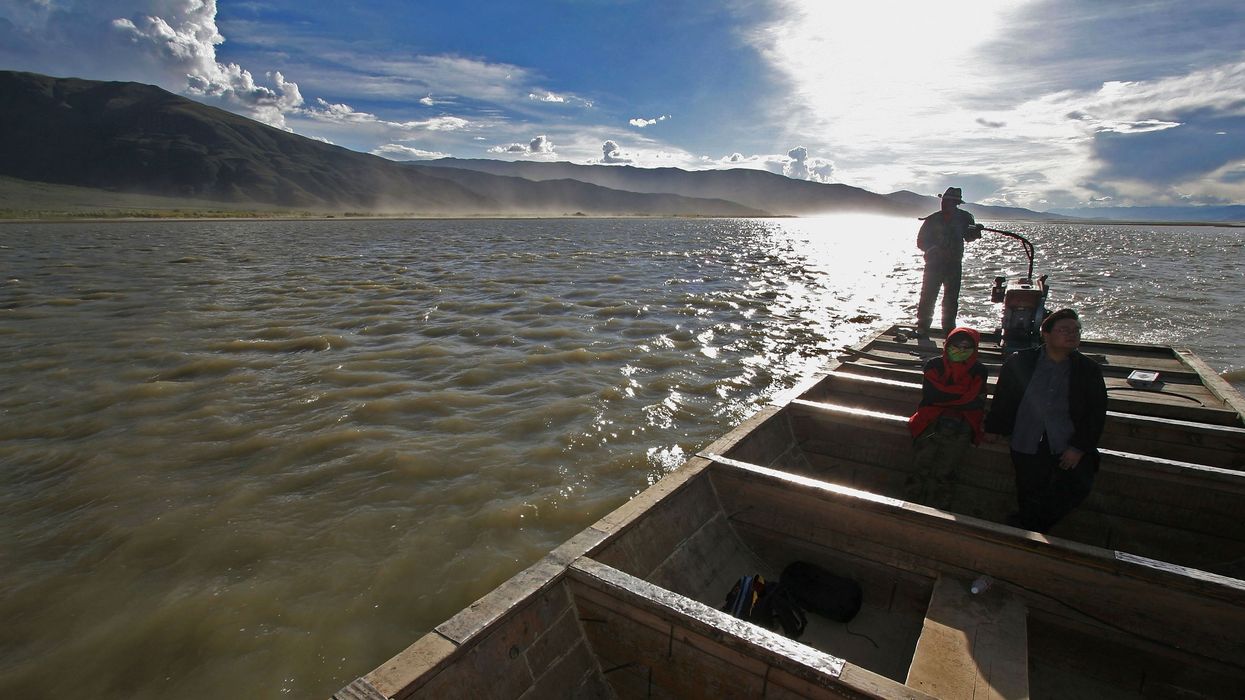

CHINA has approved the construction of what is expected to become the world’s largest hydropower dam on the Brahmaputra River in Tibet. The project, located near India’s border, has raised concerns in India and Bangladesh over its potential impact on downstream water flow and ecology.
The dam will be built on the lower reaches of the Yarlung Zangbo River, as the Brahmaputra is called in Tibet, according to the state-run Xinhua news agency.
It is part of China’s 14th Five-Year Plan (2021-2025) and broader national development objectives through 2035.
The total cost of the project is estimated to exceed £110 billion, making it the largest single infrastructure project globally. It would overshadow the Three Gorges Dam, currently the world’s largest hydropower project, which cost £28 billion and displaced 1.4 million people.
China’s foreign ministry has defended the project, stating that it will not negatively affect downstream countries.
Spokesperson Mao Ning said the hydropower development aims to promote clean energy, address climate change, and mitigate hydrological disasters.
"China will maintain communication with lower riparian countries and step up cooperation on disaster prevention and relief," she said.
The Yarlung Zangbo, which becomes the Brahmaputra River in India, flows into Arunachal Pradesh and Assam before reaching Bangladesh.
Indian officials have raised concerns that the dam could enable China to control water flow, potentially causing floods during hostilities.
India and China established the Expert Level Mechanism (ELM) in 2006 to discuss trans-border river issues.
China provides hydrological data on the Brahmaputra and Sutlej rivers to India during flood seasons, and river data-sharing was part of discussions between Indian National Security Advisor Ajit Doval and Chinese foreign minister Wang Yi in December.
The project site lies in a seismically active region along tectonic plate boundaries. Chinese authorities have stated that extensive studies and safety measures have been implemented to address these challenges.
The dam is expected to generate 300 billion kWh of electricity annually, enough to meet the energy needs of 300 million people.
Chinese officials claim the project will boost Tibet’s economy and create jobs, while also advancing solar and wind energy development in the region.
India is also constructing a dam on the Brahmaputra in Arunachal Pradesh. Both nations continue to monitor developments closely amid ongoing discussions on trans-border river cooperation.
(With inputs from agencies)