

- British church leader Pankaj Devnoor faces allegations over a Christian gathering in Pune.
- His family says the allegations are “baseless”.
- Police initially cited Maharashtra’s new anti-conversion law.
- The law does not come into force until 28 August.
- Devnoor remains in India under strict bail conditions.
Pankaj Devnoor travelled from Manchester to Pune expecting to attend a church anniversary celebration. Instead, the British church leader found himself at the centre of an extraordinary legal dispute over religious conversion in India, as mentioned by The Indpendent.
The 50-year-old, who leads a Christian community in Manchester and is associated with the Anglican Episcopal Church International, was attending a 10-day celebration featuring sermons, prayer and religious music when a group of Hindu men entered the premises on 7 August.
They accused organisers of attempting to convert Hindus.
What followed has become particularly contentious because the police initially registered a case under Maharashtra’s new Freedom of Religion Act 2026, only for it to emerge later that the law was not actually in force when the case was filed.
For Devnoor’s family, the episode has been frightening and bewildering.
“Everything happened so quickly and so suddenly,” his daughter Manali Devnoor told The Independent. “They'd taken his phone away, so we couldn't even really speak to him.”
“The law will take its course”
Indian police maintain that Devnoor was involved in missionary activity.
Deputy Commissioner of Police Prashant Amrutkar told The Independent that Devnoor was “carrying out missionary activities”.
Devnoor had permission under his immigration status to attend prayer meetings and religious functions in India, but police said he did not have permission to preach or deliver a religious discourse.
He was not arrested but was granted interim bail. The conditions mean he cannot leave India without the court's permission and must report to a local police station every Monday, Wednesday and Friday.
The complaint was filed by Amit Raju Bhosale, a 31-year-old rickshaw driver, who alleged that Devnoor was spreading “misconceptions” about Hinduism and attempting to “lure people in the audience into religious conversion”.
Asked whether Devnoor could face arrest or deportation, DCP Amrutkar said: “The law will take its course.”
But the court's own observations introduced considerable doubt about what happened inside the church.
“Nowhere it was mentioned that in the said cultural programme they intended to convert persons of other religion”
The court noted that “nowhere it was mentioned that in the said cultural programme they intended to convert persons of other religion”.
It also said the group that entered the church appeared to have done so under the “misconception that it is a cultural programme for Hindus” and had apparently mistaken a promotional image of the church for a Hindu temple.
“Prima facie it appears that it was a programme of [the] Christian community,” the court said, adding that the fact there was no restricted entry “does not mean that the persons of other religion were called with intentions to convert them”.
That distinction is crucial.
The allegation was not simply that a religious event took place. The accusation was that the event was being used to convert people.
The court, at least at the interim stage, found no clear indication of that intention.
And then came the most striking development.
“The law was not actually in force”
Maharashtra's new Freedom of Religion Act received presidential assent on 31 July. Police apparently treated that as meaning the legislation was already operational.
It was not.
The law is due to come into force on 28 August.
Police have now said they will drop the charges under the anti-conversion law, although they may still pursue action under other legislation, including the Immigration and Foreigners Act 2025.
That leaves an extraordinary question hanging over the case: how did a law that had not yet taken effect become part of the initial legal action?
The episode comes amid a wider political debate in India over so-called anti-conversion laws. Supporters argue that such legislation protects vulnerable people from forced or fraudulent religious conversion. Critics, including rights groups and opposition parties, have argued that these laws can be used to intimidate religious minorities and restrict legitimate religious activity.
For Devnoor's family, the legal argument has now been joined by a personal safety concern.
His name, address and other details have circulated through Indian media and social media. His family says the publicity has caused him severe emotional and financial stress.
His son Punit has launched a GoFundMe appeal to raise £10,000 for his father's legal defence and return to Britain. More than £6,600 had reportedly been raised.
The family's priority is straightforward.
“That’s our biggest fear at the moment, especially when details of his name, his exact location, where he lives – all of these things that nobody would like in the press – are being revealed. It’s very scary.
“Our priority is making sure he comes back home safe. That's the first thing, and then after that, we’ll see what needs to be done.”
The UK's Foreign, Commonwealth and Development Office has confirmed it is supporting a British man in India and is in contact with his family and local authorities.
Devnoor's case is due back in court on 25 August.
Three days later, Maharashtra's controversial new anti-conversion law is scheduled to come into force.




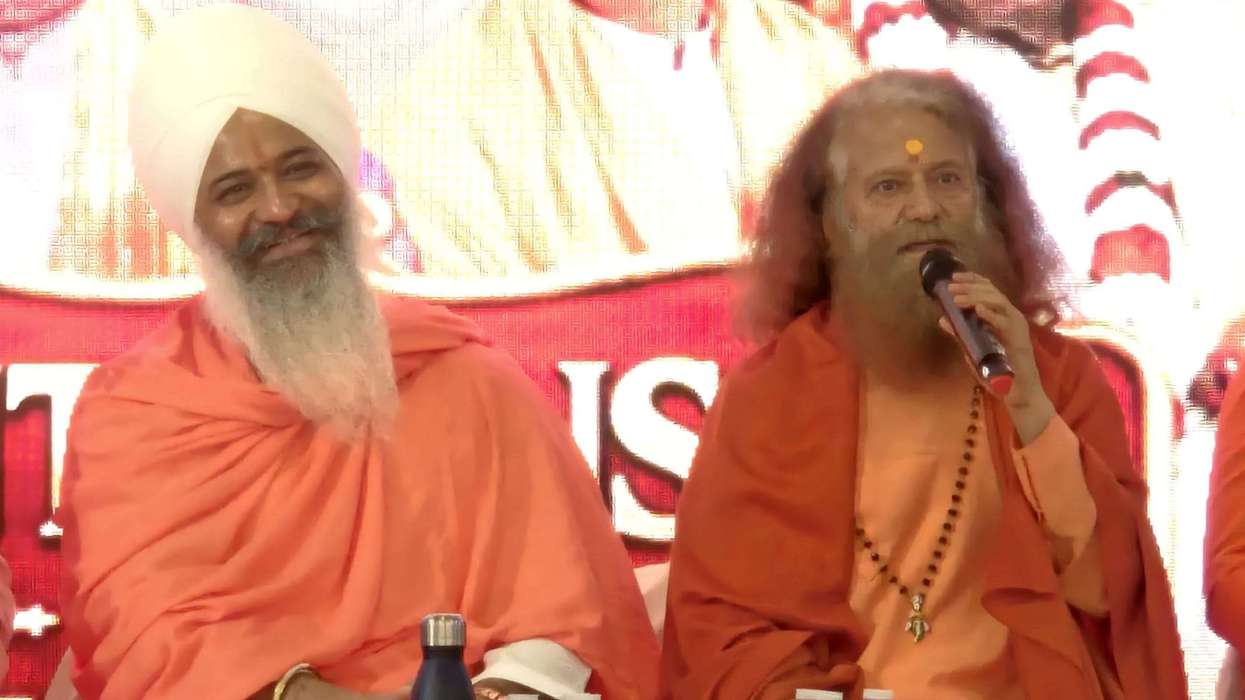
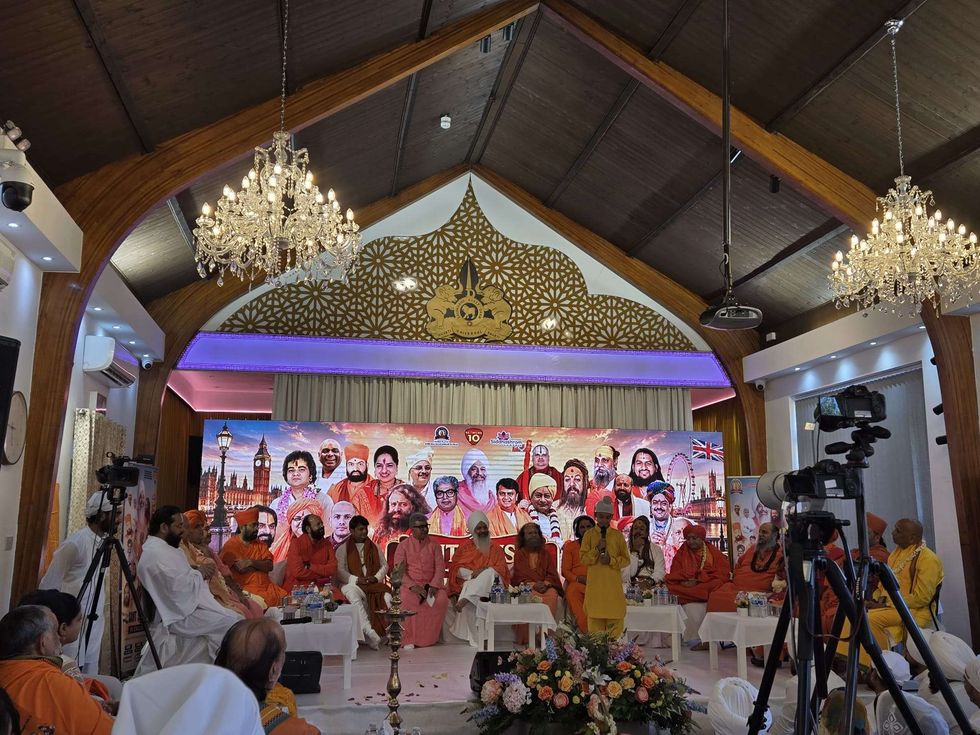 Sant Sansad Master Jasraj sharing his views Mahesh Liloriya
 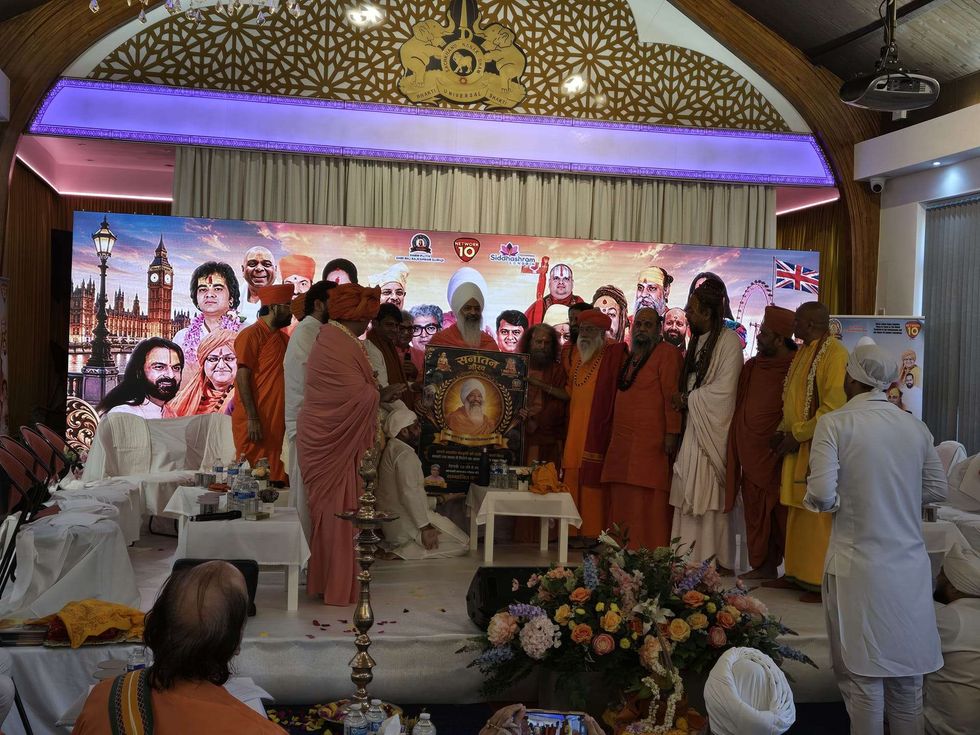 Sant Sansad- Deep PrajjawalanMahesh Liloriya