

- Subsidence claims surged 140 per cent in August after Britain’s record summer heat.
- Insurers warn damage could continue to emerge into autumn.
- The average subsidence claim has hit a record £20,000.
Britain’s hottest summer on record may have left behind a problem that homeowners cannot see immediately — the ground beneath their homes.
After months of unusually hot and dry weather, insurers are reporting a sharp rise in subsidence claims. Hastings Direct said claims in August were almost 140 per cent higher than in the same month last year, the highest monthly level it has recorded.
But the more worrying part for homeowners is what happens next. The temperature may have fallen and rainfall may have returned, yet the effects of prolonged dryness can continue to show up in buildings.
Subsidence occurs when the ground supporting a property shrinks or moves, putting pressure on its foundations. Hot, dry conditions can remove moisture from the soil, causing it to contract. If a building is sitting on vulnerable ground, that movement can translate into cracks and other structural problems.
Why the damage can arrive late
Subsidence is normally associated with late summer and autumn, but insurers say activity increased unusually early this year after two particularly dry summers.
Hastings Direct expects claims to remain above normal levels until around October unless sustained rainfall restores moisture to the soil.
That delay matters because a homeowner may not immediately connect a new crack or sticking door with the heat experienced weeks earlier.
Some movement in a property after hot, dry weather is normal. But diagonal cracks around windows and doors that widen over time, doors and windows that become difficult to close, uneven floors and rippling wallpaper can indicate a more serious problem.
Aviva says diagonal cracks wider than around 2.5cm — roughly the diameter of a £1 coin — can be a warning sign.
The risk is not evenly spread across Britain. Older properties can be more vulnerable, while scientists identify areas including London, Essex and Kent, along with a broad stretch of eastern England from Oxford towards the Wash, as particularly exposed.
The British Geological Survey has warned that millions of homes could be at risk as hotter and drier summers become more frequent.
A climate problem that arrives as an insurance bill
For homeowners, the concern is not simply whether a wall develops a crack. It is how expensive that crack can become.
The Association of British Insurers said the average subsidence claim reached a record £20,000 between April and June, more than £2,000 higher than a year earlier. Insurers paid £72m on domestic subsidence claims during the quarter, up from £60m in the same period last year.
The longer-term trend is also moving in the wrong direction. Insurers paid around £297m in subsidence claims during 2025, 6 per cent more than the previous year and 89 per cent higher than in 2022.
That is why insurers are beginning to look beyond individual claims and at whether their entire approach to the risk needs to change.
Aviva has reported an increase in recent subsidence claims and said the trend could continue without significant rainfall. Its chief executive Amanda Blanc said the company was reviewing the reserves it holds for subsidence, as well as its pricing models and exposure management.
Axa expects 2026 to be a “surge year” for subsidence claims, although it has not said whether the year will set a record.
The wider warning is that extreme heat can create costs that are much less visible than a flooded road or a storm-damaged roof. The damage can develop quietly, appear weeks later and eventually become a problem measured not in degrees Celsius, but in thousands of pounds.
With Europe warming faster than any other continent and Britain experiencing increasingly hot and dry summers, subsidence could become one of the less obvious ways climate change changes the economics of owning a home.
The heatwave may be over. For some homeowners, the consequences may only just be beginning.





 Restored portrait of Dadabhai Naoroji Amit Roy
  Yadgar Marker Amit Roy
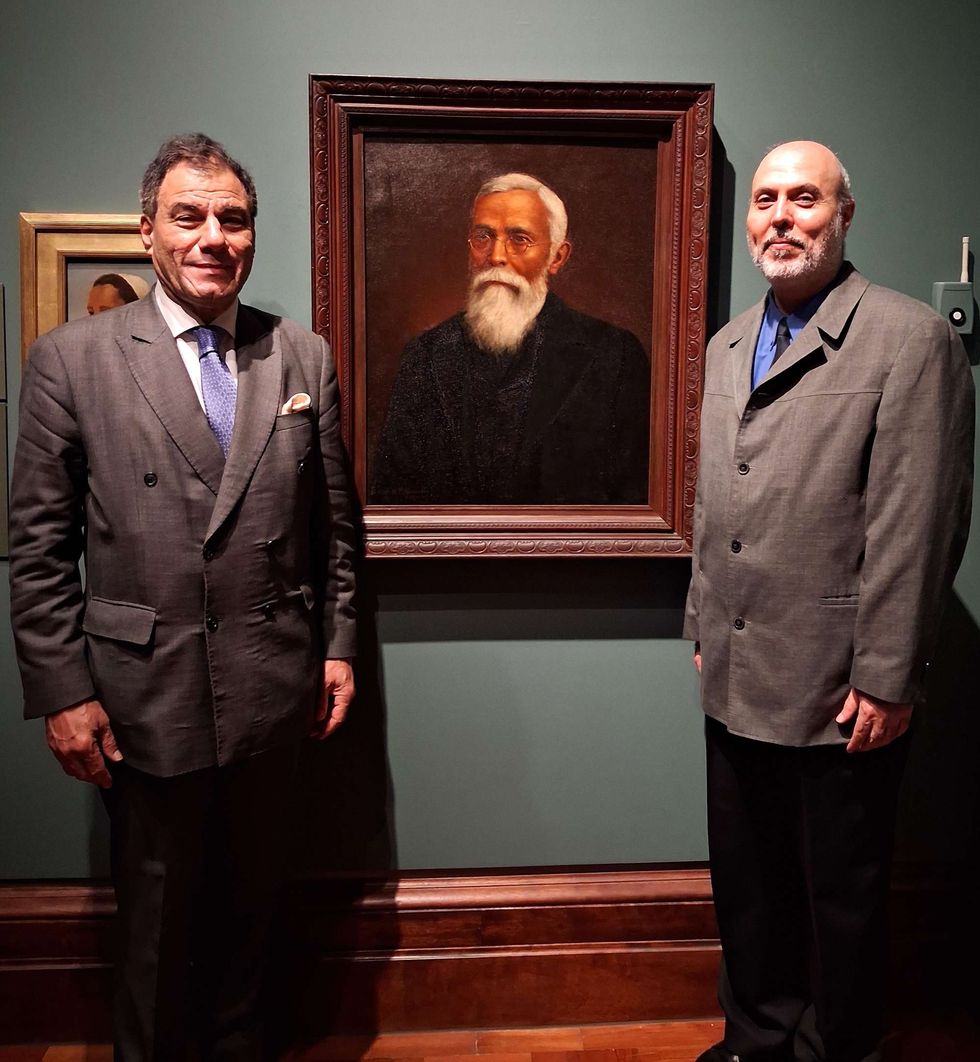 Lord Karan Bilimoria (left) and Malcolm Deboo Amit Roy
  The Secret of England's Greatness. Queen Victoria presenting a Bible in the Audience Chamber at Windsor. By Thomas Jones Barker Amit Roy
 Sarah Moulden Amit Roy
 Pippa Balch Amit Roy
 Ursula Griffths Amit Roy