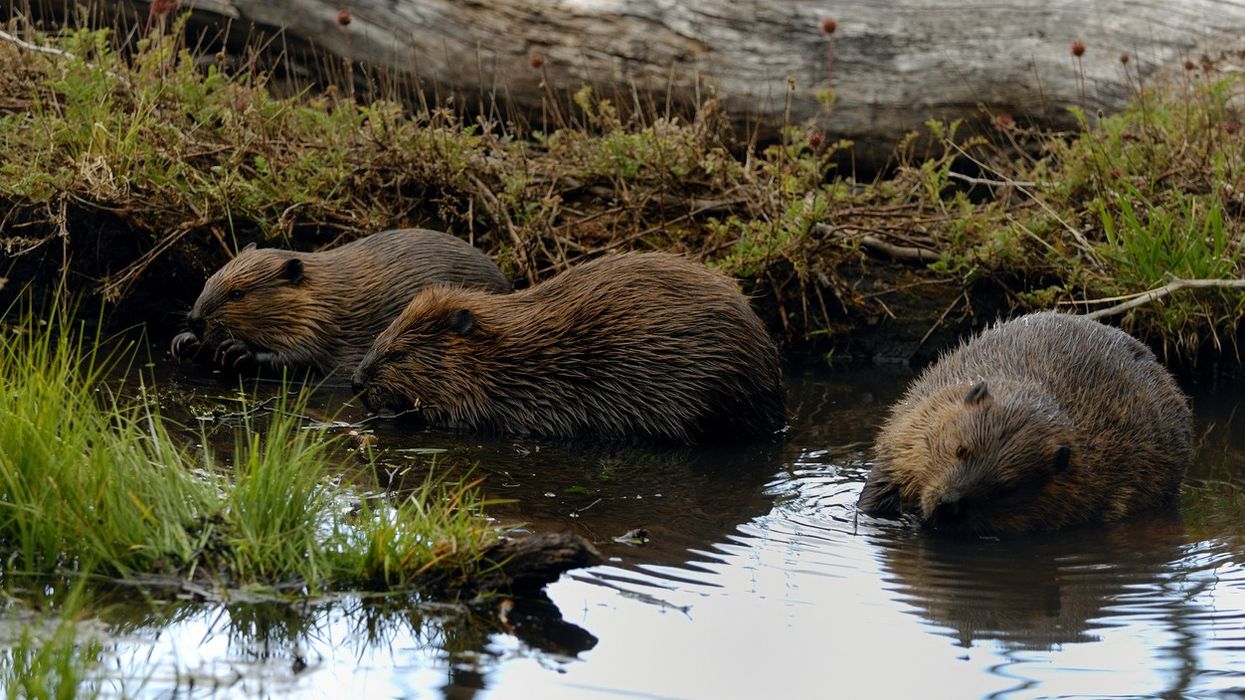

FOUR centuries after beavers became extinct in Britain, the government is now considering to release the dam-building mammals back into the wild across England.
The plan is described as a cautious step towards establishing a native beaver population.
The proposals would see the animals allowed to be introduced if strict criteria were met along with an assessment of their impact on the surrounding land and other species.
It comes after a successful five-year trial on the River Otter in Devon, a rural county in southwest England, concluded a family of beavers had a beneficial effect on the local ecology in what was the first legally sanctioned reintroduction to England of an extinct native mammal.
"Today marks a significant milestone for the reintroduction of beavers in the wild," environment minister George Eustice said on Wednesday (25) at the start of a 12-week consultation on the plans.
"But we also understand that there are implications for landowners, so we are taking a cautious approach to ensure that all potential impacts are carefully considered."
The government said beavers could play a hugely significant role in helping to restore nature, creating dams from trees, mud, and rocks, which raise water levels and create wetland habitats that support the recovery of a wide range of native species.
The semi-aquatic vegetarian mammals have hunted to extinction in Britain about 400 years ago because people wanted their meat, fur and castoreum, a secretion that was used in medicine and perfumes.
The government said it also planned to make it an offence to capture, kill, disturb or injure beavers or damage their breeding sites.