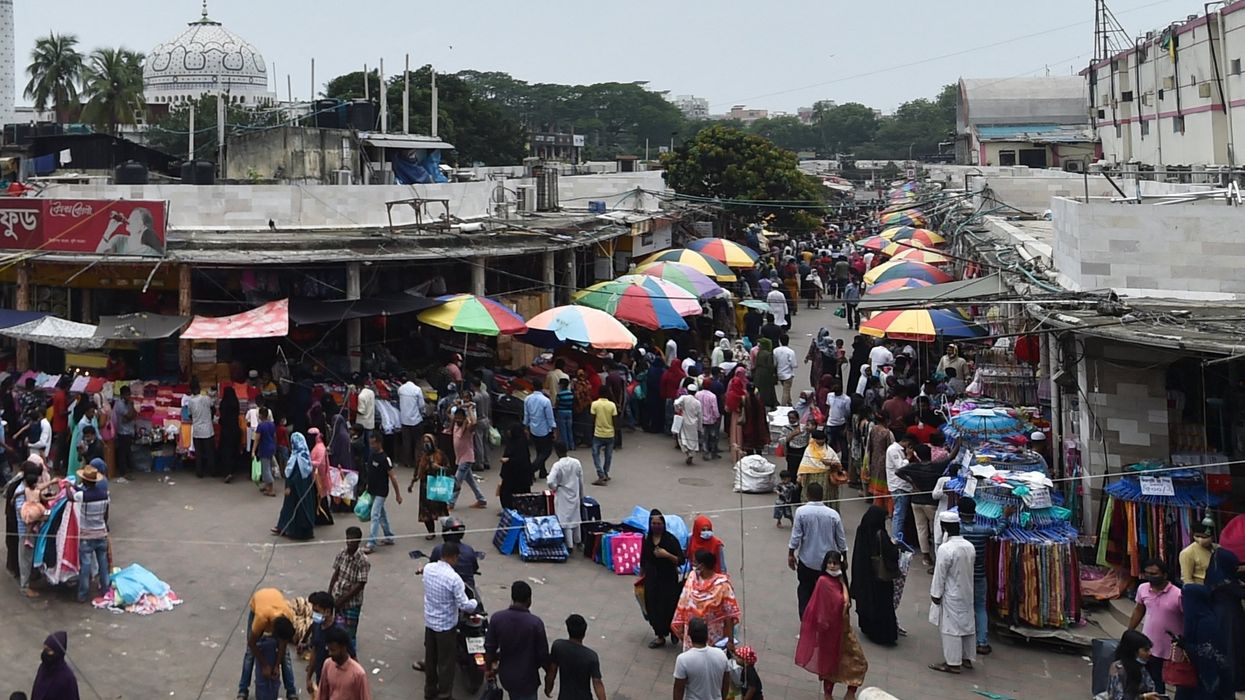

BUSINESSES in Bangladesh are expected to make half of their regular profits during the key Eid-ul-Azha festival due to the coronavirus pandemic, the Dhaka Tribune reported.
Eid-ul-Azha is the last of the big festival economy in the Asian country.
The celebration of the festival mainly circles around livestock and the rawhide industry.
According to the Ministry of Fisheries and Livestock, out of 11.9 million animals eligible for sacrifice this year, 10 million could be sold and the transaction will be around Tk450 billion (£3.9bn) to Tk500bn (£4.3bn).
Cattle rearing is one of the largest economic activities in rural Bangladesh and a large number of people are dependent on it, especially during the Eid economy, Prof Mustafizur Rahman, a distinguished fellow of the Centre for Policy Dialogue (CPD) told the newspaper.
Besides, the leather industry which usually makes Tk12bn (£103 million) to Tk15bn (£130m) during this Eid, expects to make only Tk7bn (£60m) this year.
“We are ready to collect Rawhide. But like the last two years, we do not expect much profit in this sector,” Bangladesh Hide and Skin Merchant Association President Aftab Khan said.
Profits for the country's spice market is also expected to come down to half this time like last year, spice merchants said.
After a two-week lockdown before Eid, markets are now finally open, but shopkeepers say the business is still in a lull.
Bangladesh Shop Owners Association President Helal Uddin said the demand for various luxury items including refrigerators, clothes and fashion products usually spikes around Eid-ul-Azha. But this year, sales are expected to be much less.