
Authorities in an Indian state want to ban polygamy as part of a bid by the Hindu-nationalist central government to standardise the civil code across the country.
Polygamy, the practice of having more than one spouse, is illegal under the Indian Penal Code but Muslim men are allowed to have up to four wives under sharia Islamic law, and polygamy also exists in many tribal communities.
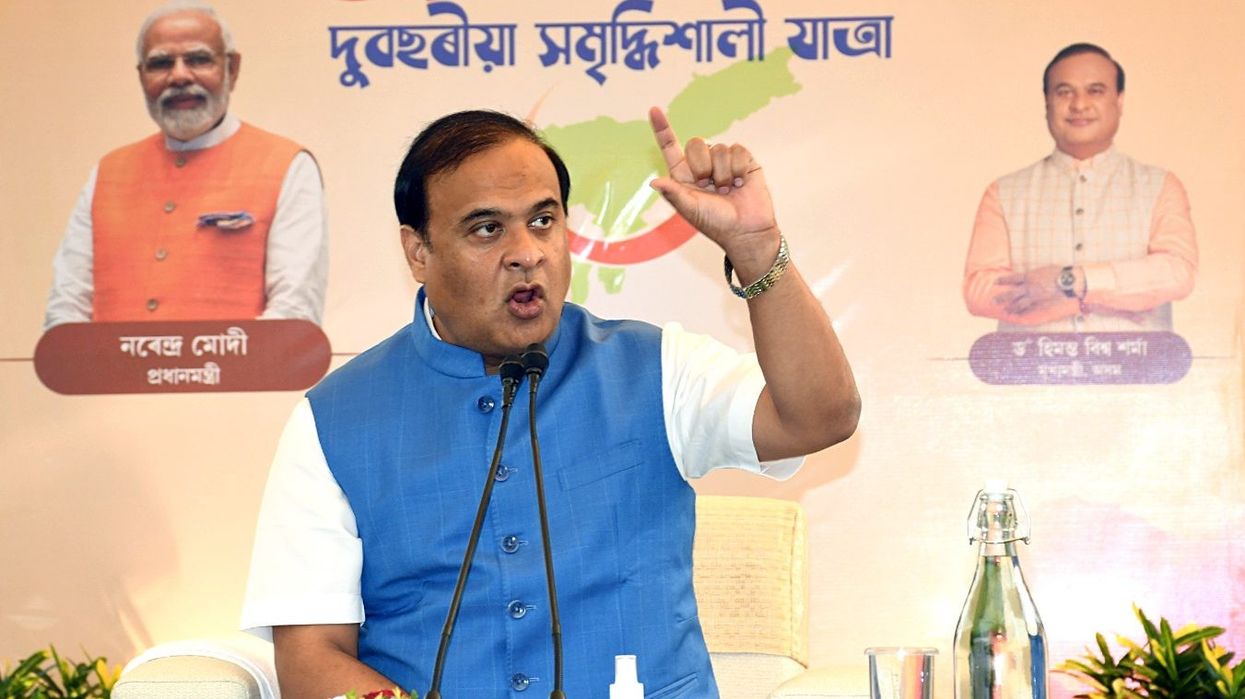
"I plan to ban polygamy in Assam," Himanta Biswa Sarma, chief minister Assam state in the northeast, told reporters on Thursday.
"We want to make this a consensus-building process rather than some kind of a provocation," said Sarma, a senior member of India's ruling Bharatiya Janata Party (BJP).
The central government wants to impose a uniform civil code to replace a patchwork of religious and cultural codes governing matters such as marriage, divorce, inheritance and adoption.
Supporters of the code see it as a way to ensure gender equality but opponents, including some Muslim leaders, see it as a government strategy to dilute rights sanctioned under Islam.
The federal government in a 2020 study found polygynous marriages were prevalent among more than 30 tribal groups in the remote northeast, including Assam.
Sarma said a team would scrutinise legal provisions along with the religious and personal aspects of Islam and other religious groups and report back to him in 60 days.
In April, another BJP ruled state, Uttarakhand in the north, announced that an expert panel would examine the possibility of applying the uniform civil code there.
The Supreme Court in 2017 outlawed the Islamic practice of "triple talaq", by which a Muslim man can divorce his wife by saying "talaq" (divorce) three times.
The BJP championed a campaign by Muslim women and activists to outlaw that divorce practice.
(Reuters)