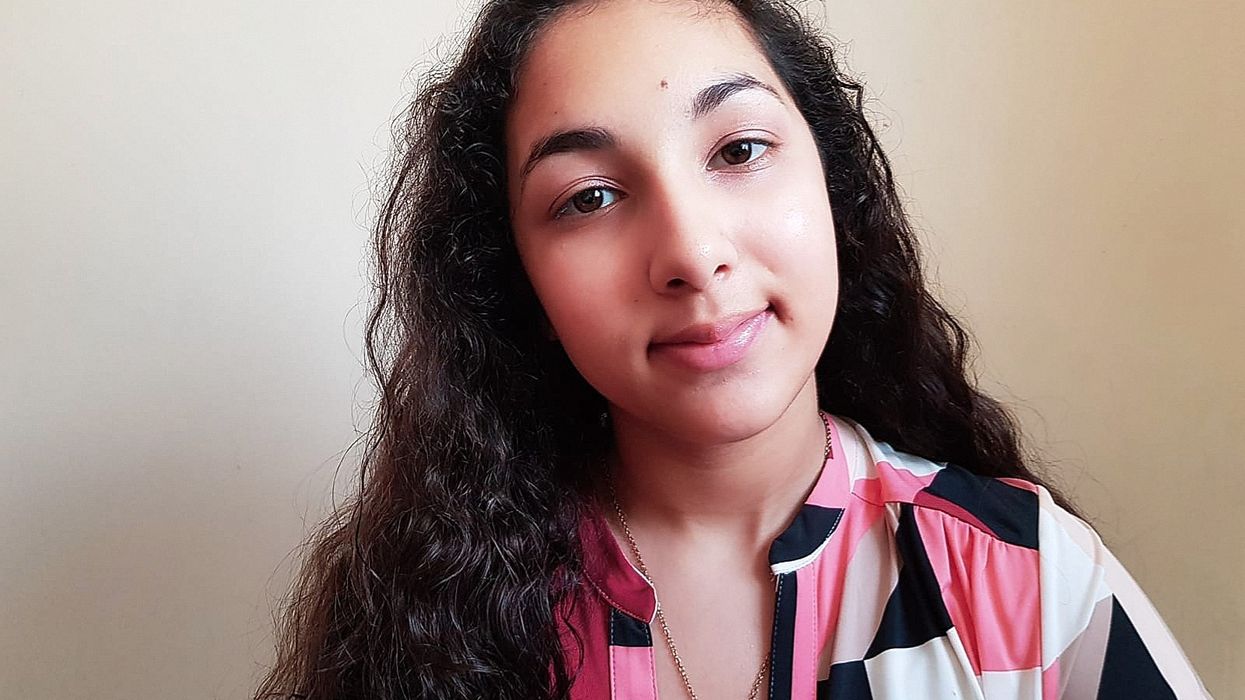

A TEENAGER who used sign language to interview her sister for a TV presenting competition has been announced as the winner.
Samaira Iqbal, 15, was chosen out of 200 entries for 2021 BAFTA Kids’ Young Presenter Competition. She is the fifth young presenter to win the prestigious award.
To enter the competition, children were invited to create and submit a short video on how they express themselves. Iqbal’s entry saw her interview her sister using sign language.
Reacting to her win, Iqbal said she never thought “in a million years” she would ever get an opportunity to work with BAFTA.
“Being a kid myself, I was told that I was too young to start thinking about my career at such an early age, but I’ve always been so passionate for TV presenting,” she said. “It still hasn’t sunken in and I am constantly in shock when I remind myself that it has actually happened and I’m not dreaming. I am getting closer and closer to my dream of becoming a TV presenter and just the thought of it is getting me way too excited.”
The teen has now won the opportunity to present with BAFTA Kids for the next year as well as feature on popular Sky Kids’ news show, FYI. To celebrate her win, BAFTA arranged for Iqbal to interview England footballer Jesse Lingard.
Tim Hunter, executive director of Learning and New Talent added: “For us, the Young Presenter Competition is important because trying your hand at speaking to camera is a chance to boost important life skills like confidence, speaking persuasively and teamwork. Samaira has these skills in bucket loads, and we can't wait to see what she does next.”