
Highlights
- Asia-Pacific shares rise 26 per cent for year, marking best performance since 2017.
- Gold surges 72 per cent in 2025 to reach $4,525.86 per ounce, while silver jumps 150 per cent to record $72.27 in best year ever.
- US economy expands faster than expected in third quarter, pushing S&P 500 to closing record.
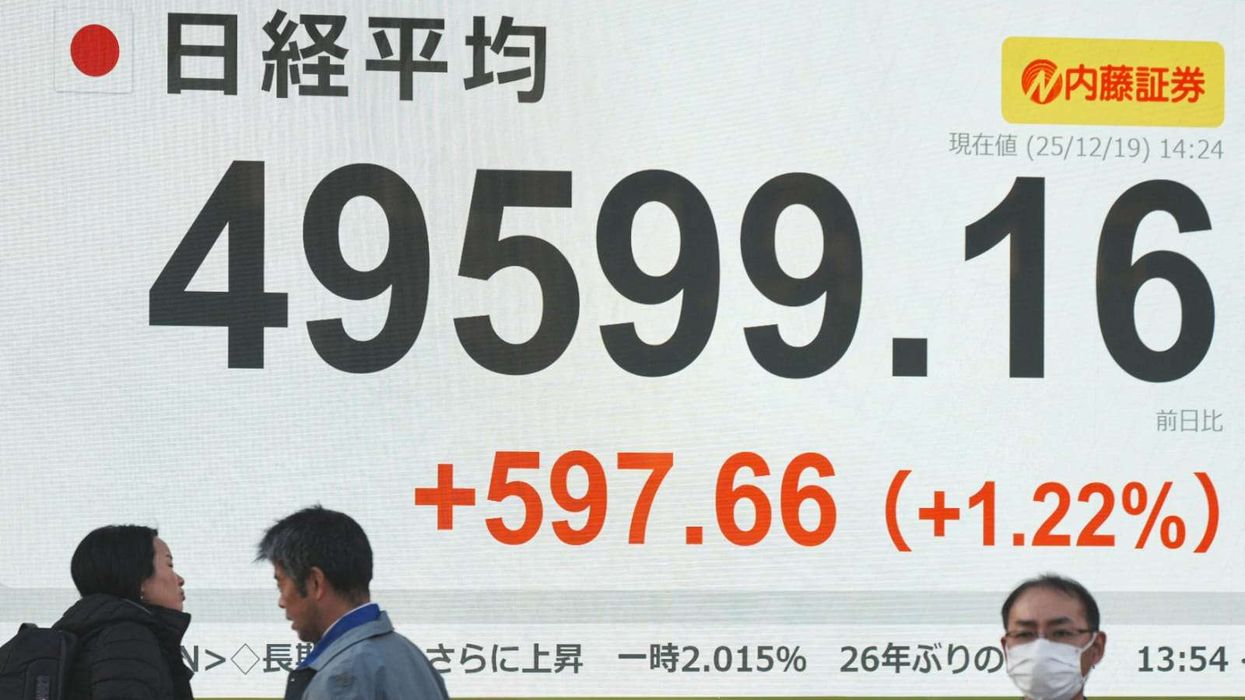
Asian stock markets led a global rally on Wednesday as shares held near record levels, while precious metals extended their bullish momentum to unprecedented highs as 2025 draws to a close.
The broadest Asia-Pacific index outside Japan rose 0.4 per cent, capping a 26 per cent gain for the year, its strongest performance since 2017.
The robust showing reflected broader gains across global markets, which have been driven by artificial intelligence
Gold and silver emerged as the week's standout performers. Spot gold prices held at $4,489.91 per ounce after reaching a record high of $4,525.86 earlier, bringing its annual gain to 72 per cent. Silver jumped 1.2 per cent to a historic $72.27 per ounce, on track for an annual rise of almost 150 per cent, representing its best year on record.
US economic strength
On Wall Street, the S&P 500 achieved a closing record overnight as the anticipated Santa Claus rally materialised.
US data revealing the economy expanded at a significantly faster pace than expected during the third quarter bolstered risk sentiment, though bond markets weakened.
Chris Zaccarelli, chief investment officer for Northlight Asset Management, described Tuesday's economic data as "exceptional", noting "If the economy keeps producing at this level, then there isn't as much need to worry about a slowing economy and concerns may actually flip back to the price-stability constraint."
Goldman Sachs economists forecast full-year global GDP growth of 2.8 per cent in 2026, exceeding the 2.5 per cent consensus, with US growth projected at 2.6 per cent against a 2 per cent consensus.
Chief US economist David Mericle stated, "Our 2026 global economic outlook argues for above-consensus growth and falling inflation next year."
Europe's STOXX 600 index remained unchanged in early trading, while the UK's FTSE 100 declined 0.2 per cent. Several European bourses, including Amsterdam, Brussels and Paris, operated half-day trading sessions, with German and Milan markets closed for the holidays.
In currency markets, the yen strengthened for a third consecutive session amid intervention risk from Japanese authorities. The dollar fell 0.3 per cent to 155.83 yen, retreating from the 158 level that previously triggered intervention. The euro remained steady at $1.18, having rallied 14 per cent this year.
Oil prices held firm but faced a third consecutive year of declines, with Brent crude rising 0.1 per cent to $62.45 per barrel, down 16 per cent annually.