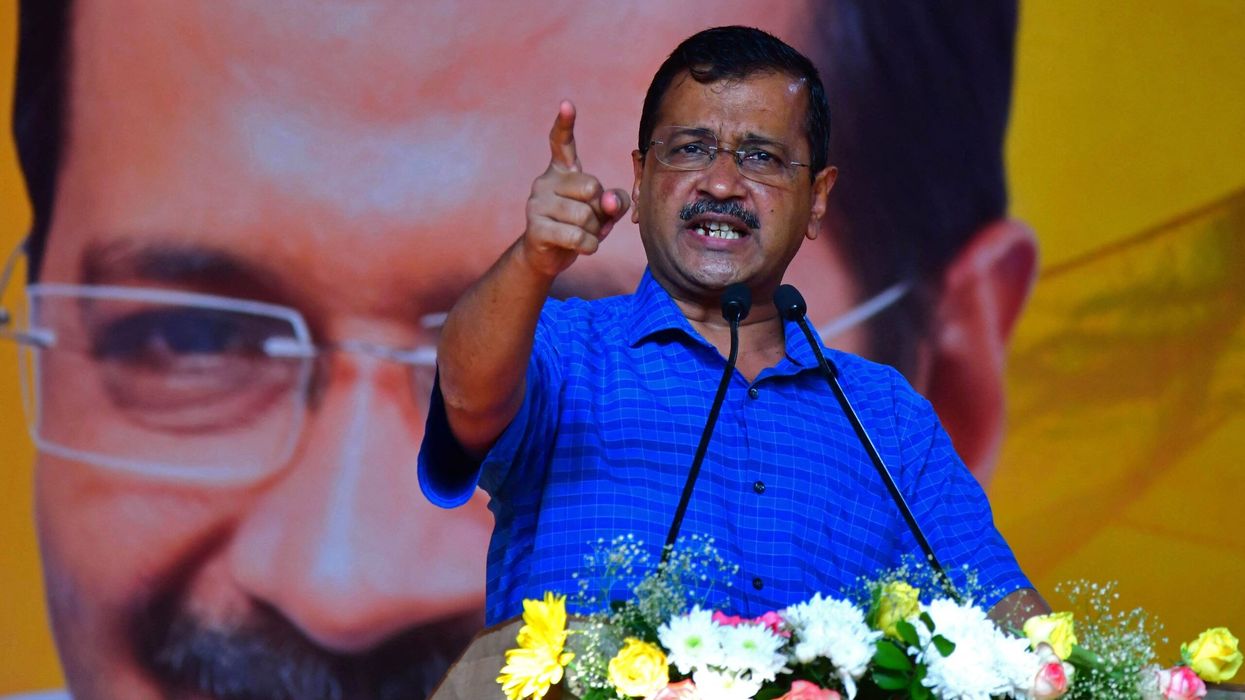

THE DELHI high court on Friday (21) stayed a lower court's order granting bail to opposition leader and Delhi Chief Minister Arvind Kejriwal in a liquor graft case.
The court said the interim stay will remain until the Enforcement Directorate's (ED) petition is heard.
The directorate had challenged Aam Aadmi Party (AAP) leader's bail just hours before he was to leave Tihar jail.
Additional Solicitor General S V Raju, representing the ED in the high court, sought a stay on the trial court order.
He contended that the agency was not allowed to argue its case.
The high court said till it heard the petition, the trial court order would not be acted upon.
The court said it was reserving the order for 2-3 days as it wanted to go through the entire records.
On Thursday (20), the trial court ordered Kejriwal's release on a personal bond of Rs 100,000 (£947), subject to certain conditions.
The court had accepted Kejriwal's argument that the probe agency hasn't presented enough evidence since arresting him on March 21.
ED had alleged that Kejriwal was part of a conspiracy to intentionally leave loopholes in the now-scrapped Delhi Excise Policy for 2021-22, to benefit certain liquor sellers.
Other AAP leaders arrested in the same case include former Deputy Chief Minister of Delhi, Manish Sisodia and Member of Parliament Sanjay Singh.
Singh is currently out on bail though Sisodia continues to be in jail. (Agencies)