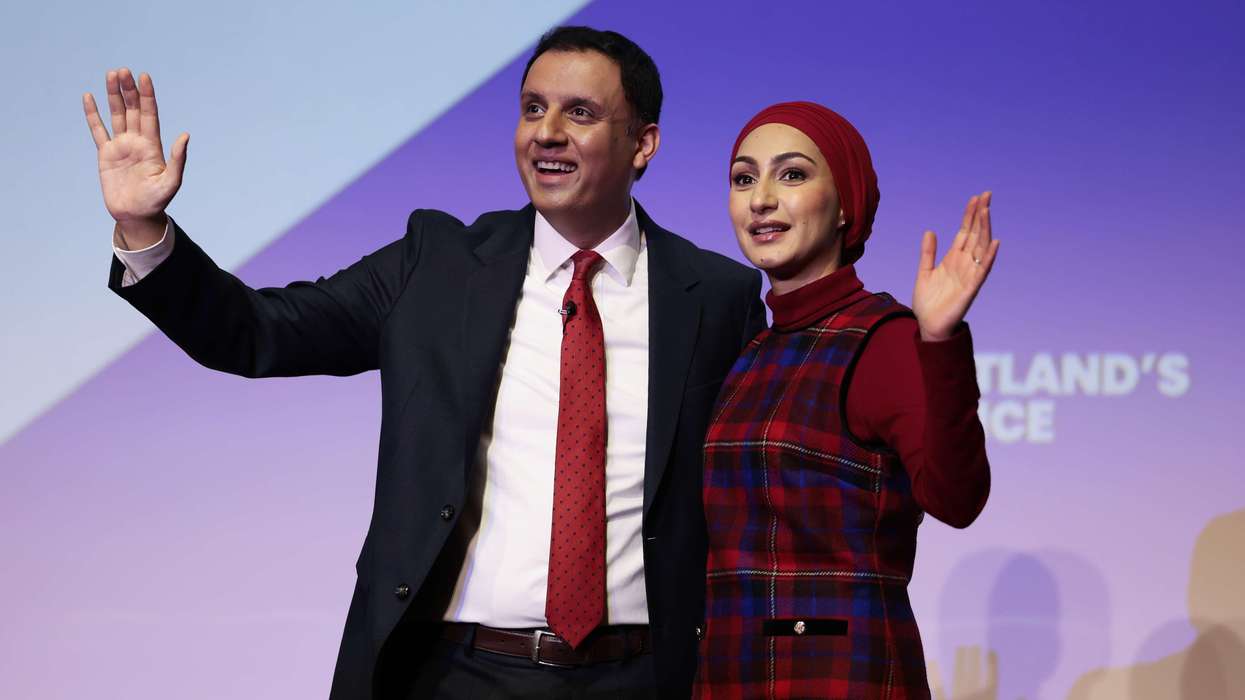

IN FEBRUARY, Anas Sarwar made a striking intervention in national politics. As controversy swirled around the government, the Scottish Labour leader publicly called on prime minister Keir Starmer to step down, arguing that ongoing disputes had become a distraction from governing.
Sarwar cited a series of issues – including the appointment of Peter Mandelson as UK ambassador to the US despite his past links to convicted sex offender Jeffrey Epstein – and concluded that the “the distraction needs to end, and the leadership in Downing Street has to change.”
The episode revealed a central feature of Sarwar’s political style: a willingness to step beyond cautious party lines when he believes the stakes demand it. It also unfolded against the backdrop of Scotland’s approaching Holyrood election in May, which Sarwar has framed as a decisive moment for the country’s future.
“I am standing to be Scotland’s first minister,” he told the BBC earlier this year. “I am determined that we will defy the odds again and that we will win the election in 2026.”
Sarwar has led Scottish Labour since 2021, when he became the first person of colour to head a major political party in the UK. His leadership has coincided with an unusually volatile period in Scottish politics, marked by leadership changes within the Scottish National Party (SNP), the rise of smaller parties and renewed scrutiny of public services.
At the 2024 UK general election, Sarwar helped steer Scottish Labour to a significantly stronger performance, increasing the party’s representation at Westminster and reviving its fortunes north of the border. The challenge now is translating that momentum into success at Holyrood, where devolved issues such as health, housing and education dominate voter concerns.
Health policy sits at the centre of Sarwar’s political narrative. A former NHS dentist, he frequently draws on his professional experience when discussing reform of Scotland’s health system. He has argued that long waiting times and service pressures demand urgent structural change.
Among his most prominent proposals is ‘Milly’s Law’, named after a child cancer patient who died after contracting an infection in hospital. The measure would create an independent patient advocate to support families seeking answers and accountability. Sarwar has said the families “deserve the truth”, pledging to legislate if elected.
Born in Glasgow in 1983, Sarwar is the son of Mohammad Sarwar, who became the UK’s first Muslim MP when he was elected in 1997. After training as a dentist at the University of Glasgow and working in the NHS, he entered politics and was elected MP for Glasgow Central in 2010. The SNP landslide of 2015 cost him the seat, but it also reshaped his trajectory. A year later he entered the Scottish Parliament, rebuilding his standing within the party before winning the leadership in 2021.
With the Holyrood contest approaching, Sarwar faces the defining test of his leadership: turning renewed relevance into electoral victory. Whether Scottish Labour can overcome entrenched political divides and challenge the SNP’s long tenure in government may determine not only his political future, but the next chapter of Scotland’s politics.