
- Children under 14 will have to be seated with a parent or accompanying adult free of charge.
- Families can currently face up to £104 for seats together on a return journey.
- Airlines could also gain powers to ban repeat disruptive passengers.
Parents travelling with children in the UK could soon stop paying extra to sit together on flights, under government plans aimed at tackling what ministers describe as unnecessary charges on holidaymakers.
From today (2), airlines will be required to seat children under 14 next to a parent or accompanying adult free of charge under the government's planned reforms. Ministers are also proposing to prevent airlines from charging passengers to correct simple mistakes in names on flight bookings.
The measures are part of a wider overhaul of aviation consumer protection being developed alongside the Civil Aviation (Consumer Protection and Regulatory Reform) Bill, which is currently going through Parliament. The Bill would give ministers powers to introduce detailed passenger-rights regulations through secondary legislation.
According to the Department for Transport, families can currently pay as much as £104 for a parent and child to sit together on a return journey.
Prime Minister Andy Burnham said: “Charging parents just to sit with their children is a rip-off, plain and simple.”
He added: “People are fed up with these little charges that add up, so I’m putting a stop to them.”
The government said it wants the measures in place in time for next year's summer holiday season, meaning families could see the changes before the busiest period for international travel.
From seat fees to booking mistakes
Family seating has already become a source of scrutiny for airlines operating in the UK.
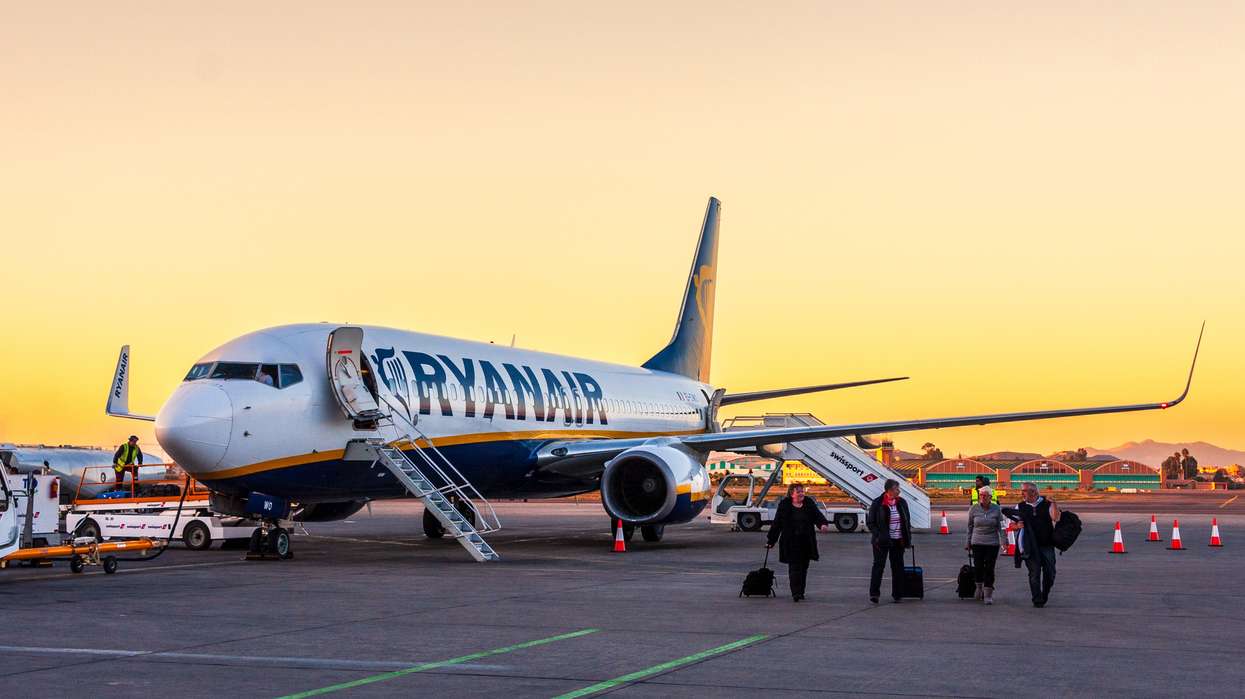
Ryanair came under investigation from the Competition and Markets Authority (CMA) earlier this year over its policy for families travelling with young children. The airline had required parents travelling with children aged between two and 11 to pay for a mandatory family seat, typically costing about £8 each way, while the children were allocated seats next to or close to the paying adult.
Ryanair subsequently changed its policy, allowing parents to accept a free seat allocation, generally at the back of the aircraft, or pay to reserve a seat of their choice. Children travelling with them can then be seated alongside them without an additional charge.
The government's proposed rules would take the principle further by requiring free seating with a parent or accompanying adult for children under 14 across airlines.
Rory Boland, editor of Which? Travel, said: “It’s clearly unfair to force parents and children as young as three to pay an extra fee just to sit together.”
He added: “Airlines that have separated families are putting profit ahead of passenger peace of mind.”
The proposed changes also target another common source of frustration: correcting mistakes on flight bookings.
Under the plans, passengers would be able to make simple name corrections without being charged. The government said the measure is intended to prevent travellers from facing unnecessary costs when, for example, a spelling mistake is made during the booking process.
The reforms would sit within a broader framework giving ministers powers to establish passenger rights and set duties for airlines and airports. The Bill is currently being scrutinised by Parliament, with the House of Commons Public Bill Committee due to begin detailed line-by-line consideration in October.
Airlines face a second crackdown
The government is also proposing a new approach to disruptive behaviour on aircraft.
Airlines recorded more than 1,000 serious disruptive passenger incidents in 2025, according to government figures, including an incident involving a mid-air brawl that resulted in a flight being diverted.
Under the proposed system, airlines and other relevant organisations would be able to share information about persistently disruptive passengers. Airlines could then choose to ban repeat offenders from flying with them.
Transport Secretary Heidi Alexander said: “Everyone deserves to travel knowing their flight isn’t going to be disrupted by bad behaviour from a small minority.”
She added: “These commonsense reforms will make flying safer for staff and passengers and protect people from unnecessary charges, whoever they fly with.”
The two measures tackle different sides of the passenger experience: one aims to reduce the extra costs attached to travelling as a family, while the other is designed to give airlines more tools to deal with passengers whose behaviour repeatedly causes disruption.
For families, however, the immediate change will be the removal of one increasingly familiar holiday expense — paying simply to make sure a child sits beside the adult responsible for them.