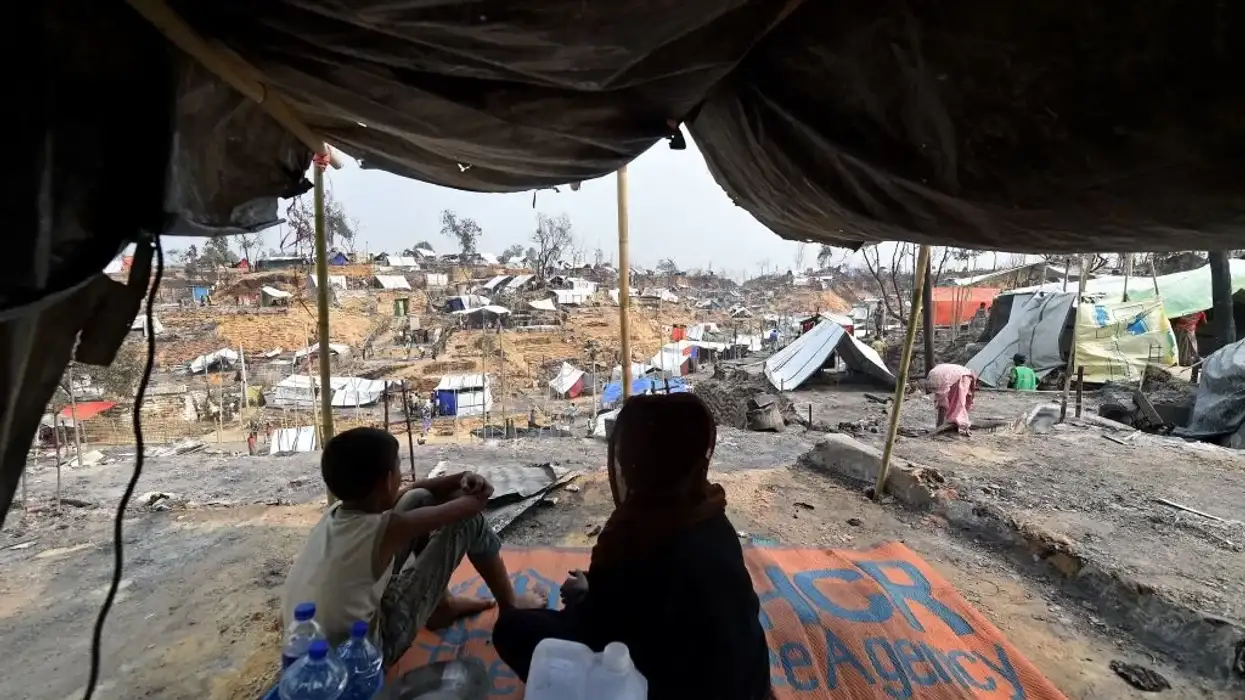

AID WORKERS searched on Wednesday (24) to reunite Rohingya Muslim families separated when a huge fire swept through the world's biggest refugee settlement in Bangladesh, forcing about 45,000 people from their bamboo and plastic homes.
The blaze, the latest and biggest over the past year in the crowded camps in southeast Bangladesh's Cox's Bazar district, killed 15 people on Monday (22) with hundreds missing, the UN said.
Bangladeshi authorities say they are investigating the cause.
Some 1 million Rohingya refugees live in camps in Cox's Bazar with little hope of returning to their homes in Buddhist-majority Myanmar, where most have been refused citizenship and face persecution.
Ayesha Bibi, 60, was relieved to be reunited with her husband after assuming him dead but said they once again faced ruin.
"Nothing is left but ashes," Bibi said.
"Our home in Myanmar was burned down. Here also we're losing our shelter."
Bibi and her 85-year-old husband sat under a tarpaulin as aid agencies set up tents in place of their huts. Nearby, some iron pipes and a boundary wall were all that remained of a camp hospital built with Turkish support.
Nearby Mohammed Bokheri, 10, was poking through the scorched debris of what was his home, picking over scraps of his half-burned school books.
"I'm so sad, all my books are ruined," he said.
No safety concerns
The UN refugee agency, UNHCR, said some children were looking for their parents, in another trauma for many of the families that fled from their homes in western Myanmar when the military there launched an offensive against Rohingya insurgents in 2017.
"This is a very difficult situation and our heart goes out to the thousands of refugees who have yet met another disaster," UNHCR official Ita Schuette said in a video message posted on Twitter from Cox's Bazar.
Witnesses said that barbed wire fencing put up around the camp had trapped many people during the fire.
International humanitarian agencies have called for the removal of the wire but the deputy Bangladesh government official in charge of the refugees, Mohammad Shamsud Douza, said the fencing was not a major issue.
"It spread so quickly that some people who could not come out instantly died," he said, putting the death toll at 11. "It was not the barbed wire fencing that prevented them from escaping."
Citing the overcrowding in the camps thrown up across deforested hills, Bangladesh has been trying to move 100,000 Rohingya to a remote, flood-prone Bay of Bengal island.
Bangladesh has already transferred more than 13,000 refugees to the Bhasan Char island since December, despite opposition from aid groups and the reluctance of many Rohingya.
Aid groups say the flood-prone, low-lying island, which only emerged from the see about 20 years ago, risks being overwhelmed by storms and refugees should not be housed there.
Bangladesh has dismissed safety concerns over the island, and says it has built flood defences, housing, hospitals and emergency cyclone shelters.
Bibi said she would never go: "I'll die here. I'll never go to Bhasan Char island."