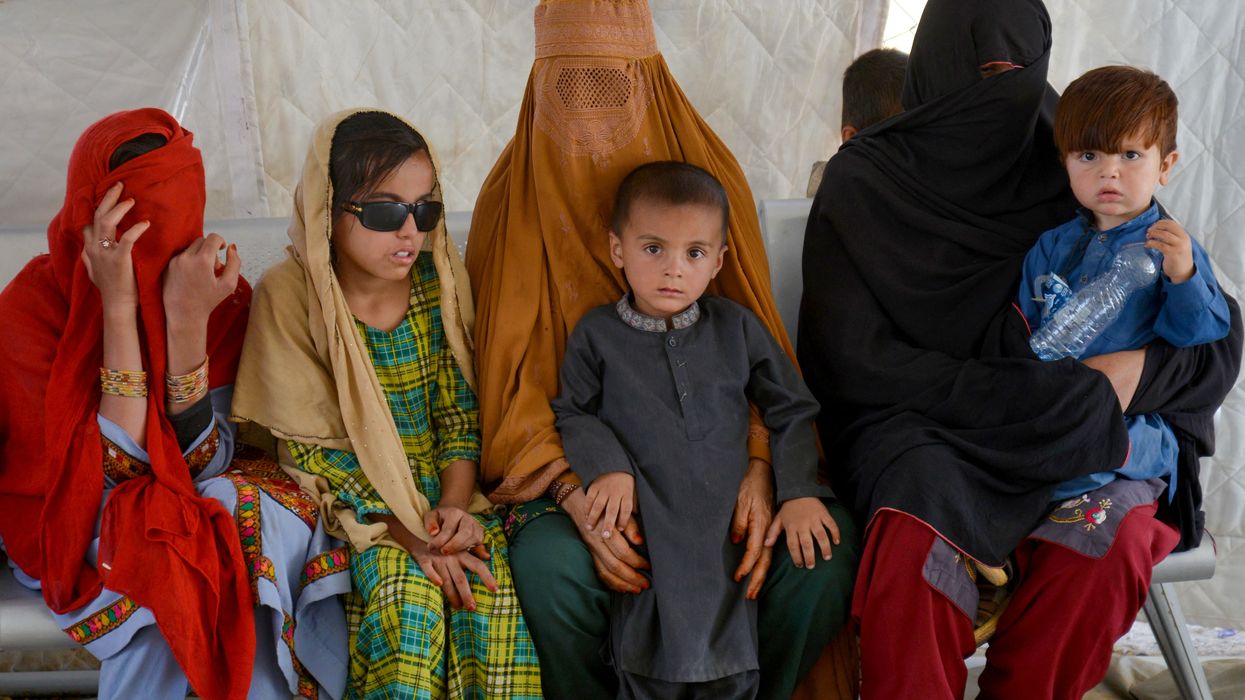

MORE than 200,000 Afghans have left Pakistan since the government renewed a deportation drive in April, with Iran also stepping up expulsions of Afghans.
Generations of Afghans have fled to neighbouring Pakistan and Iran during decades of successive wars, seeking safety and better economic opportunities.
Both governments have grown weary of large migrant populations and ordered millions to leave under the threat of arrest.
Pakistan launched a strict campaign to evict more than 800,000 Afghans who had their residence permits cancelled, including some born in the country or lived there for decades.
According to the interior ministry, more than 135,000 Afghans left Pakistan in April, while around 67,000 departed in May and more than 3,000 were sent back in the first two days of June.
The number of returnees slowed ahead of the Eid al-Adha holiday last week, with some Afghans still crossing the main border points from Pakistan last Wednesday (4). In total, more than one million Afghans have left Pakistan.
Islamabad has labelled Afghans “terrorists and criminals”, but analysts say the expulsions are designed to pressure neighbouring Afghanistan’s Taliban authorities to control militancy in the border regions.
Last year, Pakistan recorded the highest number of deaths from attacks in a decade.
The government frequently accuses Afghan nationals of taking part in attacks and blames Kabul for allowing militants to take refuge on its soil, a charge Taliban leaders deny.
Pakistan is now threatening to lift the protection granted to the 1.3 million Afghans holding refugee cards issued by the UN High Commissioner for Refugees at the end of June.
Meanwhile, Iranian officials have ordered Afghans without documentation to leave by July 6.
Nader Yarahmadi, from the Iranian interior ministry, said on state television that it would affect around four million of the more than six million Afghans who Iran says are in the country.
The UN’s International Organization for Migration (IOM) voiced concern over a surge in Afghan families being deported from Iran, recording 15,675 crossing in May, a more than two-fold increase from the previous month.