
I WAS at Lord’s on June 25, 1983, when Kapil Dev’s team beat the West Indies to win the cricket world cup. It was 7.30pm as the shadows were lengthening across the hallowed turf at the “home of cricket” and the midnight hour in India where fireworks were lighting up the night sky. It was an important moment in the country’s history.
The victory gave India self-confidence not just in cricket, but in many other walks of life. Some commentators went so far as to declare this was the most important moment since India’s independence in 1947.
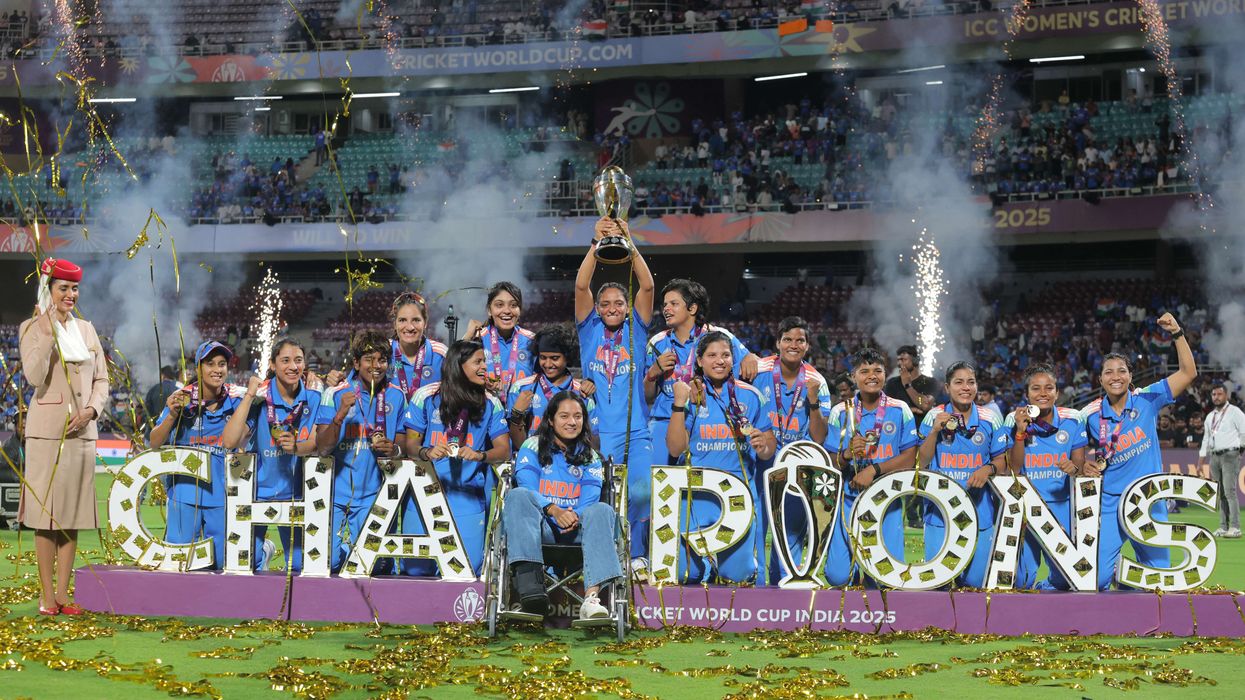
The victory of India’s women cricketers in the ICC world cup final against South Africa last Sunday (2) in Navi Mumbai was – if anything – more significant.
The Times of India headline echoed Jawaharlal Nehru’s “tryst with destiny” speech from 1947: “At the stroke of the midnight hour, India awake as World Champions!”
The victory will raise the status of women. For decades, India’s women cricketers were disparagingly called “Eves” whereas the men, usually overpaid and often spoilt, were never dismissed as “Adams”, even when they were humiliated by their opponents. One consequence of last Sunday’s victory is that parents will not object if their daughters want to take up cricket. In top level cricket, the women are now paid the same as men, a change introduced by the BCCI (Board for the Control of Cricket in India). The Women’s Premier League has also created new opportunities for talented players from all parts of India.
After last Sunday’s final, Shafali Verma, player of the match, spoke in Hindi, the language in which she is most comfortable, when she was interviewed. That she did not go to an English-medium school indicates her family background is modest.
A friend, Kabir Khan, directed a Bollywood film, 83, celebrating India’s victory at Lord’s. A movie about Sunday’s heroines might be even more inspiring.
Economically, the country is progressing, even though there are still hundreds of millions of very poor people in a population of 1.4 billion.
Earlier this year, when I went to India for my first visit in nearly 15 years, I noticed at least two changes. In middle-class, urban India, girls were going into higher education alongside boys. And, at Air India, many of the senior posts were held by women, a reflection of what was happening across India.
But other changes are urgently required. Two of the Australian women cricketers “were approached and touched inappropriately by a motorcyclist” when they were on their way to a café in Indore in Madhya Pradesh, according to Cricket Australia. A local male BJP minister, Kailash Vijayvargiya, caused outrage by appearing to blame the victims: “Whenever a player steps out, just like when we step out, we tell a local. The players will also realise that in the future, if we step out, then we should tell the security or local administration. Players are very popular, so they must take care whenever they step out.” Opposition Congress party leader Arun Yadav called the statement “disgusting and regressive”.
And female singer Chinmayi Sripaada accused the minister of victim blaming: “BJP Minister Kailash Vijayvargiya basically says women visiting another city/country must be worried/concerned/think about their own safety when stepping out without telling anyone. So basically it was the women’s fault.”
Cricket can be the instrument of radical change in India.
Harmanpreet Kaur, the Indian captain, said after receiving the winner’s medal: “This is the start. We wanted to break this barrier. And our next plan is to make this a habit. We were waiting for it. Now this moment has come. So many big occasions are coming, and we want to keep improving. This is not the end, just the beginning.”
The victory for the men in 1983 was big. The victory for the women in 2025 is bigger.