Skip to content
Search

Latest Stories

Submit Guest Post

Van-fire kills 15 in southern Pakistan

AT LEAST 15 people were killed when a passenger van travelling in southern Pakistan crashed and caught fire, officials said.

The van was carrying passengers from Karachi to Hyderabad city when it struck an object and careered off the road late Saturday(26).


"The death toll in the unfortunate accident has reached 15," said Owais Shah, the transport minister of Sindh province.

Five other people were injured, three of them critically, he said.

Most of the bodies were burned beyond recognition, said Faisal Edhi, head of the non-profit Edhi Foundation which runs the morgue the bodies were taken to.

Investigators were looking to see if a natural gas cylinder aboard the bus had contributed to the inferno.

Such incidents occur frequently on Pakistan's roads, where speeding, dilapidated vehicles and badly maintained roads all contribute to the accident rate.


Add EasternEye As Your Trusted Source
preferred source on google news

More For You

magnetic nanomotors

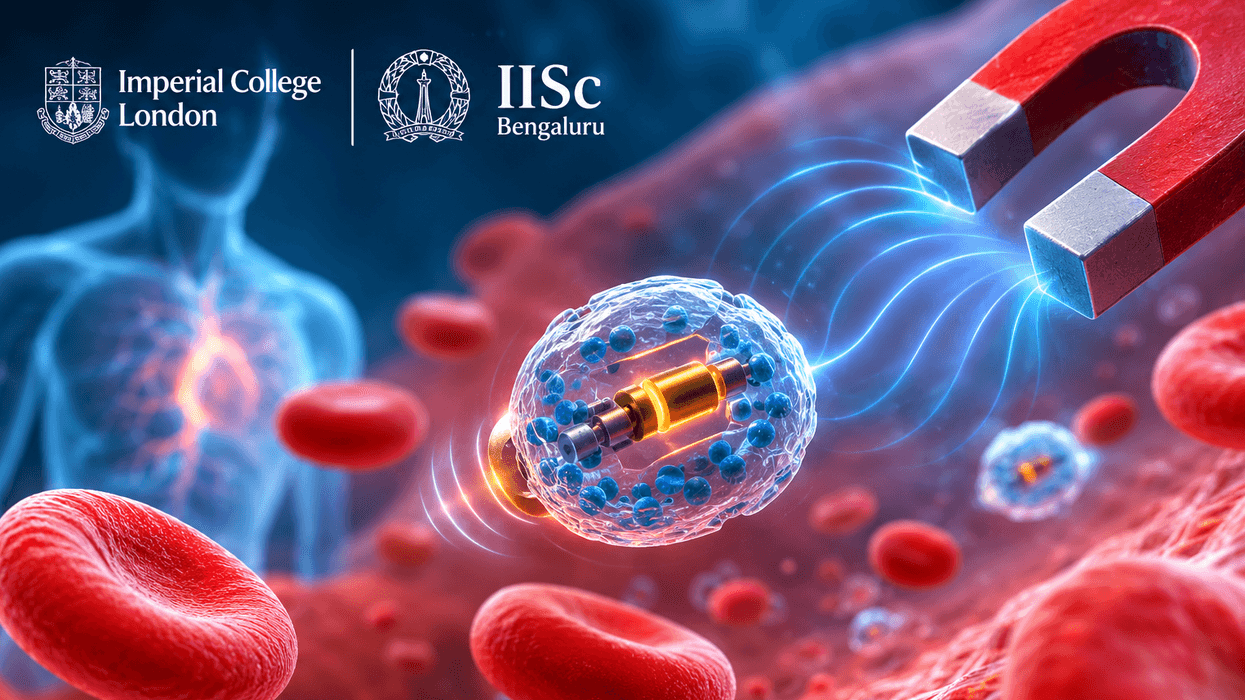
The team plans to place magnetic nanomotors inside synthetic cells, engineered structures that mimic some functions of living cells.

AI generated

India-UK team to develop magnetic nanorobots that can be steered around the body

  • Imperial College London and IISc Bengaluru to develop magnet-guided nanorobots
  • Tiny motors inside synthetic cells could deliver drugs to precise locations
  • Approach could mean lower doses and fewer side effects
  • Project funded by Imperial's India Connect Fund

Scientists in Britain and India are developing tiny robots that can be steered through the body using magnets, in a project that could lead to more precise ways of delivering medicines.

The collaboration between Imperial College London and the Indian Institute of Science (IISc) in Bengaluru, announced this week, combines synthetic biology with nanorobotics to create microscopic systems that can move, carry materials and release them at specific locations.

Keep ReadingShow less