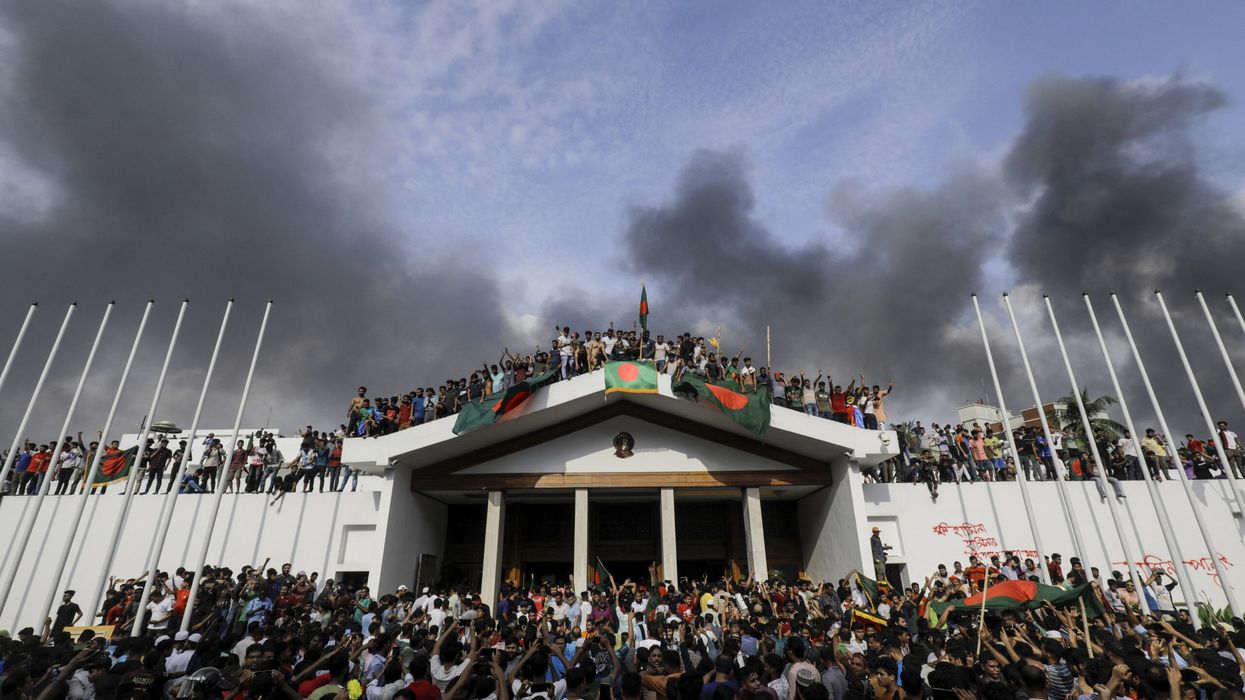

THE British government has urged the United Nations to lead an investigation into the recent violent incidents in Bangladesh, which culminated in the ousting of prime minister Sheikh Hasina, who has reportedly fled to India and may seek asylum in the UK.
Foreign secretary David Lammy issued a statement on Monday (5) condemning the "unprecedented levels of violence and tragic loss of life" over the past two weeks in Bangladesh, and emphasised the UK's desire to see progress towards a democratic future for the nation.
The UK government has not officially commented on reports of Hasina seeking political asylum in Britain, with Home Office sources indicating that the country's immigration rules do not specifically allow individuals to travel to the UK to seek asylum.
“The last two weeks in Bangladesh have seen unprecedented levels of violence and tragic loss of life. A transitional period has been announced by the Chief of the Army Staff,” Lammy's statement read.
He further stressed the need for all parties to collaborate to end the violence, restore calm, and prevent further casualties, advocating for a full and independent UN-led investigation into the recent events.
“The UK wants to see action taken to ensure Bangladesh a peaceful and democratic future. The UK and Bangladesh have deep people-to-people links and shared Commonwealth values,” he added.
Meanwhile, external affairs minister S Jaishankar updated parliament in New Delhi on Tuesday (6) to confirm that Hasina had arrived in the country after a forced resignation amid public agitation.
“At very short notice she requested approval to come for the moment to India. We simultaneously received a request for flight clearance from Bangladesh authorities. She arrived yesterday evening in Delhi,” he said in a statement in the Rajya Sabha.
According to UK government sources, while the country has a “proud record” of providing protection for people who need it, there is no provision within the Immigration Rules for someone to be “allowed to travel to the UK to seek asylum or temporary refuge”.
Those who need international protection should claim asylum in the first safe country they reach as the fastest route to safety, officials indicated with reference to the asylum procedures. London is believed to be the preferred final destination of Sheikh Hasina, whose niece – Tulip Siddiq, the daughter of UK passport holder Sheikh Rehana – is based in north London as a Labour party member of Parliament from Hampstead and Highgate and junior minister in the Treasury department.
Strategic experts believe the situation is a complicated one for the UK, which has previously offered Hasina's late father – Sheikh Mujibur Rahman – refuge on his release from a Pakistani jail in January 1972 following the country's freedom struggle.
“Sheikh Hasina's desire to relocate to the UK, where her sister and niece live, puts the UK government in a dilemma. UK Foreign Secretary David Lammy has called for a UN-led investigation into the violence of the past few days. If this is held, it will likely hold Sheikh Hasina accountable to some degree and would look bad for the British government if she were then in the UK with the grant of ‘political asylum',” said Rahul Roy-Chaudhury, Senior Fellow at the International Institute for Strategic Studies (IISS) in London.
“But, at the same time, the UK's long-standing links with Sheikh Hasina's family makes it difficult to ignore her request. A possible solution would be to give Sheikh Hasina leave to enter the UK where she could live in ‘self-exile'. But, with Sheikh Hasina's niece being a Labour MP and minister, the optics of this will be challenging,” he said.
The student-led protests in Bangladesh started last month against a controversial job quota scheme and turned into violent anti-government agitation. (PTI)