
Highlights:
- Plug-in solar is now legal across Great Britain under new rules.
- 800-watt kits can be connected through a standard three-pin wall socket.
- Households could save up to £110 a year on electricity bills.
- The technology could help renters and flat owners access solar power.
- Strict safety rules apply, including no extension leads or multi-way adaptors.
For many British Asian households, particularly those living in rented properties, flats or densely packed urban homes, putting solar panels on the roof has often seemed like an expensive or impractical option.
That could now change.
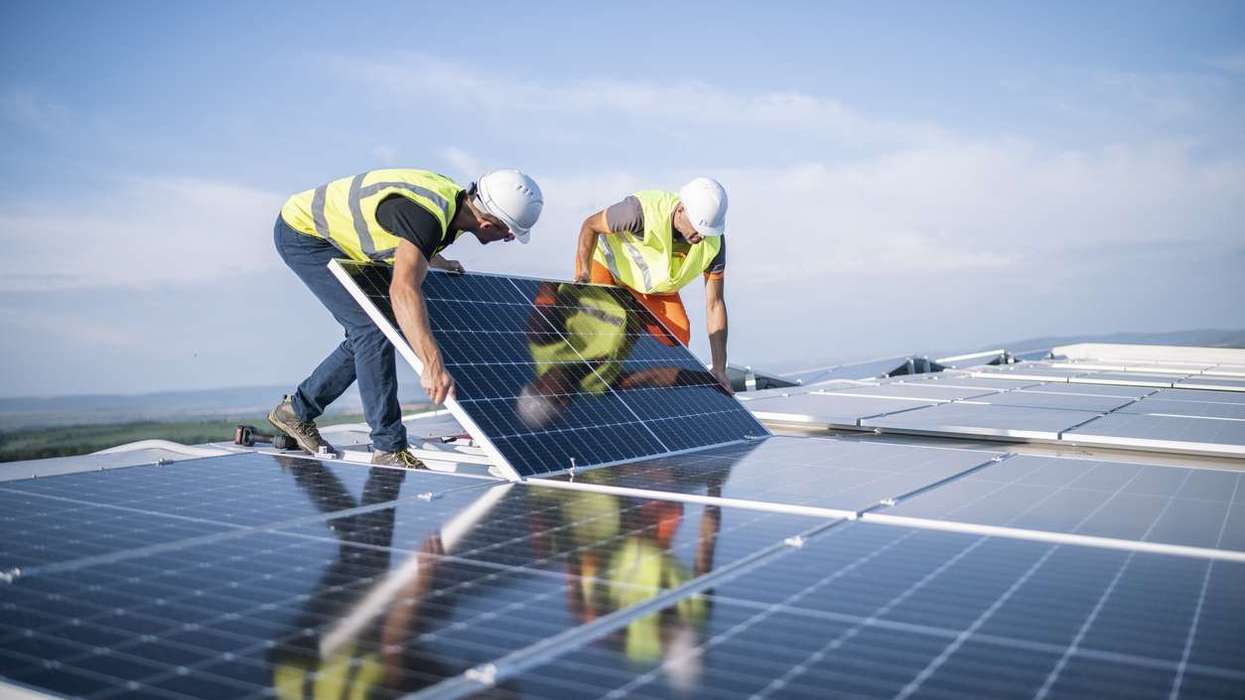
New rules coming into force on Thursday (27) allow households across England, Scotland and Wales to use approved plug-in solar panel systems of up to 800 watts, connecting them directly to a standard three-pin wall socket.
The government estimates that these small systems could provide as much as 20 per cent of an average home's electricity use and save households up to £110 a year.
The change comes at a particularly important time, with household energy costs facing fresh pressure. Ofgem has announced a 4 per cent increase in the domestic energy price cap from October, with higher wholesale fuel costs contributing to the rise.
For families already looking for ways to control household spending, the new technology offers a relatively simple way to generate some electricity at home.
Solar without the big rooftop investment
Until now, residential solar has largely meant installing permanent panels on a property's roof — an option that can cost thousands of pounds and is not always possible for renters or people living in flats.
The new plug-in systems are designed to make smaller-scale solar available to a much wider group.
Approved systems can use up to two solar panels connected to an 800-watt micro-inverter. The inverter converts the direct current generated by the panels into alternating current that can be used by appliances and electrical devices inside the home.
The electricity generated is first used within the property, helping offset the power being consumed by appliances such as refrigerators, televisions, Wi-Fi routers and devices left on standby.
The Department for Energy Security and Net Zero estimates that the systems could meet up to one-fifth of an average home's electricity needs.
Major retailers including Amazon, Currys, Argos and Wickes are expected to sell approved kits online and in stores.
"From this summer, we are giving more families the ability to power their homes with clean homegrown energy," said Miatta Fahnbulleh, the UK Energy Secretary, describing the technology as a simple and affordable way for households to manage their energy bills.
The move could be particularly significant for British Asian families living in rented accommodation or flats, where installing permanent rooftop solar may require landlord, freeholder or building approval.
A new option for renters and flat owners
The biggest change may not be for homeowners with large detached properties, but for people who have previously been unable to access solar at all.
Plug-in solar systems are intended to provide a lower-cost and less permanent alternative. Similar systems in European markets typically cost between £400 and £600, although prices in Britain will depend on the product and retailer.
Green energy organisations have welcomed the move as a way of widening access to renewable energy.
"This will bring cheap, clean power to households that have not been able to access the benefits of solar and batteries," said Chris Hewett, Chief Executive Officer of trade association Solar Energy UK.
Trevor Hutchings, Chief Executive Officer of the Renewable Energy Association, described the move as a major step towards making renewable energy available to more people.
"Our electricity prices are some of the highest because of our exposure to volatile international gas markets. Innovations like plug-in solar and the wider renewables roll out will help us bring down bills and strengthen our energy sovereignty," Hutchings said.
However, households cannot simply buy any portable solar panel online and plug it into a socket.
The new rules apply only to approved systems, and there are strict requirements around installation and use.
Strict rules households must follow
Safety is at the heart of the new regulations.
Approved plug-in solar kits must have automatic anti-islanding protection. This is designed to cut the electricity supply from the plug within 100 milliseconds if the system is unplugged or the local electricity supply fails.
The safeguard is intended to prevent the plug from remaining live and creating a potential electric-shock risk.
Households can have only one plug-in solar device, and it must be connected directly to a fixed wall socket.
Extension leads, multi-way adaptors and cable reels cannot be used.
Battery storage systems are also not covered by the new plug-in route and cannot currently be connected in the same way.
There are additional restrictions concerning where panels can be installed. They cannot be mounted on timber balconies, high-pressure laminate cladding or external walls undergoing safety work.
Mounting systems must be non-permanent and reversible.
For renters and residents who want to attach panels to external structures, written permission from the landlord or freeholder is required.
After installation, owners must also enter the system's details on the official UK Plug-In Solar Registration portal. The registration will help local electricity network operators monitor the amount of small-scale generation being connected to the electricity grid.
The introduction of plug-in solar comes as interest in residential renewable energy continues to rise.
Almost 150,000 certified rooftop solar installations were recorded by the Microgeneration Certification Scheme during the first six months of 2026 — 17 per cent higher than the previous record for the same period in 2025.
Traditional rooftop solar can save homeowners as much as £480 a year, according to government estimates.
But plug-in solar could open the door to a different group of households — those who cannot afford, own or permanently alter the property needed for conventional panels.
For British Asian families, that could make the change particularly relevant.
Whether living in a London flat, a rented terrace or a smaller suburban property, households that have previously watched the solar revolution from the sidelines now have another option to generate some of their own electricity.
Northern Ireland is not included in the current rules and is expected to consider similar measures under its own energy policies.
For everyone else in Great Britain, the message is simple: solar power no longer necessarily has to start on the roof. It can now start at the wall socket.





 The research found that South Asian women were more likely to describe smear tests as embarrassing, with 71 per cent to 91 per cent of South Asian participants agreeing with that description compared with 28 per cent of White British women.iStock
 O GO WITH India-therapy-health-doctors,FEATURE by Rupam Nair In this photograph taken on July 2, 2013 an Indian woman covers her face in pain as she is cut on her hand by Mohammed Iqbal, (R), son of elderly doctor Mohammed Gyas, at their open air clinic outside the Jama Masjid in the old quarters of Delhi. Among a handful of poorer, and sometimes remote, communities in India, traditional practices like bloodletting are favoured. About 50 patients queue each day at the open-air clinic in the shadow of India's largest mosque, the Jama Masjid, for the treatment which Gyas says can cure everything from paralysis to diabetes and even cervical cancer. Getty Images
 Bryant had cancerous cells discovered during screening when she was 32. iStock