Highlights
- Trump says US-Iran talks could resume within days, possibly in Pakistan
- Israel and Lebanon agree to launch direct negotiations for the first time since 1993
- Fighting continues with rocket attacks and Israeli strikes reported across Lebanon
- US maintains pressure on Iran amid warnings, while truce between Washington and Tehran holds
PRESIDENT Donald Trump said Tuesday that US-Iran talks could resume this week, while Israel and Lebanon agreed to launch direct negotiations, marking movement on two fronts in the West Asia conflict.
Trump told The New York Post a new round of talks with Tehran could take place in Pakistan "over the next two days", after saying earlier that Iranian officials had contacted him seeking a deal. Senior Pakistani sources said efforts were underway to bring both sides together for a second round after earlier talks did not produce a breakthrough.
At the same time, Israel and Lebanon agreed to hold direct negotiations after talks in Washington mediated by US Secretary of State Marco Rubio. A State Department spokesperson said the discussions were "productive" and added: "All sides agreed to launch direct negotiations at a mutually agreed time and venue."
ALSO READ: Efforts step up for US-Iran talks as truce holds and blockade begins
The meeting marked the first direct, high-level engagement since 1993. Rubio said: "This is a historic opportunity," and referred to the "decades of history" behind the talks. Lebanese president Joseph Aoun said he hoped the talks would "mark the beginning of the end of the suffering of the Lebanese people."
Israeli ambassador Yechiel Leiter said both sides were "on the same side", while Lebanese envoy Nada Hamadeh Moawad described the talks as "constructive" and said she had called for a ceasefire.
The diplomatic steps came as fighting continued. Hezbollah said it fired rockets at northern Israel, including attacks on multiple towns. The Israeli military said it detected "approximately 30 launches" early Wednesday.
Israeli strikes also hit vehicles south of Beirut, including in Saadiyat and Jiyeh, according to Lebanese state media. Additional strikes were reported across southern Lebanon.
Lebanon was drawn into the conflict after Hezbollah attacked Israel in support of Iran, triggering Israeli military action that has killed more than 2,000 people and displaced more than a million, according to Lebanese authorities.
ALSO READ: US, Iran fail to reach deal after 21-hour talks in Pakistan
Hezbollah opposed the talks. Its leader Naim Qassem had called for negotiations to be scrapped and said the group would continue fighting.
Washington is pushing to contain the conflict. US Central Command said American forces "have completely halted economic trade going into and out of Iran by sea." Maritime data indicated ships had still moved through the Strait of Hormuz.
Iran’s military called the blockade piracy and warned that if its harbours were threatened, "no port in the Persian Gulf and the Arabian Sea will be safe." China said the move was "dangerous and irresponsible".
The US Treasury said it would not extend a temporary easing of sanctions on Iranian oil. "The short-term authorisation permitting the sale of Iranian oil already stranded at sea is set to expire in a few days and will not be renewed," it said, adding it is "maintaining maximum pressure".
Despite tensions, a truce between Washington and Tehran agreed last Wednesday remained in place. Trump said the war is "very close to over" in an interview with FOX Business's "Mornings with Maria".
On the nuclear issue, US Vice President JD Vance said Trump had told Iran the United States would "make Iran thrive" if it committed to "not having a nuclear weapon". He added: "That's the kind of Trumpian grand bargain that the president has put on the table. Man, we're going to keep on negotiating and try to make it happen."
Media reports said the United States had proposed a 20-year suspension of uranium enrichment, while Iran suggested a five-year pause, which US officials rejected.
ALSO READ: Iran threatens further attacks after Trump warning
UN chief Antonio Guterres said there was "no military solution" and that "Serious negotiations must resume".
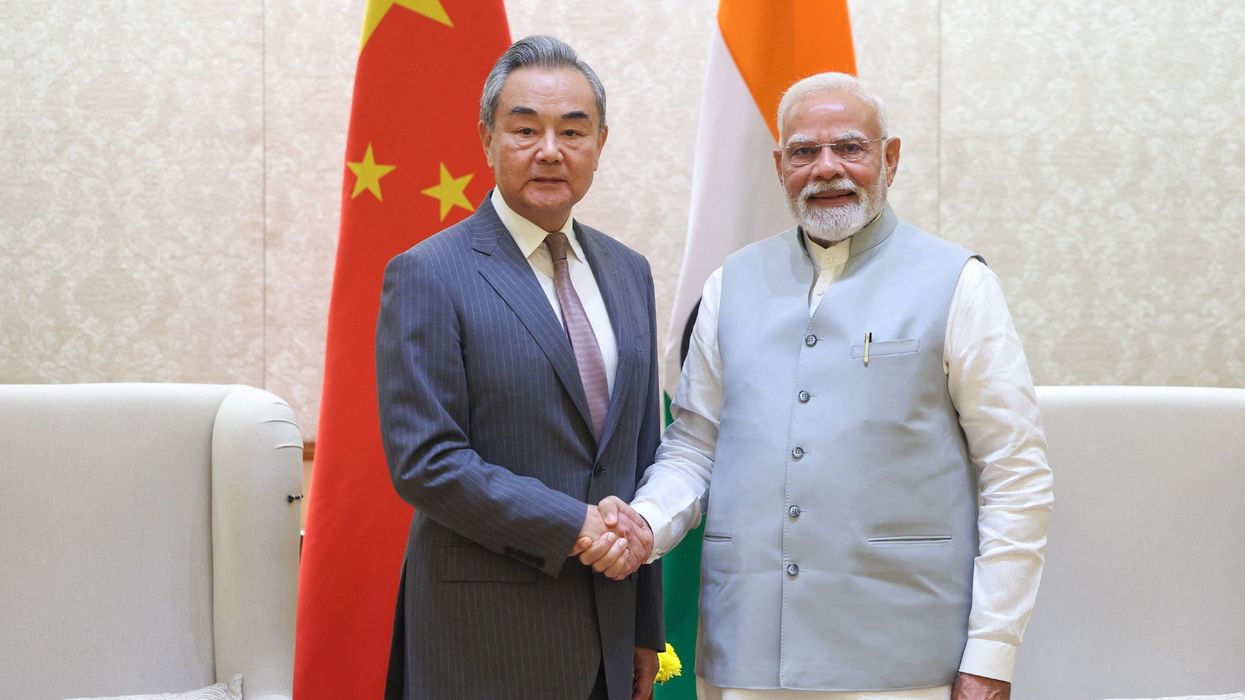
Diplomatic activity continued elsewhere. Pakistan’s prime minister Shehbaz Sharif began a regional visit to Saudi Arabia, Qatar and Turkey. Russia’s Sergei Lavrov met China’s president Xi Jinping in Beijing, with both sides agreeing to work to de-escalate tensions.
Sri Lanka said it had repatriated 238 Iranian sailors whose warship was torpedoed by a US submarine in March.
Foreign ministers from 17 countries, including Britain and France, called on all sides to use the opportunity to improve security in the region.
(With inputs from agencies)